


Quick Answer
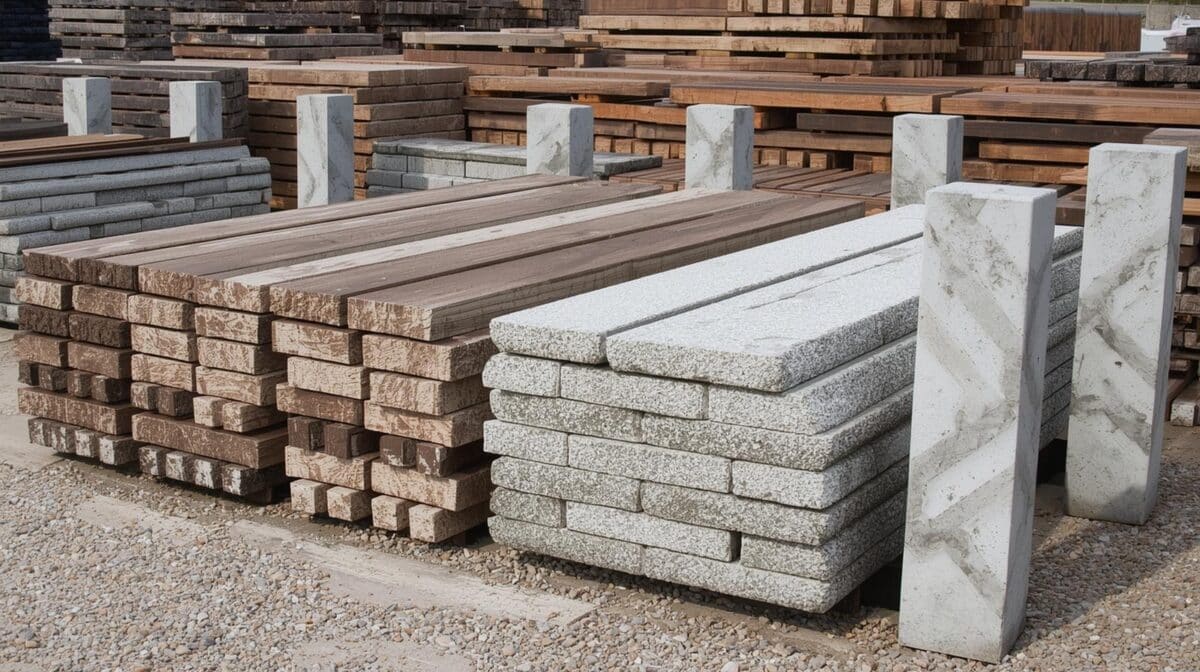
Woodgrain concrete sleeper colours typically range from a natural mid-brown timber tone through to bleached, weathered coastal shades and darker aged-timber tones. The right colour usually comes down to matching your home's existing brick, render or garden palette rather than picking a favourite in isolation. Browse the full woodgrain concrete sleepers range to see the current colour lineup, or read on for how to choose between them. If woodgrain isn't quite right, charcoal concrete sleepers and a smooth finish are the two main alternatives.
Choosing a colour is easy to underestimate, but it has a real effect on how convincing and cohesive the finished wall looks. This guide walks through the woodgrain colour range, how to match a tone to your property, and the alternative finishes worth considering if woodgrain doesn't turn out to be the right fit — whether you're planning a single garden bed border or a full street-facing boundary wall.

The Woodgrain Colour Range, Explained
Woodgrain concrete sleepers are typically available across a handful of timber-inspired tones, each suited to a slightly different aesthetic.
- Natural mid-brown — the most versatile and commonly chosen tone, close to a typical treated pine colour
- Weathered / driftwood grey-brown — a bleached, coastal-style tone popular for modern and native garden settings
- Darker aged-timber tones — a deeper, richer shade for a more dramatic contrast against lighter homes
- Range availability — exact colour names and availability vary by product line and supplier, so it's worth confirming current stock before finalising a design around a specific tone
How Colour Is Actually Achieved
Colour in woodgrain concrete comes from either an integral oxide mixed through the concrete before pouring, or a pigment applied to the textured surface and sealed after casting. Integral colour runs through the full thickness of the textured face, so it holds up more consistently over decades if the surface ever experiences minor wear. It's a reasonable question to put directly to a supplier if long-term colour consistency matters to your project.
Why Photos Rarely Tell the Full Story
Product photography, especially under studio lighting, tends to flatten the subtle variation that makes a woodgrain colour convincing in person. A tone that looks uniformly brown in a catalogue photo often reveals more depth, colour variation and grain contrast once viewed outdoors in natural, changing light. Where possible, look at an installed wall or request a physical sample rather than relying on a single product image to make your final decision.
Reading Undertones Before You Decide
Most timber-inspired tones carry a subtle undertone — warm (leaning red or orange), neutral, or cool (leaning grey). This undertone matters more than the overall shade name suggests, because it's the undertone that either harmonises or clashes with existing brick, render or paving. A "mid-brown" woodgrain sleeper with a warm undertone can look noticeably different against terracotta paving than the same named colour with a slightly cooler undertone. If a supplier can tell you the undertone of a specific product line, it's worth asking — it's a more useful data point than the marketing name of the colour alone.
How Weathering Changes a Colour Over Time
Concrete, like most exterior materials, changes subtly with age and weather exposure. Direct sun can very slightly lighten exposed surfaces over years, while shaded, damp areas can pick up light staining from algae or organic matter. None of this is dramatic or a sign of a problem — it's the same kind of gentle ageing any outdoor masonry experiences — but it's worth knowing that a wall's colour on day one won't be perfectly identical to its colour a decade later. In most cases, this gentle weathering actually enhances the timber illusion rather than detracting from it, since real timber ages in a broadly similar way.
Viewing a Colour at Different Times of Day
Colour perception shifts noticeably across a single day, and a retaining wall is a fixed, outdoor object that will be seen under all of those conditions over its lifetime. Morning and evening light, with its lower angle and warmer colour temperature, tends to bring out grain texture and warmth in woodgrain tones. Harsh midday sun flattens texture and can make colours look slightly washed out by comparison. Overcast days shift colours cooler and more neutral again. If you have the option, view a sample or an installed wall at more than one time of day before finalising a decision — a colour that only looks right in one specific lighting condition may disappoint once the wall is lived with day to day.
Matching Colour to Your Home
The most reliable way to choose a woodgrain tone is to look at what's already on the property and work with it, rather than treating the sleeper colour as an isolated decision.

- Warm brick homes — a natural mid-brown tone tends to sit comfortably alongside red or warm-toned brick
- Rendered, contemporary homes — a lighter, driftwood-style tone can soften an otherwise hard-edged façade
- Coastal and native gardens — weathered, bleached tones pair naturally with coastal planting and muted colour schemes
- Properties with existing timber features — matching or complementing an existing timber fence, deck or pergola usually gives the most cohesive result
A Simple Test Before You Commit
Stand at the point where the wall will be most visible — the street, the driveway, or the main garden path — and hold a sample or swatch up against the existing brick, render or fence line at that exact vantage point, ideally at different times of day. Colours that look harmonious side by side in a shaded showroom can read quite differently in full sun, and the reverse is also true. This small step catches most colour-matching mistakes before they become an expensive, permanent part of the wall.
When to Choose Contrast Instead of a Match
Matching isn't always the goal. Some of the most striking results come from deliberately contrasting a darker woodgrain tone against a light, minimalist rendered home, or a lighter driftwood tone against a darker brick. If you're going for a feature wall rather than a wall that blends into the background, it's worth considering contrast as a genuine design choice rather than defaulting to the safest, closest match available.
Considering the Garden, Not Just the House
It's easy to focus purely on matching the house and forget that a retaining wall usually sits within a garden setting as much as an architectural one. Established greenery, existing timber garden edging, paving colour and even the tone of nearby mulch all form part of the visual context a new wall will sit within. A colour that matches the house perfectly but clashes with an established garden can look just as jarring as a poor match against the brickwork — it's worth walking the actual site, not just looking at the house from the street, before finalising your choice. This is especially relevant on properties where the retaining wall sits well back from the house itself, closer to established planting than to any brick or render surface.
Getting a Second Opinion
Colour perception varies meaningfully between individuals, and it's genuinely useful to get a second opinion from someone else before committing to an order, particularly for a decision that's expensive and difficult to reverse once a wall is built. A partner, a landscaper, or even a neighbour with a good eye for colour can sometimes spot a clash or a strong match that becomes harder to see once you've been staring at swatches for an extended period. It's a small step, but one that genuinely reduces the risk of an expensive second-guess once the wall is finished and impossible to change without significant cost.
Common mistake: choosing a colour purely from a small screen thumbnail without seeing it at scale or in natural light. Ask your supplier for a physical sample or a photo of an installed wall in daylight before finalising your order — colour perception shifts more than most buyers expect once a sleeper is standing in full sun against real brick or render.
Charcoal as an Alternative Worth Considering
If none of the woodgrain tones feel quite right, charcoal concrete sleepers are worth a look. Rather than attempting a timber-look finish, charcoal offers a bold, modern, dark-toned surface that suits contemporary homes and landscaping styles that lean industrial or minimalist rather than natural.

Why Some Buyers Switch to Charcoal
Charcoal tends to appeal to buyers who like the idea of a premium, textured concrete sleeper but whose overall property palette is more modern than natural — think dark aluminium fencing, black window frames, or a minimalist, hard-landscaped garden. In these settings, a timber-look finish can occasionally feel slightly out of step with the rest of the design, whereas charcoal reinforces the same contemporary direction rather than working against it.
Charcoal and Woodgrain, Side by Side
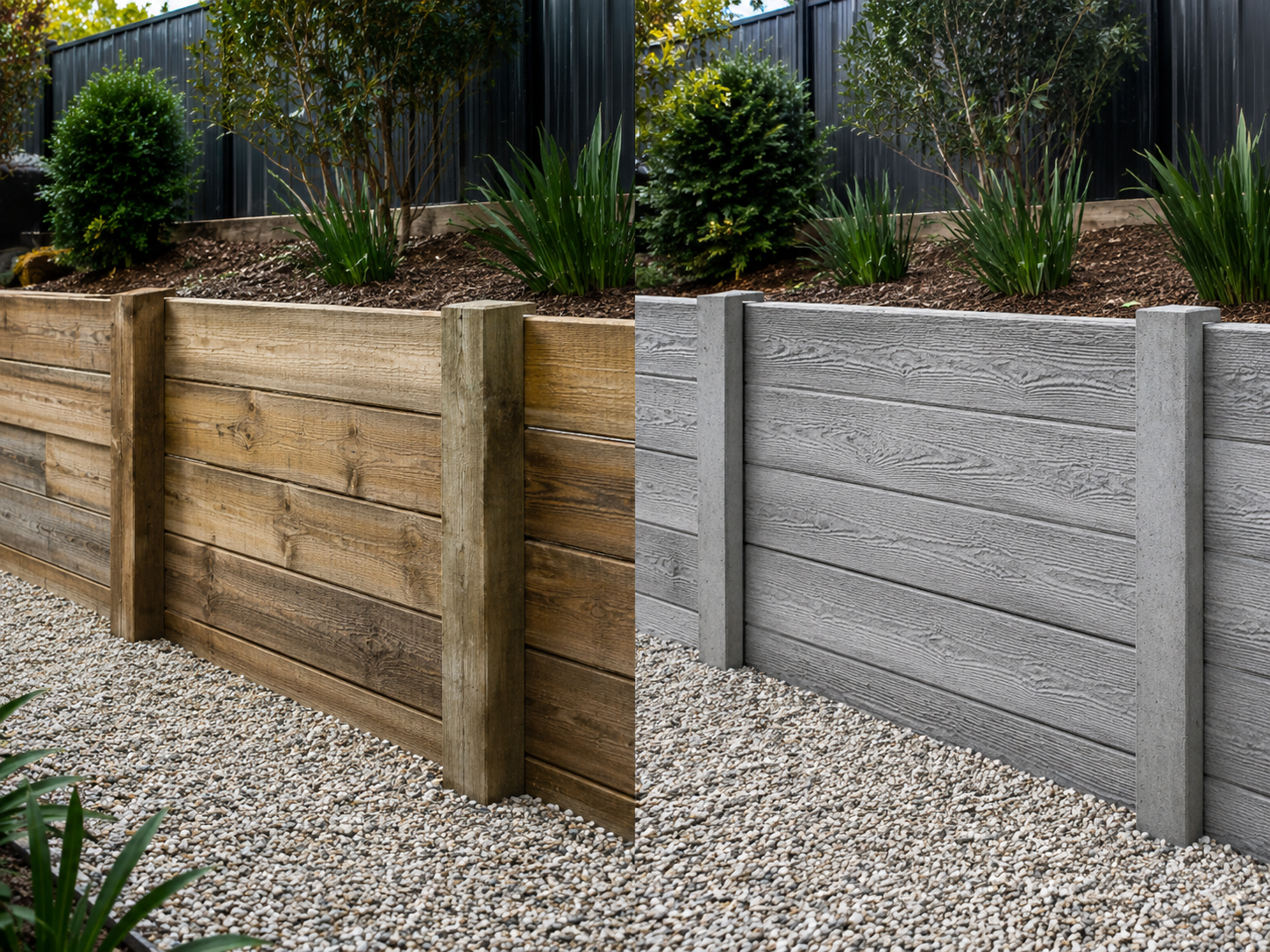
It can help to picture both finishes on the same wall mentally: charcoal reads as a single, deep, consistent dark tone with a smoother visual texture, while woodgrain reads as varied, warm and textured, with visible grain lines and colour variation across the surface. Neither is objectively better — they're aimed at different aesthetic goals. If your property already leans dark and architectural, charcoal usually wins that comparison; if it leans warm, natural or garden-forward, woodgrain usually does.
A Practical Note on Heat and Sun Exposure
Darker finishes, including charcoal, absorb more heat in direct sun than lighter woodgrain tones. This is rarely a structural concern for a retaining wall, but it's worth a brief mention if the wall sits close to a garden bed with heat-sensitive plants, or in a position where you or family members might lean against or sit near the wall regularly in summer. It's a minor practical consideration rather than a reason to rule charcoal out, but one worth being aware of.
Other Finishes Worth a Look
Beyond woodgrain and charcoal, a smooth finish rounds out the main options — a clean, understated surface that works well where you'd rather the wall recede visually rather than draw attention.
- Smooth finish — the most economical option, and a good fit for utilitarian or purely functional walls
- Woodgrain — for a natural, timber-inspired look with none of timber's maintenance
- Charcoal — for a bold, modern, dark-toned finish
For the fuller breakdown of how these three finishes compare beyond colour alone — including cost and structural considerations — see our charcoal vs woodgrain vs smooth concrete sleepers comparison.
Choosing by Elimination, Not Just Preference
If you're genuinely torn between finishes, it can help to eliminate rather than select. Rule out smooth if you want visual texture and warmth. Rule out charcoal if your property leans traditional or garden-heavy rather than modern. What's left after that process is usually woodgrain — which is part of why it's become the most requested finish for residential retaining walls with any garden or landscaping element nearby.
Budget as a Deciding Factor
Cost can also legitimately settle a close call. Smooth finish is typically the most economical of the three, since it requires no textured mould in production. Woodgrain and charcoal sit close to each other in price, reflecting the similar additional mould and finishing work involved in both. If budget is the deciding factor rather than aesthetics, it's worth getting exact pricing across all three finishes for your specific strength grade before making a final call, since the gap between finishes can vary depending on supplier and product line.
Combining Finishes on One Property
There's no requirement to use a single finish across an entire property. A common, cost-effective approach is to specify woodgrain or charcoal for street-facing or highly visible sections, and a plain smooth finish for hidden or side walls that get little visual attention. Since all three finishes share the same dimensions, strength grades and post system, mixing them across different sections of a larger project is entirely practical.
A Final Word on Making the Call
Colour and finish decisions can start to feel overwhelming once you're deep into swatches, samples and product photos. If you find yourself going back and forth without a clear winner, it's usually a sign that more than one option would genuinely work well — at that point, cost, availability and a supplier's honest recommendation based on similar past projects are entirely reasonable tie-breakers. There's rarely a single objectively correct colour choice; there's a shortlist of tones that will all look good, and the goal is simply landing on one of them with confidence.
FAQs
What colours do woodgrain concrete sleepers come in?
Typically a natural mid-brown, a bleached driftwood or coastal tone, and a darker aged-timber shade. Exact availability varies by supplier and product line.
How do I choose the right colour for my home?
Start with what's already on the property — brick, render, roofing and existing timber or fencing — and choose a tone that complements those colours rather than competing with them. A mid-brown, natural timber tone is the safest starting point if you're unsure.
Does woodgrain concrete come in grey?
Not typically — grey tones are usually associated with our smooth finish rather than woodgrain, since woodgrain is specifically designed to replicate timber colouring rather than plain concrete grey.
Can I get a sample before ordering a full wall's worth?
Yes — most suppliers, ourselves included, can arrange a sample or point you to an installed project so you can judge colour and texture in natural light before committing to a full order.
Will my woodgrain sleepers all match if I order them at different times?
Not necessarily. Sleepers from the same production batch and mould tend to match most closely in colour and texture. If you're building a wall in stages, ordering your full quantity upfront in one batch is the safest way to avoid subtle mismatches later.
Does a darker colour cost more than a lighter one?
Not usually — pricing within the woodgrain range is generally consistent across colour options, since the cost difference comes from the mould and manufacturing process rather than the specific pigment used. Confirm current pricing with your supplier, as this can vary by product line.
What if I can't decide between two colours I like equally?
That's a reasonable position to be in, since most woodgrain tones are designed to look good against a wide range of settings. In that situation, checking current stock availability, asking a supplier which tone they see chosen most often for similar properties, and simply going with the one that felt right on first impression are all sensible ways to make the final call without over-deliberating.




Leave a comment (all fields required)