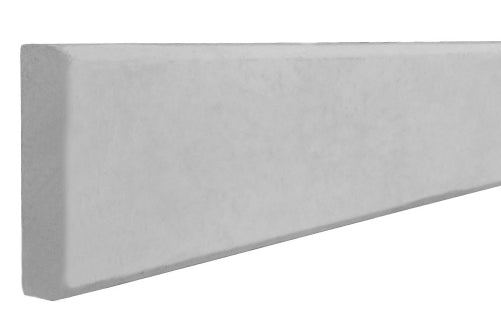
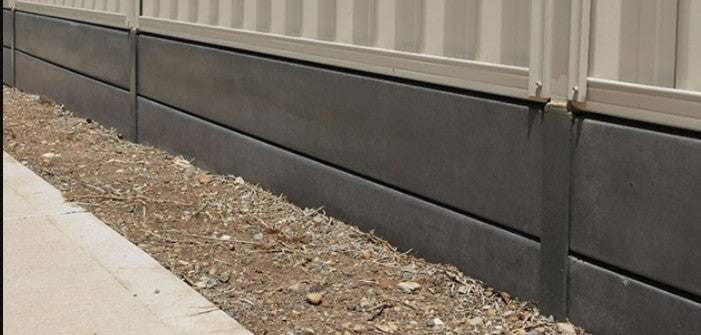
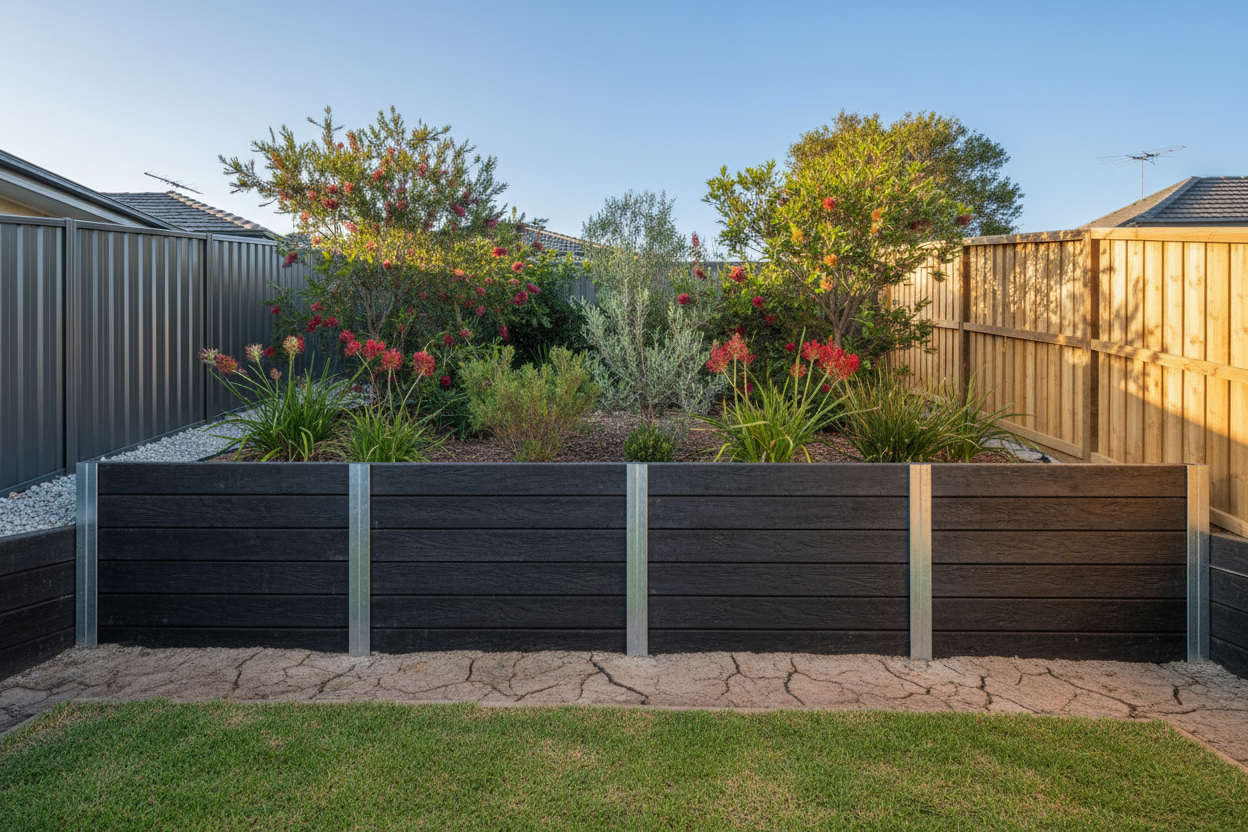
Under-fence plinths from Retaining Walls Direct are precast concrete infill panels that close the gap between the base of a fence and the ground. On sloping or uneven sites, and on reactive clay soils where ground levels shift seasonally, this gap is almost unavoidable with a standard fence installation. Left unaddressed it allows soil erosion, weed growth, and pet or pest entry, and on a pool fence it can be a genuine safety barrier breach. A concrete plinth is the standard trade solution: durable, low-maintenance, and designed to slot cleanly into standard steel fence post lines.
A gap under a pool fence is a compliance issue, not just a cosmetic one. Pool barrier safety standards in every Australian state require a continuous barrier with no gap large enough for a young child to pass through, generally no more than 100mm at any point along the base of the fence. On sloped or uneven ground, a standard fence panel installed without a plinth frequently leaves a gap well beyond this limit at its lowest point. An under-fence plinth closes that gap completely, giving a continuous, code-compliant barrier along the full fence line. If your pool fence is due for a safety inspection or you're installing a new pool enclosure, confirm the specific gap requirements with your local council or pool safety inspector, as exact thresholds vary by state.
If there's any gap under your pool fence, especially at low points on sloped or uneven ground, a plinth is generally the correct fix to bring the barrier into compliance. Pool safety standards require a continuous barrier with no gap large enough for a young child to pass through. Confirm the exact requirement with your local council or a pool safety inspector, as specific thresholds and inspection requirements vary by state.
Yes, this is one of the most common applications. On a sloped or graded site, a plinth provides a level, solid base under the fence panel rather than leaving a stepped or gapped bottom edge that follows the slope. It's a standard solution used by builders and landscapers wherever a fence line crosses a grade change.
This is common on reactive clay soils, where the ground expands and contracts seasonally with moisture changes. A fence installed flush to the ground during one season can develop a visible gap as the soil dries and contracts, particularly in reactive clay regions across western Sydney, Melbourne's outer suburbs, and much of south-east Queensland. A plinth closes this gap permanently regardless of further ground movement.
Our under-fence plinths are designed to slot between standard steel fence posts and are compatible with both our C-channel and H-beam post ranges, the same post system used throughout our retaining wall products. If you're installing plinths alongside a new fence or retaining wall, using the same post series across the whole run keeps the installation consistent and simplifies ordering.
Yes. Boundary fences on sites with any grade change commonly use under-fence plinths for the same reason as pool fencing, to close the gap left when a fence panel is installed over uneven ground. This prevents soil erosion, stops pets and pests moving under the fence, and gives a clean, level finish along the full fence line.
View our full steel posts range for compatible post options, or send us your fence bay measurements and we'll confirm the right plinth length and quantity for your project. Trade pricing is available for landscapers and builders.
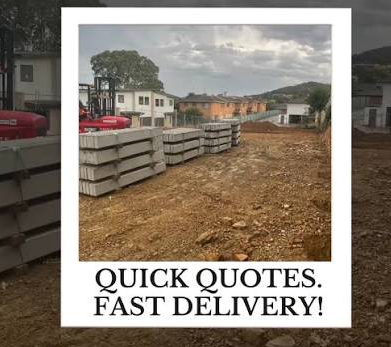
Get a free delivered quote for under-fence plinths, steel posts and retaining wall materials, delivered Australia-wide.