

Quick Answer
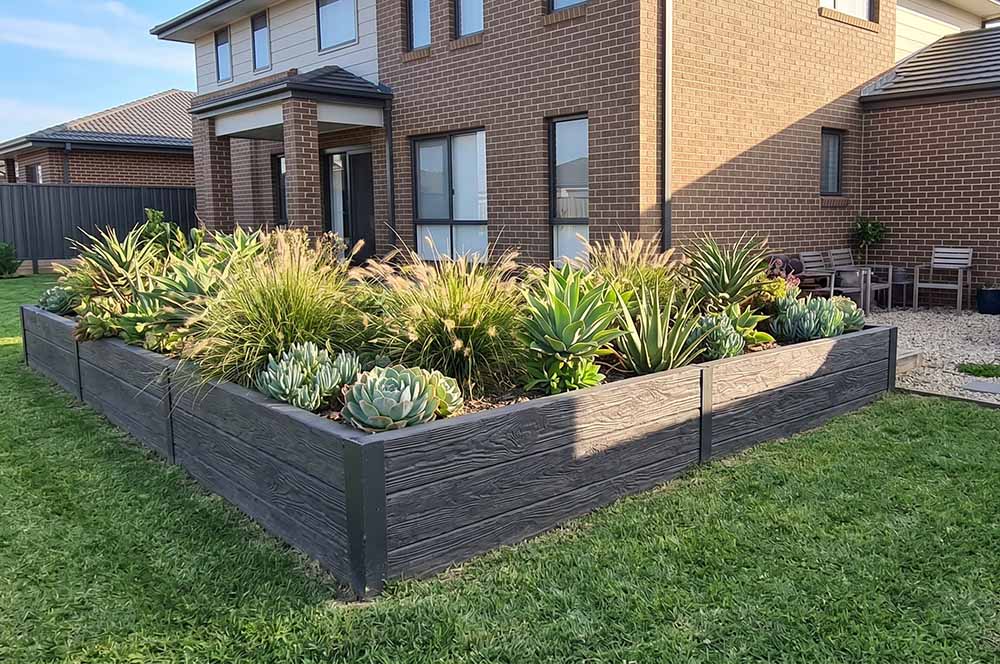
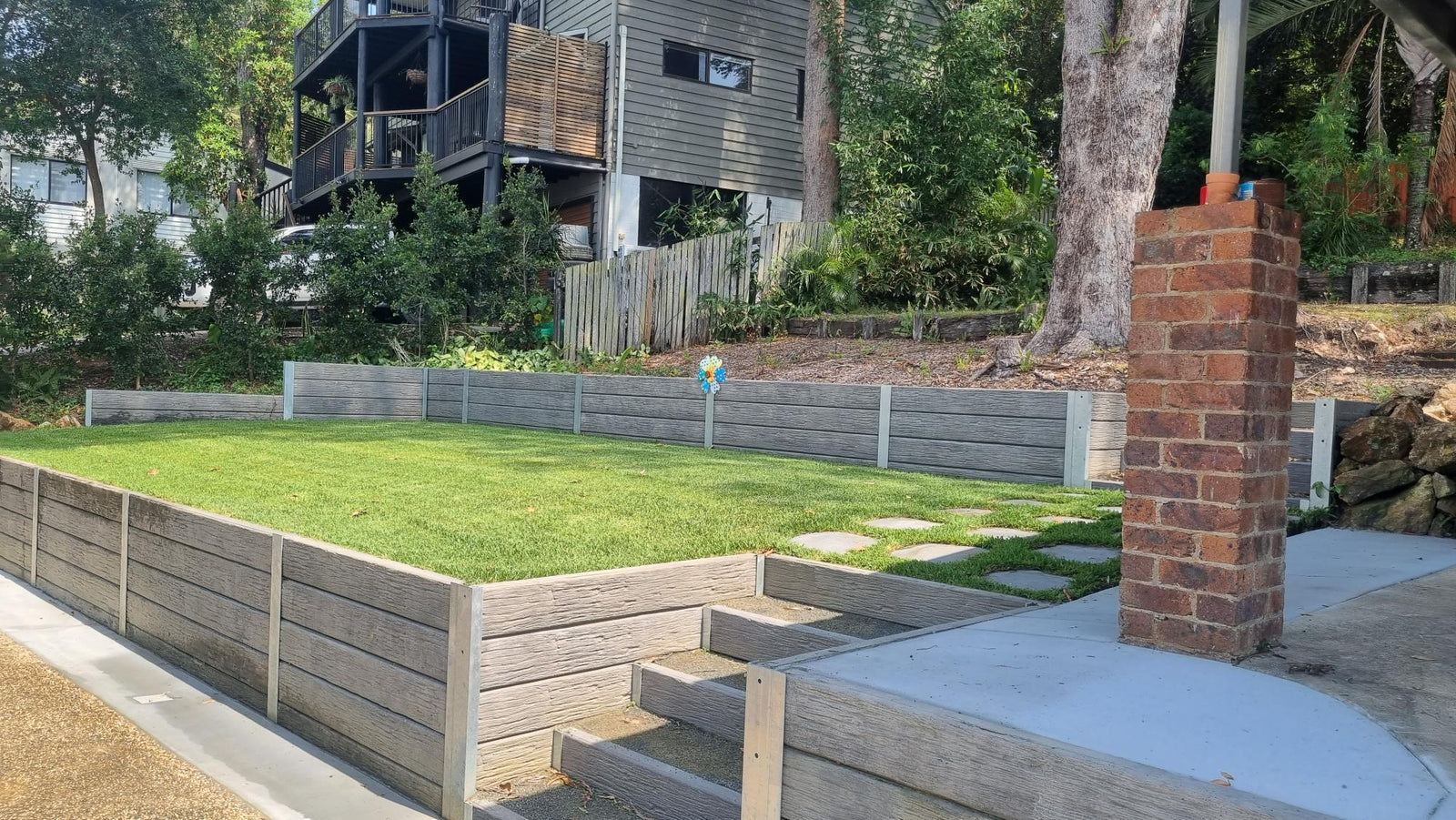
Woodgrain concrete sleeper cost depends on strength grade, thickness and length, and sits above plain smooth or charcoal concrete of the same spec due to the additional mould and finishing process. It also costs more upfront than treated pine timber, though it avoids the repeat cost of replacing a timber wall every 10 to 15 years. For current pricing on specific sizes and strength grades, see our woodgrain sleeper pricing.
This guide breaks down what actually drives woodgrain sleeper pricing, what else a full retaining wall budget needs to include beyond the sleepers themselves, and how the total cost compares to timber over time — useful reading whether you're budgeting for a single garden bed or pricing up a full boundary wall project.

Price Per Sleeper: What Drives It
Woodgrain sleeper price is driven mainly by three factors: strength grade, thickness, and length. A 40MPa, 80mm-thick sleeper will typically sit at the lower end of the price range within the woodgrain category, while a 60MPa, 100mm-thick sleeper in a longer length sits at the higher end.
- Strength grade — higher MPa grades cost more due to the additional reinforcement and mix requirements
- Thickness — 100mm sleepers cost more than 80mm sleepers of the same length and grade
- Length — longer sleepers generally cost more per unit, though sometimes less per linear metre
For exact current pricing across sizes and grades, see our woodgrain sleeper pricing page — we're not going to quote specific dollar figures here since pricing changes over time and varies by region.
Why the Woodgrain Finish Carries a Premium
The premium over a plain smooth finish reflects the cost of the textured mould and the additional finishing process used to produce the timber-grain texture, not a difference in the underlying concrete or reinforcement. A woodgrain sleeper at a given strength grade performs identically to a plain sleeper at the same grade — you're paying purely for the visual result.
Comparing Quotes on an Even Footing
When comparing prices between suppliers, make sure you're comparing the same strength grade, thickness and length — a lower headline price sometimes reflects a lighter-duty spec rather than a genuinely better deal. Ask specifically for MPa grade and dimensions on any quote before comparing it against another, so you know you're weighing up equivalent products rather than apples against oranges.
Why Prices Vary Between Suppliers
Beyond spec differences, genuine price variation between suppliers can come from mould quality, manufacturing scale, freight distance to your site, and whether a supplier holds stock locally or needs to order it in. A significantly cheaper quote is worth a closer look rather than an automatic yes — ask about mould quality and finish consistency specifically, since this is one area where a lower price sometimes reflects a genuinely lower-quality product rather than simply better value.
How Order Quantity Affects Unit Price
Larger orders — a full wall's worth versus a handful of sleepers for a small garden bed — can sometimes attract better per-unit pricing, particularly through trade accounts or bulk order discounts. If you're planning a larger multi-stage project, it's worth asking whether ordering your full estimated quantity upfront, even if you're building in stages, unlocks better pricing than several smaller separate orders over time.
What Affects the Total Price of Your Wall
Sleeper cost is only one part of a full retaining wall budget. Several other factors shape the total spend.

- Wall height — taller walls need more courses, thicker sleepers, and often a higher strength grade
- Wall length — longer walls need more sleepers and more posts
- Soil type — reactive clay or poorly drained soil can push you toward a heavier-duty spec across the board
- Access — difficult site access can add labour or machinery cost independent of material choice
- Engineering — taller or more demanding walls may need an engineer's design, which adds a professional fee on top of materials
Why Height Affects Cost More Than Length
Doubling a wall's length roughly doubles its material cost, since twice the length simply needs twice the sleepers and posts. Doubling a wall's height, on the other hand, can more than double the cost, because taller walls often need a higher strength grade, thicker sleepers, deeper post embedment, larger footings and more robust drainage — a combination of factors that compound rather than scale linearly. If budget is tight, it's often more cost-effective to build a wall at the lowest height that solves your actual problem, and use terracing or multiple shorter walls instead of one very tall wall, where the site allows it.
How Soil Type Quietly Drives Cost
Soil type rarely gets the attention it deserves in early budget conversations, but it can meaningfully change the spec — and therefore the cost — of an otherwise identical wall. Stable, well-drained soil often allows a lighter post and footing spec at a given wall height, while reactive clay or waterlogged ground typically pushes toward heavier posts, deeper embedment and more robust drainage to manage the additional lateral pressure and moisture. A soil assessment, even an informal one from an experienced installer, early in the planning process can prevent a nasty budget surprise later when a lighter-duty spec turns out to be inadequate for the actual ground conditions.
Access and Site Conditions
Site access affects labour cost independently of material choice. A wall built on flat, open ground with truck access right to the site is straightforward to build and deliver materials to. A wall down a steep, narrow side passage, or behind an existing structure with no vehicle access, often needs materials carried in by hand and may need smaller equipment or additional labour hours — costs that apply regardless of which sleeper finish or strength grade you choose. It's worth flagging access constraints clearly when getting quotes, since two quotes for "the same wall" that don't account for identical access assumptions aren't really comparable.
When Engineering Fees Enter the Picture
For walls that trigger council approval or engineering requirements — commonly above about 1.0m, near boundaries, or supporting a driveway — a structural engineer's design fee is a genuine additional cost on top of materials and labour. This fee varies by project complexity and location, but it's worth budgeting for early rather than treating it as an afterthought, since it can be a meaningful percentage of overall project cost on smaller walls and is a non-negotiable requirement once a wall crosses the relevant threshold.
Common mistake: budgeting for sleepers alone and being caught out by the cost of posts, footings and drainage. On a typical retaining wall, sleepers are often less than half the total material cost once posts, concrete footings and drainage materials are included — build your budget around the full system, not just the visible sleeper finish.
Posts and Drainage: The Rest of the Budget
A complete retaining wall system needs steel posts and drainage materials alongside the sleepers themselves, and both are genuine cost items rather than optional extras.

Budgeting for Steel Posts
Browse our steel retaining wall posts range to see current options and pricing. Post cost depends on profile (C-channel vs H-beam), size, and spacing requirements — taller walls or more demanding soil conditions generally need heavier posts spaced more closely together, which increases the total post count and cost per metre of wall.
C-Channel vs H-Beam Cost Differences
H-beam (UC) posts generally cost more per unit than C-channel (PFC) posts of a comparable size, reflecting their greater section strength and suitability for more demanding applications. For a wall that genuinely needs H-beam performance — reactive clay, taller walls, or significant surcharge load — this isn't an area to economise by downgrading to C-channel; the additional cost buys structural performance the wall genuinely needs. For walls that only need C-channel performance, there's no benefit to over-specifying H-beam beyond a modest margin of safety, since it simply adds cost without a corresponding practical benefit.
Budgeting for Drainage
Drainage materials — ag pipe, geotextile fabric, and free-draining backfill gravel — are a genuine line item, not an optional add-on. Skipping drainage to save money is one of the most common false economies in retaining wall construction, since poor drainage is one of the leading causes of wall failure regardless of sleeper material or finish. Budget for drainage as a core part of the wall system from the outset, not as something to add later if funds allow.
Footings: An Easy Line Item to Underestimate
Post footings need enough concrete to properly embed posts to the depth required for your wall height and soil type. On taller walls, footing concrete volume can be a larger cost than first-time builders expect, since footing size scales with the overturning force the wall needs to resist, not just the visible post length above ground. Get a specific footing estimate for your wall height and soil type rather than assuming a standard, minimal footing will suffice.
A Realistic Budget Split
As a rough planning guide rather than a fixed rule, it's common for sleepers, posts, footings and drainage to each represent a meaningful share of total material cost on a typical residential wall, rather than sleepers dominating the budget on their own. Buyers who budget purely around sleeper pricing are often surprised by the combined cost of the remaining three categories once a full quote comes together — planning for all four from the outset avoids that surprise partway through the project.
Costs That Are Easy to Forget
Beyond sleepers, posts, footings and drainage, a few smaller costs are easy to overlook when budgeting: site preparation and excavation, disposal of excavated soil if it can't stay on-site, delivery and freight for materials (particularly on tight-access sites needing smaller vehicles or multiple trips), and any landscaping or reinstatement needed once the wall is finished. None of these are usually large individual costs, but together they can add a meaningful percentage to a budget built purely around materials, and it's worth asking a supplier or contractor whether their quote includes these items or whether they sit outside the headline price.
Woodgrain vs Timber: Comparing the Real Cost
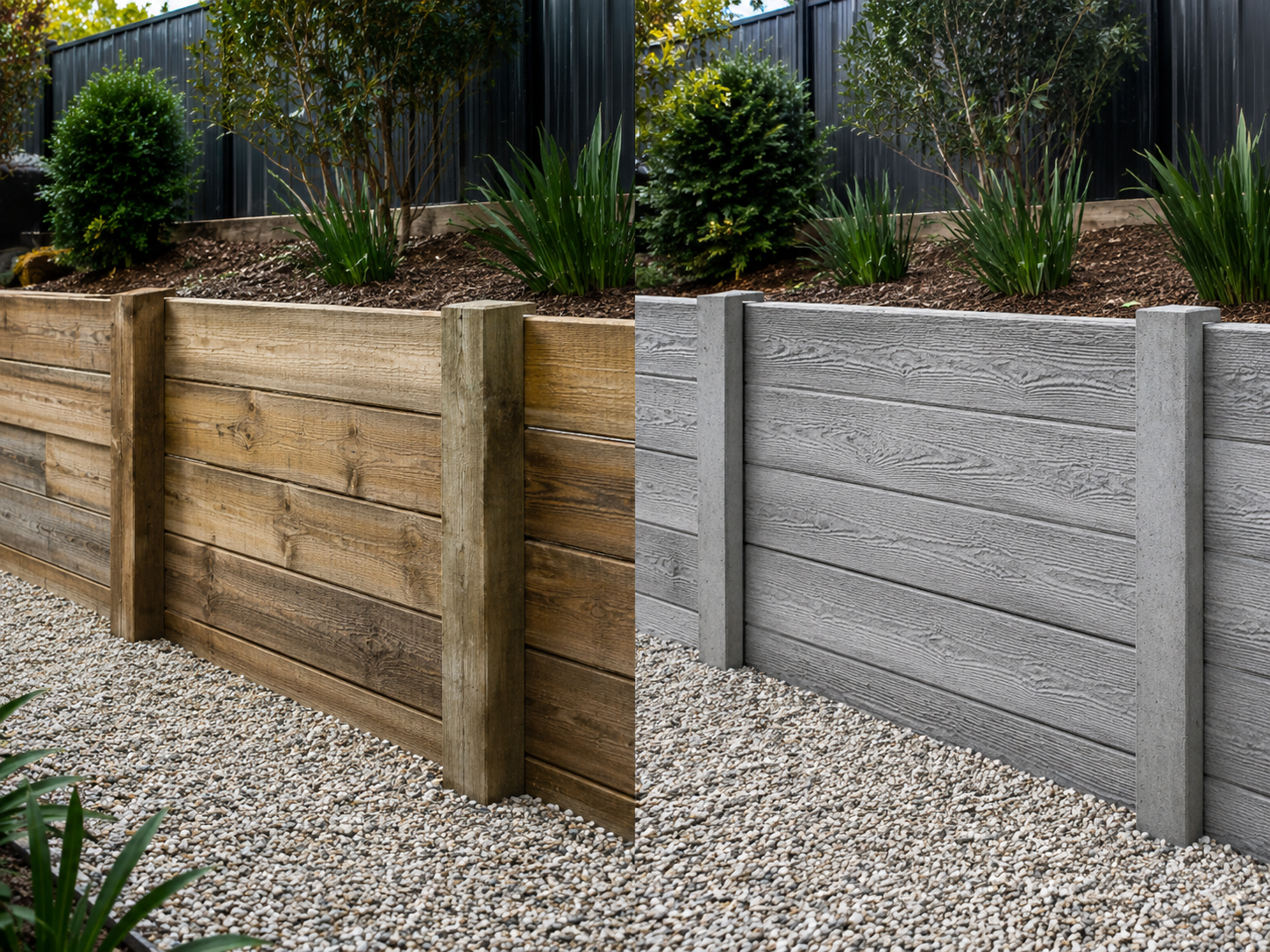
Woodgrain concrete costs more than treated pine upfront, but the comparison changes once you look at cost over the life of the wall rather than just the initial invoice.
- Timber: lower purchase price, but typically replaced every 10–15 years, adding demolition and reinstallation labour to the lifetime cost
- Woodgrain concrete: higher purchase price, built once, with no repeat rebuild cost across the same period
For the fuller lifespan and maintenance comparison behind these numbers, see our woodgrain vs timber cost breakdown.
Why the Comparison Isn't Just About the Sleepers
A genuine cost comparison between the two materials has to include labour, not just materials. Removing an old, partially failed timber wall is often more time-consuming and costly than the original install, since old sleepers can be difficult to extract cleanly and backfill has typically settled or shifted over the wall's life. None of that shows up if you only compare per-sleeper prices between timber and woodgrain concrete, but it shows up in full once an actual rebuild happens.
Thinking in Cost Per Year, Not Cost Per Sleeper
A useful reframe for this comparison is cost per year of service rather than cost per sleeper. Divide the total cost of a wall — including any rebuilds — by the number of years it's expected to remain functional, and you get a rough annualised cost that accounts for both upfront price and lifespan. Timber often looks cheaper on a pure purchase-price basis but can come out roughly comparable or more expensive on a cost-per-year basis once a full rebuild cycle is factored in, particularly on sites where soil and moisture conditions shorten timber's realistic lifespan.
When the Upfront Cost Gap Genuinely Matters
None of this means timber is never the right financial choice. For short-term holds, tight fixed budgets, or temporary garden structures, the lower upfront cost of timber is a legitimate and sensible reason to choose it, even knowing a replacement cycle may follow. The point of this comparison isn't to declare one material universally cheaper — it's to make sure the upfront price tag isn't the only number being compared before a decision is made.
Get a Quote for Your Wall
Ready to put a number on your project? Browse our retaining wall kits and quotes for a bundled starting point, or get in touch with our team for a specific quote based on your wall's height, length and soil conditions. Providing accurate measurements and site details upfront — rather than a rough estimate — will get you a quote that's genuinely usable for budgeting, rather than one that changes significantly once the actual site is assessed.
FAQs
How much do woodgrain concrete sleepers cost?
Price depends on strength grade, thickness and length, and sits above plain concrete finishes of the same spec due to the mould and finishing process. See our woodgrain sleeper pricing for exact current figures.
Is woodgrain more expensive than smooth or charcoal concrete?
Yes, typically — the premium reflects the additional mould and finishing process, not a difference in strength or structural performance at the same MPa grade.
What's usually the biggest cost in a retaining wall budget besides sleepers?
Posts, footings and drainage together often exceed the cost of the sleepers themselves, particularly on taller walls that need heavier posts and deeper footings.
Does a taller wall cost proportionally more than a longer one?
Generally yes. Length scales cost roughly linearly, since it's simply more sleepers and posts. Height can increase cost disproportionately, since taller walls often need a higher strength grade, thicker sleepers, deeper footings and more robust drainage all at once.
Can I reduce cost by choosing a lower strength grade?
Only if your wall's height and soil conditions genuinely allow it. Strength grade should be matched to engineering requirements, not selected purely to minimise cost — under-specifying to save money on a structural wall is a false economy that can lead to far more expensive problems later.
Is it cheaper to build a retaining wall myself or hire a contractor?
DIY generally saves on labour cost but requires more time, the right tools, and confidence in getting post spacing, footing depth and drainage correct. For taller or more demanding walls, particularly anything requiring engineering sign-off, professional installation is usually worth the added cost for the assurance of a correctly built, compliant wall.
How far in advance should I get a quote before starting my project?
It's worth getting quotes well before your intended start date, particularly for larger projects, since material lead times and installer availability can affect scheduling. Getting an early estimate also gives you time to adjust wall design, finish or scope if the initial numbers come in above your budget, rather than making rushed decisions once excavation has already started.



Leave a comment (all fields required)