

Quick Answer
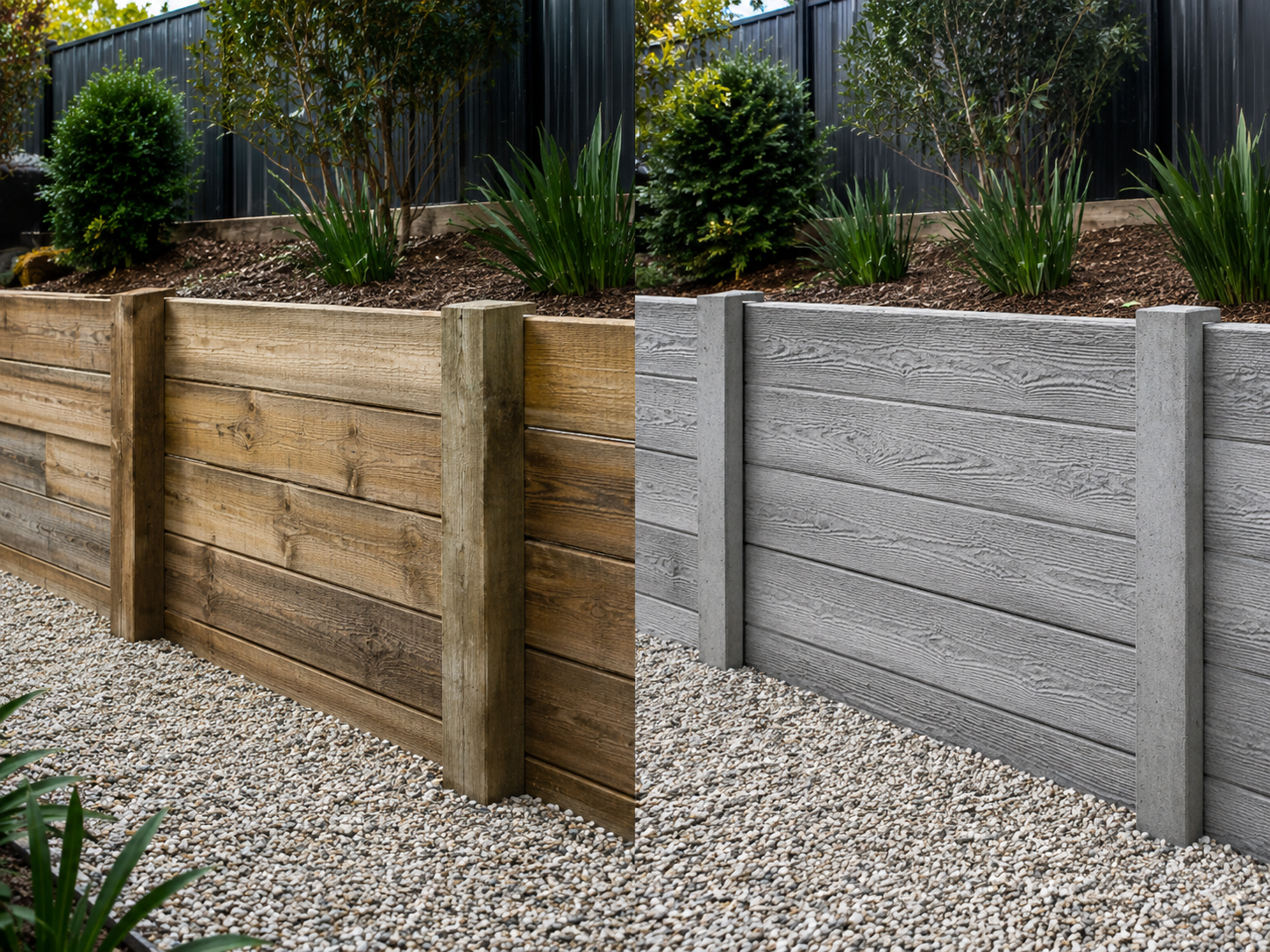
Woodgrain concrete sleepers cost more upfront than treated pine timber sleepers but need no re-staining, don't rot or attract termites, and are designed to last decades longer without replacement. Timber costs less to buy initially but typically needs replacing every 10 to 15 years in Australian conditions. Over the life of a wall, woodgrain concrete usually works out cheaper — and gives you the same timber look either way.
This guide puts the two materials side by side on the things that actually matter for a retaining wall decision: appearance, lifespan, maintenance, and total cost — not just the price tag on day one. It's written for homeowners weighing up a first retaining wall, landscapers pricing a job where a client has asked about both options, and anyone replacing an existing timber wall who wants a clear-eyed comparison before committing to the same material again.

Comparison Table
| Factor | Woodgrain Concrete | Treated Pine Timber |
|---|---|---|
| Upfront cost | Higher per sleeper | Lower per sleeper |
| Typical lifespan | Decades, built once | 10–15 years, often less in wet or reactive clay |
| Maintenance | Minimal — occasional wash | Periodic oiling/staining, rot checks |
| Termite/rot risk | None | Present, especially in ground contact |
| Timber appearance | Cast timber-grain texture | Genuine timber grain |
| Post system | Standard galvanised steel posts | Standard galvanised steel posts |
Both materials are part of a broader decision worth exploring properly — browse our full woodgrain concrete sleepers range if the concrete side of this comparison appeals.
Reading the Table in Context
A table like this can make the decision look simpler than it is, so it's worth a brief note on how to actually use it. The "typical lifespan" row is the single biggest driver of the overall cost comparison, because it determines how many times a timber wall needs rebuilding over a given ownership period — and that number varies significantly with soil type and drainage, which the table itself can't capture. Treat this table as a starting framework for the conversation, not a final answer; the sections below unpack each row in enough detail to apply it to your actual site.
Timber Side
Treated pine sleepers remain a genuinely popular retaining wall material, and it's worth being fair to them rather than treating this as a foregone conclusion in concrete's favour.

- Lower purchase price per sleeper, which matters on tight-budget projects
- Lighter weight, easier to handle on tight-access sites without machinery
- Can be cut and shaped on-site more easily than concrete
- Genuine timber texture and grain, which a cast finish approximates rather than replicates exactly
Where Timber Holds up well
Treated pine performs reasonably well in well-drained, sandy or loamy soils with good fall away from the wall, and in drier inland climates where ground moisture is less persistent. A well-built timber wall with good drainage behind it and a sensible post and footing spec can genuinely last toward the upper end of its expected lifespan, particularly if it's not in constant ground moisture.
Where Timber Struggles
Reactive clay soils, coastal salt exposure, shaded and persistently damp positions, and areas with known termite activity are all conditions that shorten a timber wall's life meaningfully below its best-case scenario. If your site has any of these characteristics, it's worth weighing that against timber's lower upfront cost before committing.
Signs a Timber Wall is Nearing the end of its life
Knowing what to look for helps set realistic expectations if you already have a timber wall and are weighing up whether to replace it now or wait. Softening or spongy timber at ground level, visible fungal growth or dark staining at the base of sleepers, sleepers that have started to bow or lean, and gaps opening up between sleepers as timber shrinks are all signs a wall is approaching or past its useful structural life. None of these appear overnight — they tend to develop gradually over several years, which is part of why timber walls can go from "looking fine" to "needing urgent replacement" faster than owners expect once the underlying decay reaches a certain point. If you're noticing any of these signs, it's worth getting the wall assessed sooner rather than later, since a wall that fails suddenly can cause far more disruption and cost than a planned, proactive replacement.
Post and Footing Considerations for Timber
Timber sleeper walls use the same category of galvanised steel post system as concrete sleeper walls, so the post and footing side of the build doesn't materially favour one sleeper material over the other. Where timber does differ is sleeper weight — lighter than concrete of the same dimensions — which can make handling marginally easier on steep or tight-access sites where getting concrete sleepers to the wall face is more physically demanding.
Engineering Thresholds Apply to Both Materials Equally
It's a common misconception that timber walls face lighter regulatory scrutiny than concrete walls. In practice, under AS 4678, the height and site factors that trigger a need for engineering design or council approval — retained height over about 1.0m, proximity to a boundary, reactive clay, or a driveway surcharge load — apply regardless of whether the sleepers are timber or concrete. Choosing timber over concrete doesn't reduce your regulatory obligations; it only changes the material behind the same engineering requirements. Always confirm specific thresholds with your local council, since they vary between jurisdictions.
If timber is genuinely the right fit for your project, browse our treated pine timber sleepers range directly.
Timber Deep-dive
For a broader, more technical look at timber versus concrete retaining walls generally — not limited to the woodgrain finish specifically — our timber cluster has a dedicated comparison covering everything from H4 treatment grades to footing depth. See our full timber vs concrete comparison for that broader context.
Treatment Grades and What They Mean
Treated pine sleepers are typically rated to AS 1604 hazard classes, with H4 being the common rating for in-ground and retaining wall applications, indicating resistance to termites and decay in ground contact. It's a genuine improvement over untreated timber, but it's a resistance rating, not immunity — H4 timber in harsh conditions still degrades over time, just more slowly than untreated timber would.
Why Treatment Grade Alone Doesn't Guarantee a Longer Lifespan
It's a common assumption that H4-treated timber will automatically last a set number of years regardless of site conditions. In practice, the treatment grade determines resistance to a given hazard level, but actual lifespan still depends heavily on drainage, soil moisture and how well the wall was built in the first place. Two H4-rated timber walls on different sites — one well-drained, one holding water against the sleepers — can have meaningfully different lifespans despite using identical timber. This is exactly why drainage gets so much emphasis in retaining wall guidance generally, regardless of which sleeper material is chosen.
Lifespan and Maintenance
This is where the two materials diverge most clearly. A woodgrain concrete wall, built and drained correctly, is designed for a long structural life without any scheduled maintenance beyond an occasional wash. A timber wall's lifespan is far more dependent on ongoing care and site conditions.

- Timber: periodic oiling or staining recommended, visual rot checks at ground contact, typical full replacement inside 10–15 years, sometimes sooner in poor conditions
- Woodgrain concrete: no oiling, staining or rot risk; occasional cleaning only; designed for a multi-decade service life when correctly specified and drained
What "Maintenance" Actually Involves for Each Material
For timber, realistic maintenance means periodically checking ground-contact points for softening or fungal growth, reapplying oil or stain roughly every few years to slow surface weathering (this is cosmetic upkeep, not a structural fix), and planning for eventual full replacement as a known, scheduled cost rather than an unexpected one. For woodgrain concrete, maintenance is closer to what you'd do for any outdoor masonry surface — an occasional hose-down or scrub in shaded, damp spots where algae can build up — with no structural upkeep required at all under normal conditions.
Common mistake: assuming either material is maintenance-free regardless of drainage. Poor drainage behind a wall accelerates timber rot and can still cause structural issues in a concrete wall through sustained hydrostatic pressure. Good drainage — ag pipe, free-draining backfill and geotextile fabric — protects both materials, and neither should be built without it.
Cost Over Time
Comparing sticker price alone favours timber every time. The more useful comparison is cost per year of service across the wall's realistic lifespan.
A Real-World Example
Imagine a timber wall and a woodgrain concrete wall built at the same time, for the same retained height. The timber wall costs less to build initially, but if it needs a full rebuild once over 25 years — including demolition, disposal and reinstallation labour, not just new sleepers — that rebuild cost stacks on top of the original spend. The woodgrain concrete wall costs more on day one but carries none of that rebuild cost across the same period. We're not going to invent specific dollar figures here since pricing varies by region, supplier and wall size, but the shape of that calculation is the same on almost every project: the longer you plan to own the property, the more the total-cost comparison tends to favour concrete.
Why This Calculation Is Easy to Get Wrong
The most common error in comparing these two materials isn't in the numbers themselves — it's in only counting the cost of materials and ignoring the cost of labour and disruption that comes with a timber rebuild. Removing an old, partially rotted timber wall often takes longer and costs more than the original install, because failing sleepers can be harder to extract cleanly, backfill has often settled or shifted, and posts embedded in old footings sometimes need to be cut out and replaced rather than reused. None of that shows up in a simple per-sleeper price comparison, but all of it shows up on the invoice when the rebuild actually happens.
Factors That Shift the Calculation
- How long you'll own the property — a short-term hold favours timber's lower upfront cost; a long-term family home favours concrete's lower lifetime cost
- Soil and drainage conditions — harsher conditions shorten timber's realistic lifespan, shifting the balance toward concrete sooner
- Labour cost for replacement — demolition and reinstallation labour is often a larger cost than the replacement sleepers themselves, and that cost only applies to timber's replacement cycle
- DIY vs contracted install — if you're comfortable rebuilding a timber wall yourself down the track, the effective cost gap narrows compared with paying a contractor for the rebuild
A Simple Way to Frame It for a Client or Partner
If you're a landscaper or builder explaining this trade-off to a client, framing it as "pay once now, or pay less now and again later" tends to land better than a straight price comparison. Most clients intuitively understand a rebuild has hidden costs beyond materials — the disruption of demolition, disposal fees, and paying for labour a second time — once it's explained that way, rather than being buried in a per-metre price comparison alone. It's also worth noting, honestly, that some clients will still choose timber even after hearing this, simply because their budget or timeframe genuinely calls for the lower upfront cost — and that's a reasonable decision too, provided it's made with the full picture in view.
When Timber's Lower Upfront Cost Genuinely Wins
There are legitimate situations where timber remains the better financial choice even accounting for replacement: short-term rental improvements before a planned sale, temporary garden structures, or projects with a hard, fixed budget ceiling where the higher day-one cost of concrete simply isn't achievable regardless of long-term savings. It's worth being honest about this rather than presenting concrete as universally the smarter financial choice — for some projects and timeframes, it genuinely isn't.
Verdict
Neither material is universally "better" — the right choice depends on your budget horizon, your soil conditions, and how much you value avoiding maintenance altogether. If you want the timber look with the least possible ongoing attention and plan to stay on the property for years, woodgrain concrete is the stronger long-term choice. If budget is tight right now and you're comfortable with a future replacement cycle, treated pine remains a legitimate option.
A useful final question to ask yourself: if you had to guess honestly, would you actually get around to the periodic oiling and maintenance a timber wall needs, or would it likely get neglected until problems appear? Most homeowners, honestly answering that question, find it tips the decision more clearly than the cost comparison alone.
Ready to make the call? Shop woodgrain sleepers if you're leaning toward concrete, or browse treated pine timber sleepers if timber suits your project better.
FAQs
Is woodgrain concrete actually cheaper than timber in the long run?
Usually, yes, once you factor in timber's replacement cycle. Timber costs less upfront, but a wall that needs rebuilding once or twice over 20–30 years carries labour and disposal costs on top of new material each time — costs a concrete wall built once doesn't incur.
How long do timber sleepers actually last compared to concrete?
Treated pine typically lasts 10–15 years in Australian conditions, sometimes less in wet or reactive clay soils. A correctly built and drained concrete wall is designed for a service life of decades, well beyond that range.
Does woodgrain concrete look as good as real timber?
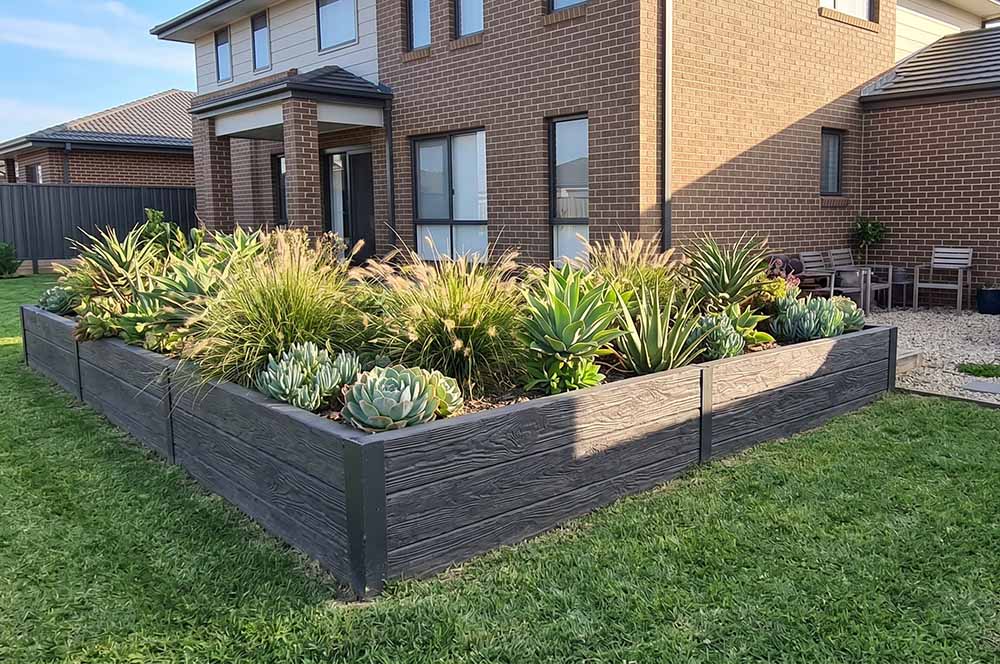
From normal viewing distance, a quality woodgrain finish reads convincingly as timber. Up close, a careful eye can tell the difference, but for a retaining wall viewed day to day, most people find the visual result genuinely comparable.
Can I mix timber and concrete sleepers in the same wall?
Technically possible, but not common practice, since the two materials have different post and footing requirements suited to their own weight and structural properties. Most projects choose one material for the full wall rather than mixing them.
Is a concrete wall harder to install than timber?
Concrete sleepers are heavier than timber of the same dimensions, which can mean more physical effort or machinery on tight-access sites. The post and footing process itself is essentially the same for both materials, so the main practical difference is handling weight rather than installation complexity.
Do I need council approval for either material?
Approval requirements depend on wall height, site conditions and your local council — not on which sleeper material you choose. Walls over about 1.0m, near boundaries, or supporting a driveway commonly need engineering or council sign-off regardless of whether you build in timber or concrete. Always confirm with your local council before ordering.
Which material is better for a coastal property?
Concrete generally holds up better in coastal conditions, since salt-laden air and higher humidity accelerate timber weathering more than they affect a well-made concrete sleeper. If a coastal build is on your radar, this is one of the clearer situations where the case for woodgrain concrete strengthens.



Leave a comment (all fields required)