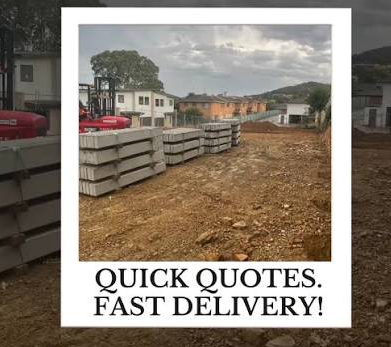
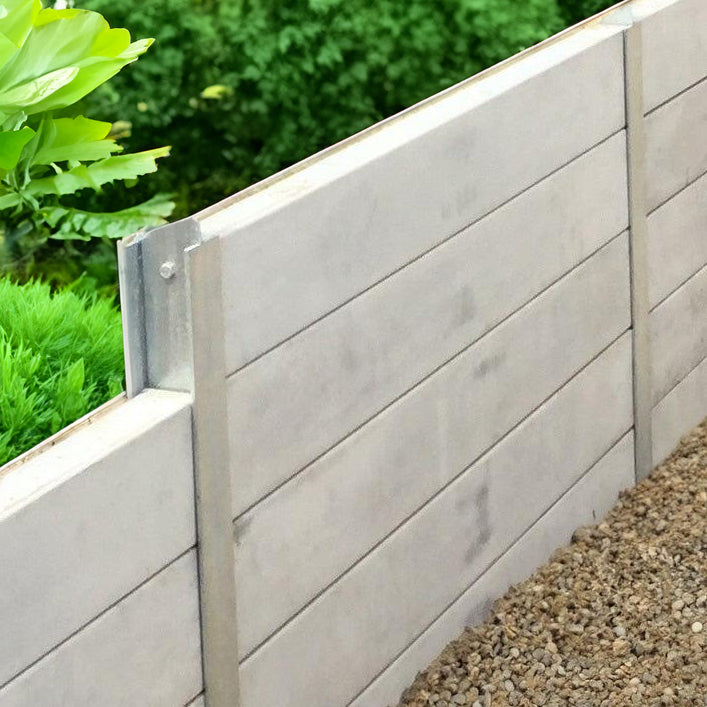
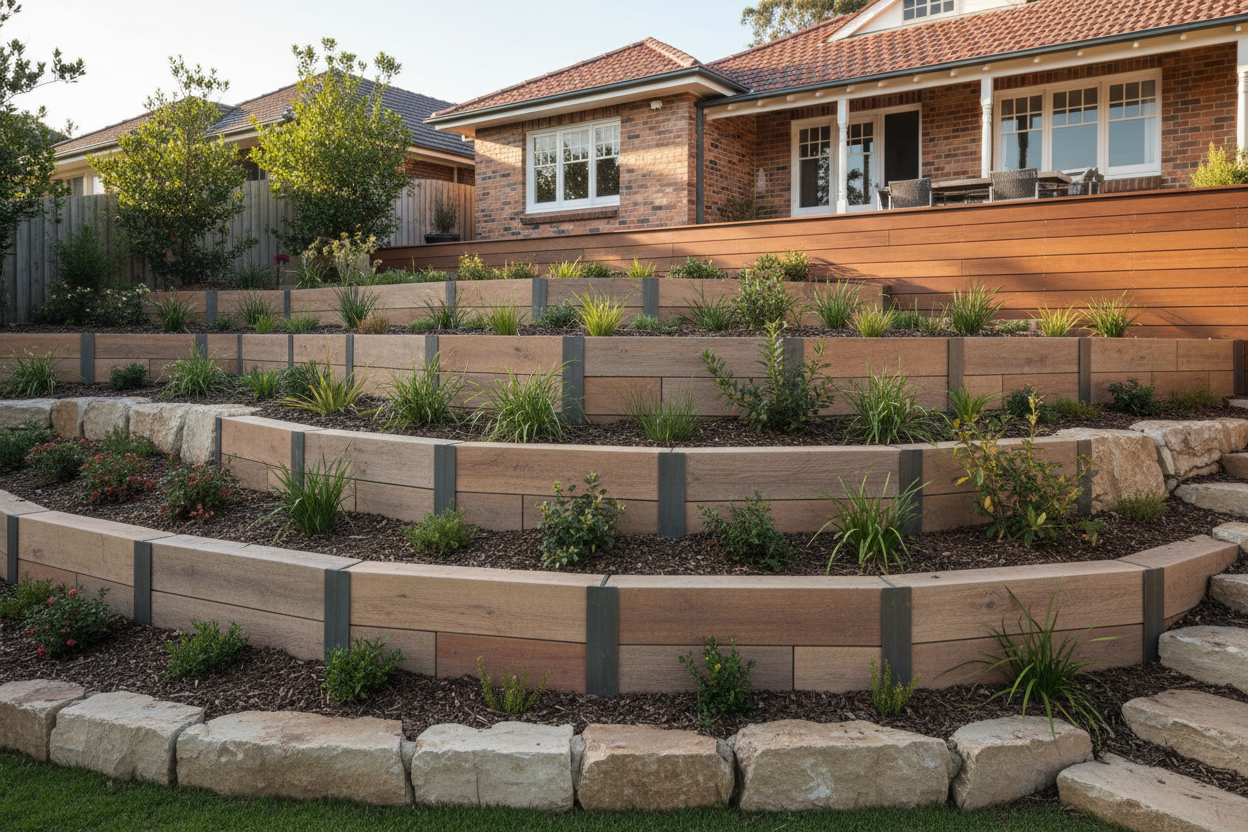
Retaining Walls Direct supplies concrete sleepers, galvanised steel posts, and drainage kits direct to the Gold Coast and surrounding South East Queensland — crane truck delivery to your site across Surfers Paradise, Robina, Coomera, Ormeau, Mudgeeraba, Tallai, Worongary, Nerang, Currumbin, Tweed Heads, and the Gold Coast Hinterland. No depot markups — direct-to-site pricing with freight calculated to your postcode before you pay.
The Gold Coast is the most geologically diverse coastal city in Queensland. You can have beach sand 500 metres from reactive clay hinterland soils — and the retaining wall specification changes dramatically between the two. Use the zone selector below to find the correct specification for your specific location, or read the full Gold Coast retaining walls overview for detailed guidance by suburb.
Zone specification selector
Select your zone — the correct specification appears instantly. Send your details and we'll respond with a delivered price within one business day.
The Gold Coast's geology splits into four distinct zones — each with different soil classification, approval requirements, and specification. No other Queensland city has this level of variation within a single metro area.
Note: Tweed Heads, Banora Point, Kingscliff and surrounding areas fall within NSW jurisdiction — the approval threshold drops to 600mm (not 1.0m). See the approval section below.
Acid sulfate soils (ASS) are estuarine sediments that release sulfuric acid when disturbed during excavation. On the Gold Coast, they are most commonly found in canal estates, low-lying coastal areas, and former tidal wetlands — the very areas where retaining walls are most frequently built. When acid sulfate soils are present:
Check the Gold Coast City Plan acid sulfate soil overlay for your property address before ordering materials or commencing earthworks. If your site is in a mapped ASS area, engage a geotechnical consultant before designing the wall.
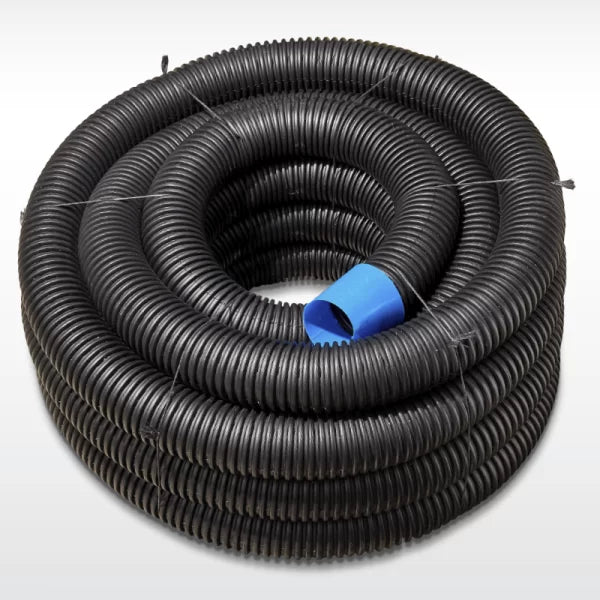
The Gold Coast receives over 1,300mm of annual rainfall — with intense summer storm events commonly delivering 100mm+ in a single day. On hinterland clay sites, summer rainfall generates extreme hydrostatic pressure behind retaining walls. On canal estates, the permanent high water table creates constant background pressure. Every Gold Coast retaining wall must include:
Full installation detail: Gold Coast retaining wall drainage guide.
All posts are hot-dip galvanised to AS/NZS 4680 — the only specification suitable for the Gold Coast's coastal salt air environment and potential acid sulfate soil sites. See the steel post sizing guide for the full embedment table by soil class and wall height.
| Post series | Wall height | Gold Coast application |
|---|---|---|
| 100 Series H-beam | Up to 600mm | Verified deep-sand coastal flat sites only — garden load, no surcharge |
| 150 Series H-beam | 600mm–1.0m | Standard coastal and suburban sites — most Gold Coast residential walls |
| 200 Series H-beam | Over 1.0m, or any canal / hinterland site | Canal estates, hinterland clay, pool surrounds, driveway surcharge, engineer-specified |
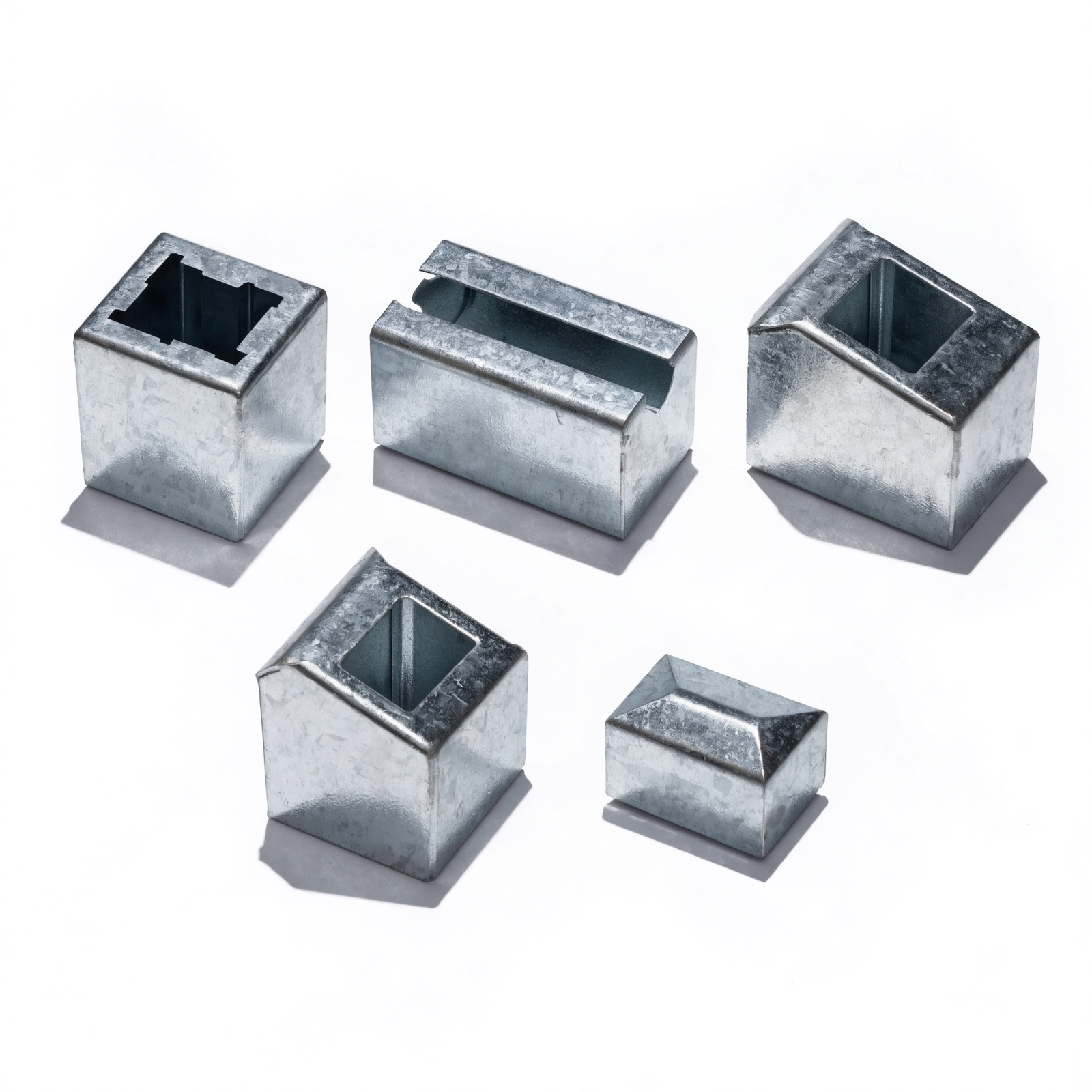
Browse the full galvanised steel post range or C-channel PFC posts for wall ends, corners and returns.
Gold Coast (QLD jurisdiction) — under the Building Act 1975 (QLD) and Gold Coast City Plan 2016:
Confirm with City of Gold Coast Council before commencing work. Full detail: QLD retaining wall regulations guide.
Tweed Heads, Banora Point, Kingscliff, Cabarita Beach (NSW jurisdiction) — under the NSW SEPP (Exempt and Complying Development Codes) 2008: walls over 600mm require a CDC and walls over 1.0m require a DA with engineering certification. Confirm with Tweed Shire Council.
Yes, without exception. Canal-front properties have a permanently high water table and tidal influence — creating constant hydrostatic pressure behind retaining walls. Additionally, canal estate sites may have acid sulfate soils that release sulfuric acid when disturbed during excavation, affecting both concrete and steel specification. Check the Gold Coast City Plan ASS overlay for your address before ordering. See the canal zone selector above for the full specification.
Hinterland properties sit on Class H1–H2 reactive clay derived from weathered granite and basalt, with rainfall up to 3,000mm per year on Springbrook. 50MPa sleepers with 150–200 Series H-beam posts, footings of minimum 900mm depth, and full ag pipe drainage are the minimum correct specification. All walls over 1.0m require a structural engineer. Crane access to Tamborine Mountain and Springbrook sites should be confirmed with our team before ordering — contact us on 1800 880 124.
Pool surrounds need special consideration — the pool structure creates surcharge load on adjacent retaining walls, and pool water leakage can saturate soil behind the wall. For any wall within 3 metres of a pool, specify 50MPa sleepers, 200 Series posts, and engage a structural engineer regardless of wall height.
Yes — significantly. Tweed Heads, Banora Point, Kingscliff and surrounding areas fall under NSW jurisdiction, where the exempt development threshold is 600mm, not 1.0m. A wall that would be exempt in Robina may require a CDC or DA in Tweed Heads. Always confirm with Tweed Shire Council before starting any wall in the border zone.
Yes. Open a trade account for trade rates, volume pricing and priority dispatch to all Gold Coast and SEQ suburbs.
Also delivering across SEQ: Brisbane · Sunshine Coast
For walls over 1.0m, near boundaries, on canal estates, in acid sulfate soil areas, subject to surcharge loads, or in hinterland locations, always engage a structural engineer and confirm QBCC and council approval requirements before ordering materials or commencing construction. All materials comply with AS 4678-2002 Earth Retaining Structures.