


Quick Answer
Woodgrain concrete sleepers work well anywhere you want a natural, timber-inspired look with none of the maintenance — garden borders, boundary walls, driveway retaining walls, and tiered designs on sloping blocks. The finish suits most planting styles, and pairing tone to your home's brick, render or existing timber usually gives the most cohesive result. Browse the full woodgrain concrete sleeper wall ideas range for inspiration, or read on for specific ideas suited to your site.
Whether you're planning a single garden bed or a full street-facing boundary, this guide runs through where woodgrain concrete sleepers work best and how to pair them with the rest of your landscaping — with practical ideas for gardens, boundaries, sloping blocks and everything in between.

Garden and Border Ideas
Garden beds and low borders are some of the simplest, most rewarding places to use woodgrain concrete sleepers, since a small footprint still delivers a big visual impact.
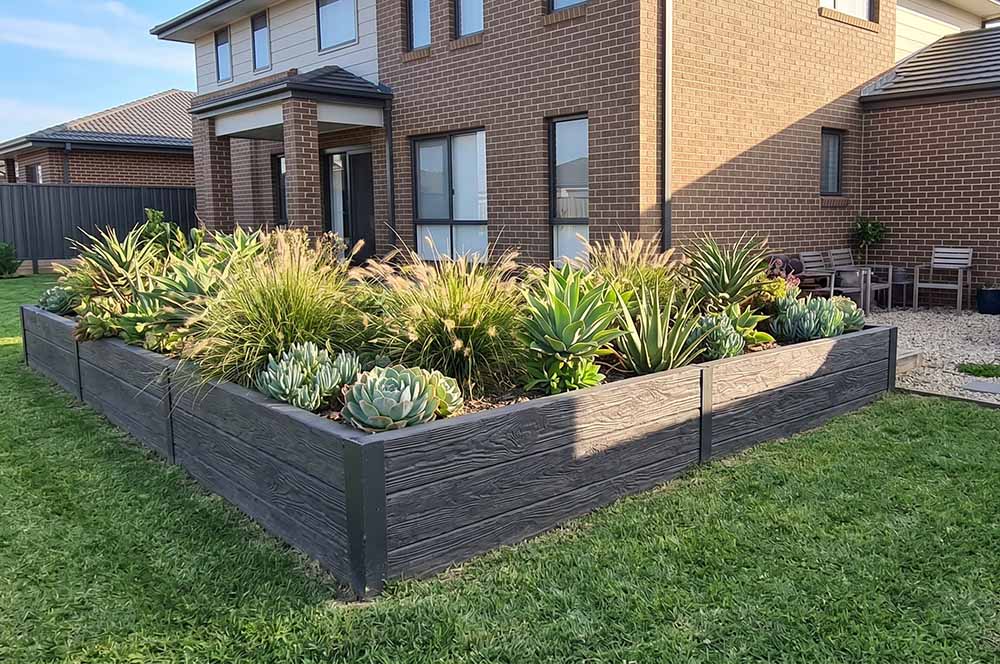
- Raised garden beds — woodgrain sleepers create a warm, defined edge that works well with vegetable gardens or ornamental planting
- Low border walls — separating a lawn from a garden bed, or defining a path edge, without the bulk of a taller structural wall
- Curved or stepped garden edges — shorter sleeper lengths make it easier to follow a curved garden line or step down a gentle slope

Why Gardens Suit Woodgrain So Well
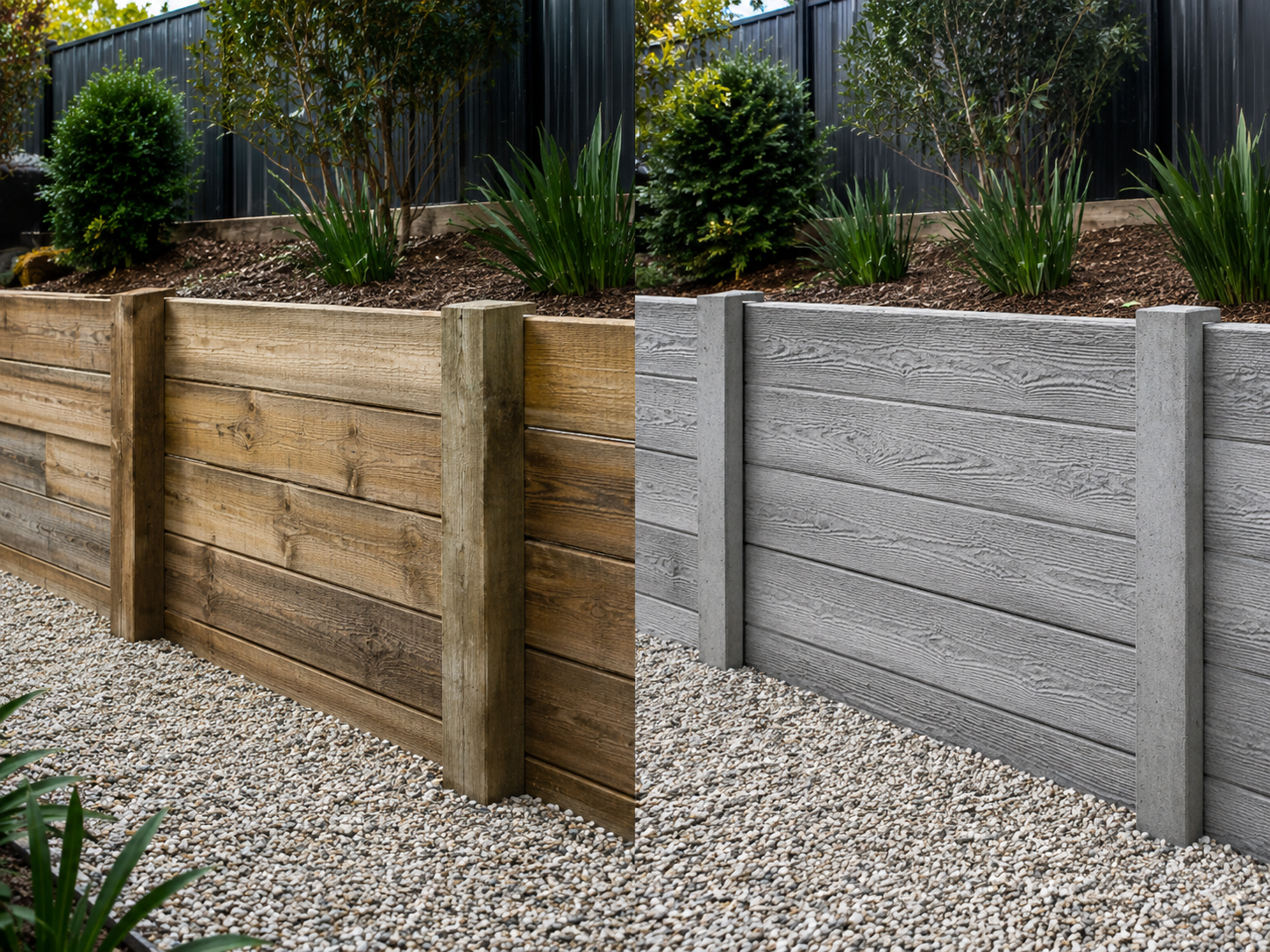
A garden setting is exactly the context woodgrain concrete was designed to sit within — surrounded by planting, soil and natural colour, a timber-look finish reads as an extension of the garden rather than an obviously manufactured structure. Plain grey concrete can look comparatively stark against soft, established planting, whereas woodgrain tends to recede into the garden's overall palette in a way that feels intentional rather than utilitarian.
Combining Heights for Visual Interest
Rather than a single uniform-height border throughout a garden, consider varying sleeper course height across different sections — a single course for a subtle path edge, stepping up to two or three courses around a raised vegetable bed. This kind of variation, using the same finish throughout, creates visual interest without requiring multiple different materials.
A Practical Idea for Vegetable Gardens
Raised vegetable beds built from woodgrain sleepers offer a genuine practical benefit alongside the aesthetic one: a defined, elevated growing area that's easier on the back to tend than an in-ground bed, with a finish that won't rot or need replacing the way a timber-framed raised bed eventually will. Two or three courses is usually enough height for a comfortable growing bed without needing engineering, making this one of the simplest, most accessible ways to bring woodgrain concrete into a garden. It's also worth lining the inside face of a raised bed intended for vegetable growing with a suitable liner, since the drainage requirements for a planted bed differ slightly from a standard retaining wall's drainage zone.
Curved Layouts and Garden Flow
Gardens rarely follow perfectly straight lines, and a woodgrain sleeper border can still follow a curved path or garden bed edge by using shorter sleeper lengths and slightly angling the joins between sections. It won't achieve a perfectly smooth curve the way a poured concrete edge might, but a series of gentle angle changes along a garden path reads naturally in a planted setting and avoids the visual harshness of a rigid straight line cutting through an otherwise organic garden layout.
Boundary and Driveway Walls
For larger, more structural applications, woodgrain concrete sleepers bring the same warmth to a boundary or driveway wall that a smaller garden border achieves on a bigger scale.
- Street-facing boundary walls — where kerb appeal genuinely matters and the timber look creates strong street presence
- Driveway retaining walls — where the added strength grades available in woodgrain concrete comfortably handle surcharge loads from vehicles
- Side and rear boundaries — for a consistent, low-maintenance finish along a full property line
Making a Boundary Wall a Feature, Not Just a Structure
A well-chosen woodgrain tone can turn a purely functional boundary wall into a genuine kerb-appeal feature. Consider how the wall reads from the street at different times of day, and whether a slightly darker or lighter tone than your first instinct might actually stand out more attractively against your home's existing colours — sometimes the safest, most matched option isn't the one that ends up looking best once it's built and viewed from the road.
A Practical Note for Driveway Applications
Driveway walls carry surcharge loads from vehicle weight, which typically calls for a higher strength grade and closer post spacing than a standard garden wall of the same height. This is purely an engineering consideration, not a finish one — woodgrain performs identically to any other finish at the same specification, so don't let finish choice distract from getting the underlying strength grade and post spec right for a driveway application.
Combining a Wall With Fencing Above
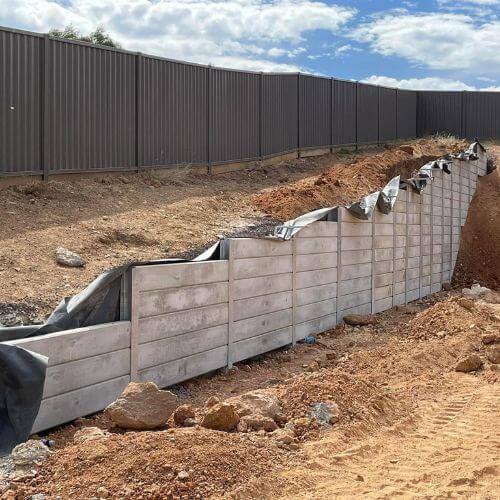
Many boundary walls support a fence built on top, and it's worth considering how a woodgrain sleeper wall will visually relate to whatever sits above it. A timber-look wall paired with an actual timber fence above creates a naturally cohesive material story from ground to fence-top, while a wall paired with a metal or colorbond fence can work well too, provided the fence colour doesn't clash with the chosen woodgrain tone. Planning both elements together, rather than choosing the wall finish in isolation, tends to give a more considered final result.
First Impressions From the Street
A front boundary wall is often the first thing a visitor or passer-by actually notices about a property, ahead of the house itself in many cases, simply because it sits closer to the street. This is worth remembering when weighing up whether the woodgrain premium is justified for a specific wall — a front boundary is exactly the kind of high-visibility application where the extra investment in finish tends to pay off in overall street appeal.
Common mistake: choosing a finish before confirming the wall's engineering requirements. Decide strength grade, post spec and drainage based on wall height, soil type and any surcharge load first — then choose woodgrain, charcoal or smooth as the final cosmetic decision on top of a correctly specified wall.
Tiered and Sloped-Block Designs
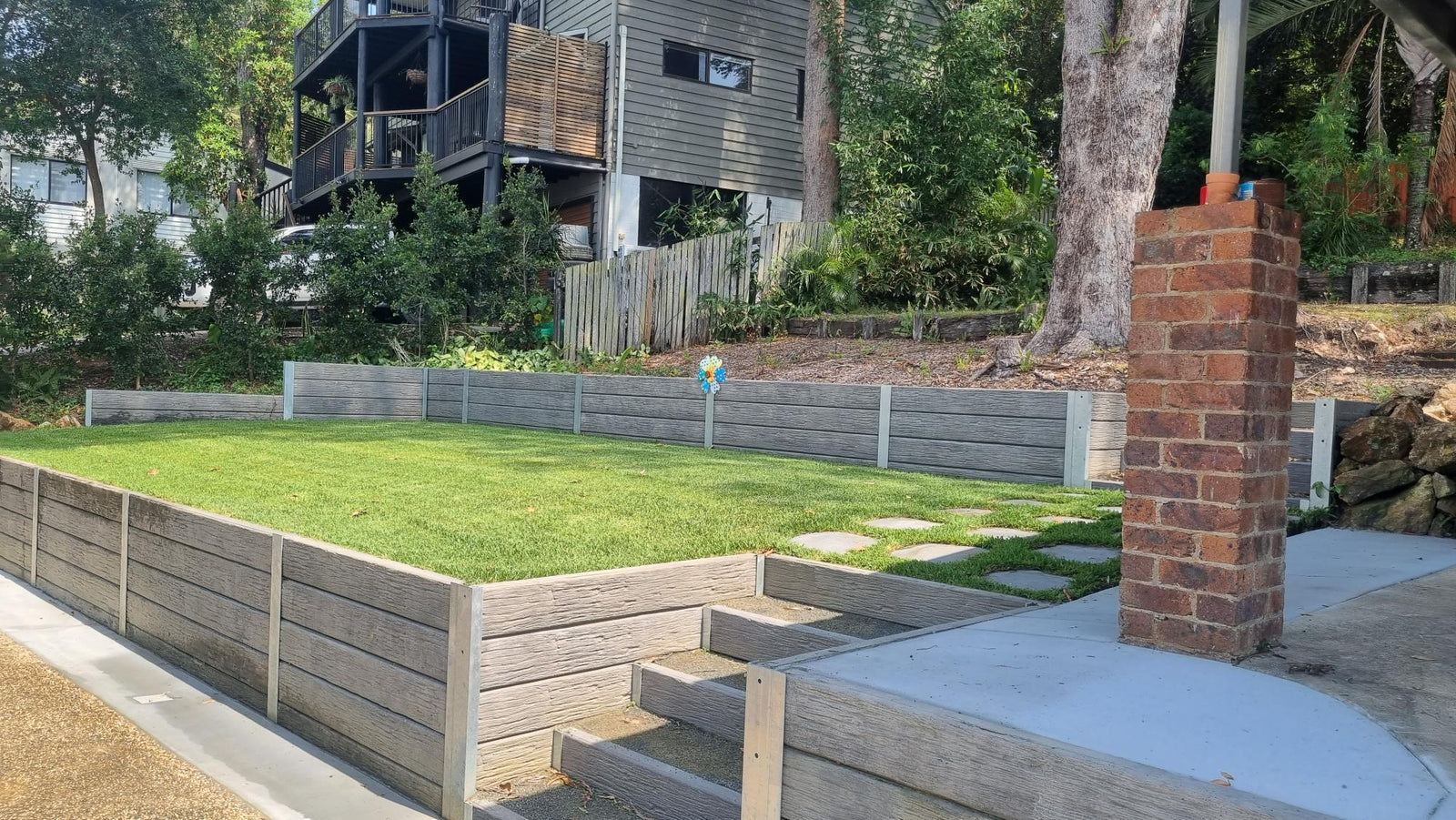
Sloping blocks are one of the more design-rewarding applications for woodgrain concrete sleepers, since a tiered approach can turn an awkward slope into a genuine landscaping asset.

- Stepped tiers — multiple shorter walls, each with its own planting terrace, rather than one very tall single wall
- Level-change entertaining areas — using tiers to create flat, usable outdoor space on a sloping block
- Pool surrounds on a slope — tiered woodgrain walls can frame a pool level while managing the surrounding grade change
Why Tiering Often Beats One Tall Wall
A single very tall retaining wall usually needs a higher strength grade, deeper post embedment, and near-certain engineering sign-off. Splitting the same overall height across two or three shorter tiered walls, each retaining a portion of the slope with a planting terrace between them, can reduce the engineering burden on any single wall while creating far more usable, visually interesting outdoor space than one imposing wall face. Not every site suits tiering — it needs enough horizontal space to step the design back — but where it's possible, it's often both a better design outcome and a more straightforward build.
Consistent Finish Across Multiple Tiers
When building a tiered design, using the same woodgrain finish and colour across every tier creates a cohesive, deliberate look, rather than each tier reading as a separate, disconnected wall. It's worth ordering all tiers' worth of sleepers in one batch where possible, for the same colour-consistency reasons that apply to any single wall — see our how to install woodgrain sleepers guide for the full build sequence, which applies to each tier individually.
Planting Terraces Between Tiers
The flat terrace created between two tiered walls is often the most valuable part of the design — a planting strip that catches more sun than a single steep slope would, and gives roots room to establish properly. Depending on terrace width, this space can host anything from a simple groundcover planting to a genuine garden bed with shrubs or even small trees, turning what would otherwise be an awkward slope into productive, usable garden space.
Sloped Blocks Near a Pool
Pool installations on sloping blocks often need retaining walls to create a level pool surround, and woodgrain concrete brings a warm, resort-style aesthetic to this application that plain grey concrete typically doesn't achieve as convincingly. Paired with timber-look decking or paving, a tiered woodgrain wall around a pool level can create a strongly cohesive outdoor entertaining area rather than a purely functional retaining structure.
Pairing Woodgrain With Landscaping
The finished result of a woodgrain wall depends as much on what's planted around it as the sleepers themselves.
- Native and coastal planting — grasses, succulents and native shrubs pair naturally with weathered, driftwood-style woodgrain tones
- Traditional garden beds — roses, hedging and structured planting suit a natural mid-brown tone well
- Minimalist, architectural planting — a single statement tree or sculptural plant against a darker woodgrain tone can create a striking, considered look

Letting Planting Soften a New Wall
A brand-new wall, even in a convincing woodgrain finish, can initially look slightly stark until surrounding planting has had time to establish. Trailing or spilling plants along the top edge of a wall, and garden beds planted close to its base, both help a new wall settle visually into its surroundings faster than a bare wall face with no adjacent greenery.
Lighting a Woodgrain Wall at Night
Low-voltage garden lighting angled up or across a woodgrain wall face can dramatically enhance the timber-grain texture after dark, since raking light brings out shadow detail in the grain lines the same way natural low-angle sunlight does during the day. This is a relatively low-cost addition worth considering at the design stage, particularly for a feature boundary wall that's visible from inside the house in the evening.
Matching Paving and Hard Landscaping
Beyond planting, paving colour and material also play a role in how a woodgrain wall reads within its setting. Warm-toned pavers — sandstone, terracotta, or warm grey — tend to complement woodgrain tones more naturally than very cool, blue-grey paving, which can create a slightly disjointed feel between the wall and the ground plane beneath it. If you're designing paving and walling together as part of a broader landscaping project, it's worth choosing both with the same overall palette in mind rather than selecting each independently.
Seasonal Considerations for Planting
Different planting styles bring out different qualities in a woodgrain wall across the seasons. Deciduous planting near a wall changes the amount of shadow and dappled light hitting the grain texture throughout the year, while evergreen and native planting keeps a more consistent look year-round. Neither approach is wrong, but it's worth considering which effect you'd prefer — a wall that changes character with the seasons, or one that maintains a consistent appearance — when choosing what to plant nearby. Australian native grasses in particular tend to move well in the wind against a fixed, textured wall backdrop, adding a layer of movement that a static hard-landscaped area alone wouldn't provide.
Building It: Where to Start
Once you've settled on where and how you'd like to use woodgrain concrete sleepers, our how to install woodgrain sleepers guide covers the full installation process — posts, drainage and sleeper placement — in detail.
Sketching Before You Order
Before ordering materials, it's worth sketching your intended design — even roughly — including wall heights at each point, any tiers or steps, and planting positions along the top and base. This simple step often reveals adjustments worth making before committing to an order, such as whether a single tall wall might work better split into two shorter tiers, or whether a curved garden edge needs shorter sleeper lengths than a straight boundary run.
Getting Inspiration From Real Installations
Beyond a rough sketch, looking at real, installed woodgrain walls — whether in person, through a supplier's project gallery, or via a landscaper's portfolio — gives a far better sense of how a design idea will actually look than a sketch or a single product photo can. If a particular idea in this guide appeals to you, it's worth asking your supplier whether they can point you to a similar completed project for reference before finalising your own design. Seeing how light, planting and surrounding materials interact with a real wall over time is genuinely more useful than any number of product photographs taken in isolation.
Questions Worth Asking Before You Start
Can woodgrain sleepers be used for both garden beds and structural walls?
Yes — the same sleeper range covers everything from a low, unengineered garden border through to a taller, engineered boundary or driveway wall. The finish stays consistent; only the strength grade, thickness and post spec change with the application.
Do I need a different design approach for a small garden versus a large property?
Not fundamentally — the same principles around matching tone to your palette, considering planting, and getting engineering right at height thresholds apply regardless of scale. Smaller gardens simply have less room to experiment with multiple tiers or long boundary runs.
How do I know if my slope needs a tiered design or a single wall?
It largely comes down to available horizontal space. If your site has enough depth to step a design back in stages, tiering is often the better outcome both structurally and visually. On a tight site without that space, a single, correctly engineered wall may be the only practical option.
Will a woodgrain wall clash with an existing timber deck or fence?
Generally not, provided you choose a woodgrain tone that complements rather than exactly tries to match the existing timber's colour. A close but not identical match often looks more natural than an attempted exact colour match, since real timber elements weather and vary in tone over time in ways a manufactured finish won't perfectly replicate.
Get the Look
Ready to bring one of these ideas to life? Shop the woodgrain range to see current sizes, colours and pricing, and if you're still weighing up which application suits your site — garden border, boundary wall, or a tiered slope design — our team can talk through your specific project before you commit to an order.



Leave a comment (all fields required)