











A retaining wall that supports a driveway is one of the most demanding applications in residential construction. The combination of retained soil pressure and the surcharge load from vehicles above the wall places significantly greater forces on the structure than a standard garden retaining wall. Get the specification wrong and the wall will fail — often suddenly and with little warning.
This guide covers what makes driveway retaining walls different, what you need to specify correctly, and when you must get engineering sign-off before starting work.
What Is a Surcharge Load?
A surcharge load is any load applied to the soil above the retained face of the wall — in addition to the weight of the soil itself. For driveway retaining walls, the surcharge load is the weight of vehicles (cars, utes, trucks, trailers) driving or parking on the driveway above the wall.
Vehicle surcharge loads are significant. A standard passenger vehicle weighs 1,500–2,500kg. A loaded ute or SUV can exceed 3,000kg. This load is transmitted through the driveway surface into the soil, increasing the lateral pressure on the retaining wall. The closer the driveway is to the top of the wall, the greater the effect. Read our full guide on what surcharge loads are and why they matter.
Why Driveway Retaining Walls Are Different
Standard residential garden retaining walls are designed for earth pressure only — the lateral pressure from the retained soil. Driveway retaining walls must be designed for earth pressure plus vehicle surcharge load. This typically means:
- Heavier posts — H-beam (UC) posts are almost always required for driveway retaining walls, regardless of wall height. C-channel posts are generally not adequate where vehicle surcharge loads are present.
- Deeper embedment — the in-ground portion of the post must be deeper to resist the increased overturning moment from the combined earth and surcharge load.
- Closer post spacing — post spacing may need to be reduced to limit the bending moment on each post.
- Thicker sleepers — 200x100mm sleepers are typically specified for driveway walls rather than 75mm.
- Engineering sign-off — virtually always required. See below.
Engineering Is Almost Always Required
For any retaining wall with a vehicle driveway above it, engineering sign-off from a licensed structural engineer is strongly recommended — and in most Australian states, legally required for council approval.
Do not attempt to specify a driveway retaining wall from a buying guide alone. The consequences of underspecification are serious: wall failure can damage vehicles, injure people, damage neighbouring property, and expose you to significant liability.
A structural engineer will assess your specific site conditions — soil type, wall height, driveway proximity, vehicle loads — and specify the correct post type, size, spacing, embedment depth, and sleeper thickness. See our guide on retaining wall height limits and council approval to understand the approval process in your state.
Council Approval for Driveway Retaining Walls
In all Australian states, retaining walls with vehicle surcharge loads require council approval — regardless of wall height. This is because the surcharge load changes the structural classification of the wall. Even a 600mm wall retaining a driveway will typically require a building permit or development approval with engineering certification.
Check with your local council before starting any work. For state-specific guidance, see our state regulation guides:
- NSW retaining wall regulations
- VIC retaining wall regulations
- QLD retaining wall regulations
- WA retaining wall regulations
- SA retaining wall regulations
Typical Material Specification for Driveway Retaining Walls
While every driveway retaining wall must be individually engineered, the following is a typical starting-point specification for standard residential driveway walls in normal soil conditions:
- Sleepers: 200x100mm heavy duty concrete sleepers — the additional thickness provides greater bending strength between posts.
- Posts: H-beam (UC) steel posts — hot-dip galvanised, sized and spaced to engineer's specification.
- Post embedment: Greater than the standard one-third rule — confirm with engineer.
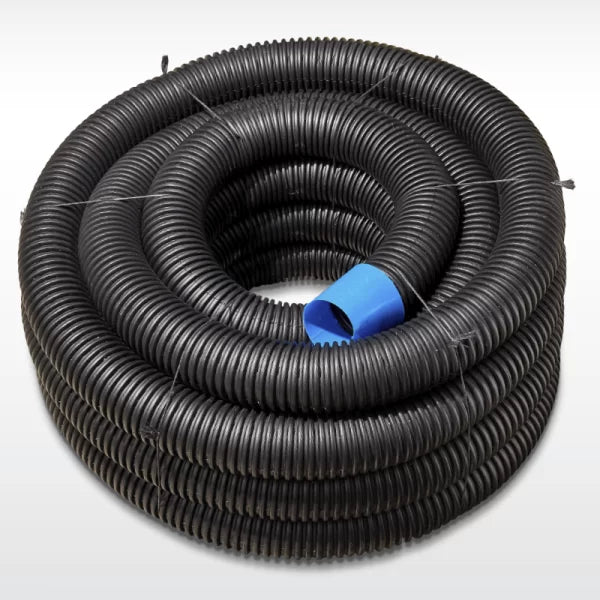
- Drainage: Full drainage system including ag pipe, geotextile fabric, and weep holes is essential. Hydrostatic pressure behind a driveway wall is a serious failure risk.
- Concrete: Engineer will specify concrete strength for post footings — typically higher than standard residential.
Drainage Is Critical for Driveway Walls
Driveway surfaces are largely impermeable — rainwater that falls on the driveway runs off the surface and concentrates at the edges, often directly above the retaining wall. This concentrated water infiltrates the soil at the wall face and dramatically increases hydrostatic pressure behind the wall.
A full drainage system — ag pipe, geotextile fabric, drainage aggregate, and weep holes — is not optional for driveway retaining walls. It is a fundamental part of the structural system. See our full guide on retaining wall drainage.
Driveway Setback from the Wall
The closer the driveway edge is to the top of the retaining wall, the greater the surcharge load effect on the wall. Where possible, maintain a setback of at least 1.0–1.5m between the driveway edge and the top of the wall. This setback allows the vehicle load to disperse through the soil before reaching the wall face, reducing the effective surcharge load.
Where a setback is not possible — for example, where the driveway runs directly along the top of the wall — the wall must be designed for the full vehicle surcharge load at the wall face. This typically requires a more substantial post specification and closer post spacing.
Frequently Asked Questions
Do I need engineering for a retaining wall under a driveway?
Yes, in virtually all cases. Any retaining wall with a vehicle driveway above it requires engineering sign-off in Australia, regardless of wall height. The vehicle surcharge load changes the structural requirements of the wall and triggers council approval requirements in all states.
Can I use C-channel posts for a driveway retaining wall?
Generally no. H-beam (UC) posts are almost always required where vehicle surcharge loads are present. C-channel posts do not have adequate bending strength for driveway applications in most cases. Confirm with your structural engineer.
What sleeper thickness do I need for a driveway retaining wall?
200x100mm sleepers are typically specified for driveway retaining walls. The additional thickness provides greater bending strength between posts under the combined earth and surcharge load. See our guide on 75mm vs 100mm concrete sleepers.
How close can a driveway be to a retaining wall?
There is no fixed minimum setback — the required setback depends on the wall height, soil conditions, and vehicle loads, and is determined by the structural engineer. As a general guide, a setback of 1.0–1.5m reduces the effective surcharge load significantly. Where no setback is possible, the wall must be designed for the full vehicle load at the wall face.
Ready to Discuss Your Project?
Driveway retaining walls require individual engineering assessment. Browse our H-beam post range and 100mm heavy duty sleepers, or contact our team to discuss your driveway retaining wall project before ordering materials.
Ready to get started?
Get a free delivered quote for concrete sleepers, steel posts and retaining wall materials — delivered Australia-wide.
Leave a comment (all fields required)