

Materials
What are concrete sleepers made of?
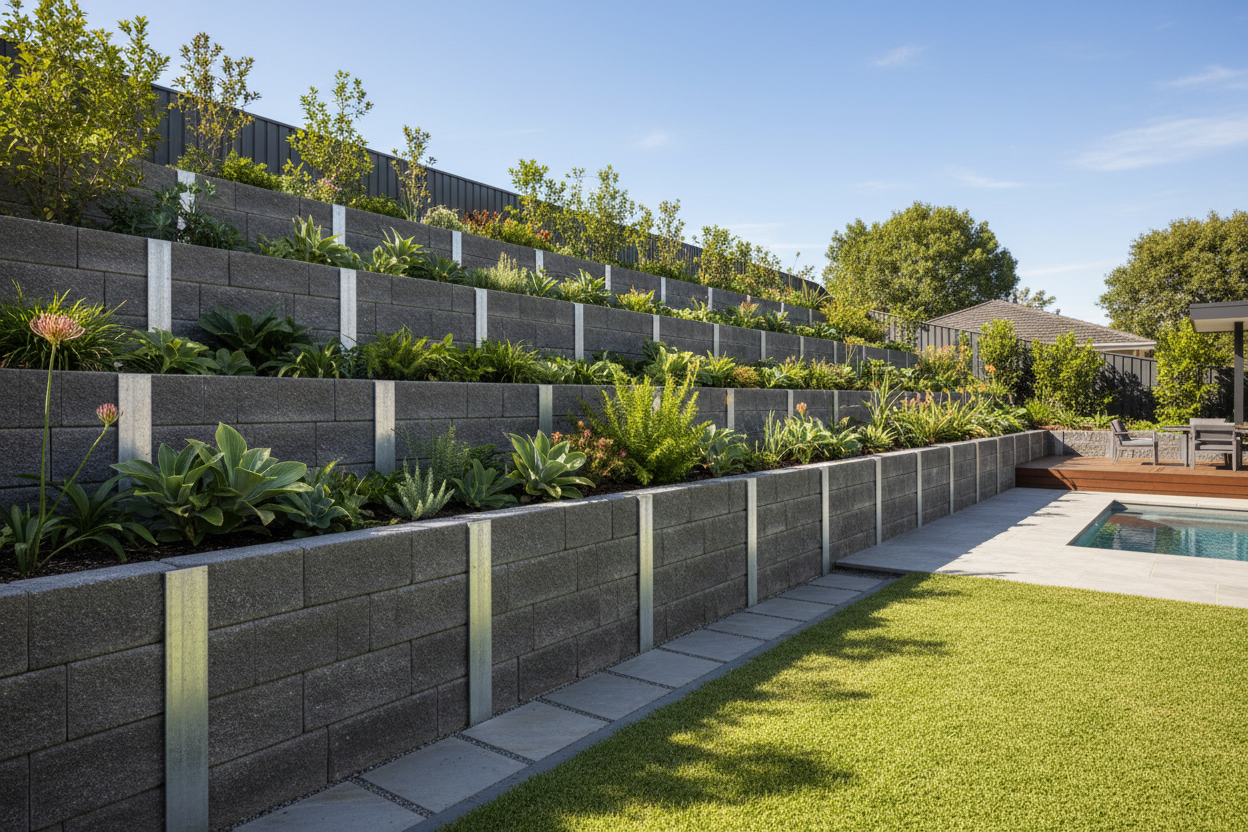
Concrete sleepers are precast reinforced concrete units. They contain a steel reinforcing cage (rebar or mesh) embedded in concrete, which gives them their bending strength. The concrete mix is typically a high-strength formulation designed for structural applications. The surface finish (charcoal, woodgrain, or smooth) is applied during casting using a textured mould or pigment.
How long do concrete sleeper retaining walls last?
Concrete sleeper walls with hot-dip galvanised steel posts and proper drainage are designed to last 50+ years in Australian conditions. The concrete itself is essentially permanent; the galvanised steel posts have a design life of 50+ years in standard soil conditions. With correct drainage, a concrete sleeper wall built today should still be performing in 40–50 years.
How long do timber sleeper retaining walls last?
H4 or H5 treated pine sleepers typically last 10–15 years in most Australian conditions. In heavy clay soils, high-moisture environments, or coastal areas, the realistic lifespan is often 8–12 years. See our full comparison: Concrete Sleepers vs Timber Sleepers.
What is the difference between 75mm and 100mm sleepers?
Both are 200mm high and 2000mm long. The 100mm sleeper is thicker and has significantly greater bending strength — approximately 2.4 times stronger in bending than a 75mm sleeper. 75mm sleepers suit most residential walls under 1.0–1.2m in standard soil. 100mm sleepers are specified for taller walls, heavy clay soils, or surcharge loads. See our guide: What Size Concrete Sleepers Do I Need?
What finishes are available?
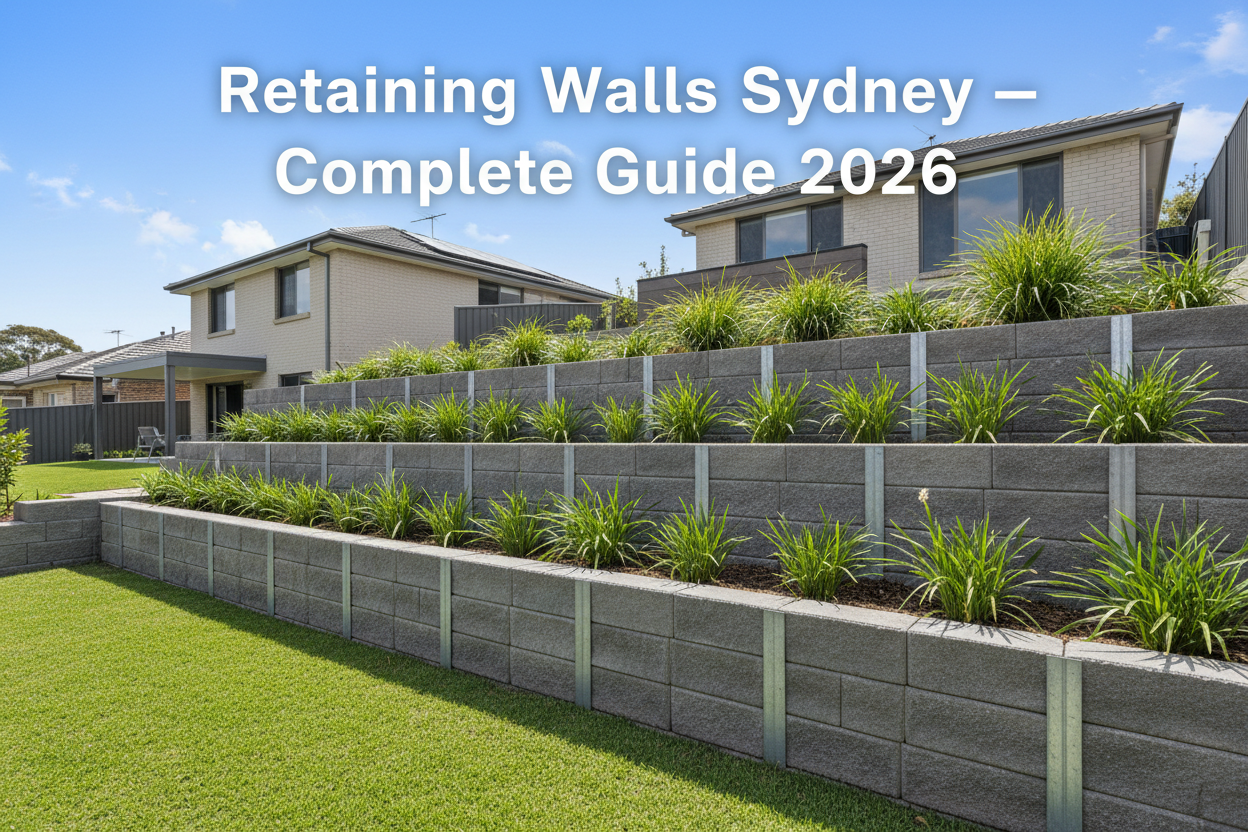
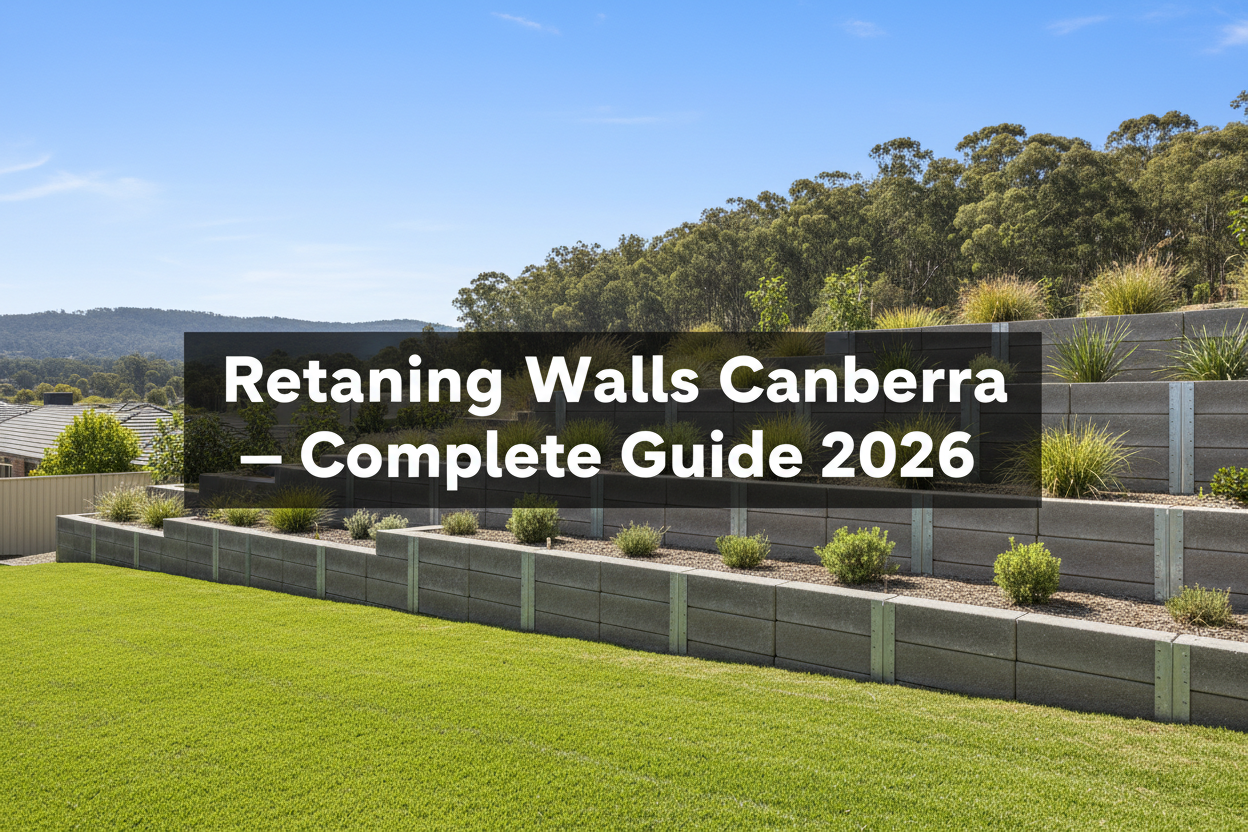
Three finishes: charcoal (dark grey, contemporary), woodgrain (natural timber look), and smooth finish (paintable, renderable). All three are available in 75mm and 100mm thickness. See our comparison: Charcoal vs Woodgrain vs Smooth Finish.
Can concrete sleepers be painted or rendered?
Yes. Smooth finish sleepers are the best base for painting and rendering. Allow a minimum of 28 days curing time before painting. Use an exterior-grade masonry paint with a concrete primer. See our guide: How to Render or Paint a Concrete Sleeper Retaining Wall.
Posts
What is the difference between C-channel and H-beam posts?
C-channel (PFC) posts are cost-effective for standard residential walls under 1.0–1.2m in normal soil. H-beam (UC) posts have significantly greater bending strength and are specified for taller walls, heavy clay soils, surcharge loads, or where an engineer has specified UC posts. See our guide: C-Channel vs H-Beam Posts.
Are all posts hot-dip galvanised?
Yes. All posts we supply — C-channel, H-beam, corner, joiner, and end posts — are hot-dip galvanised as standard. Hot-dip galvanising is the minimum specification for in-ground steel posts in Australian conditions.
How long should my posts be?
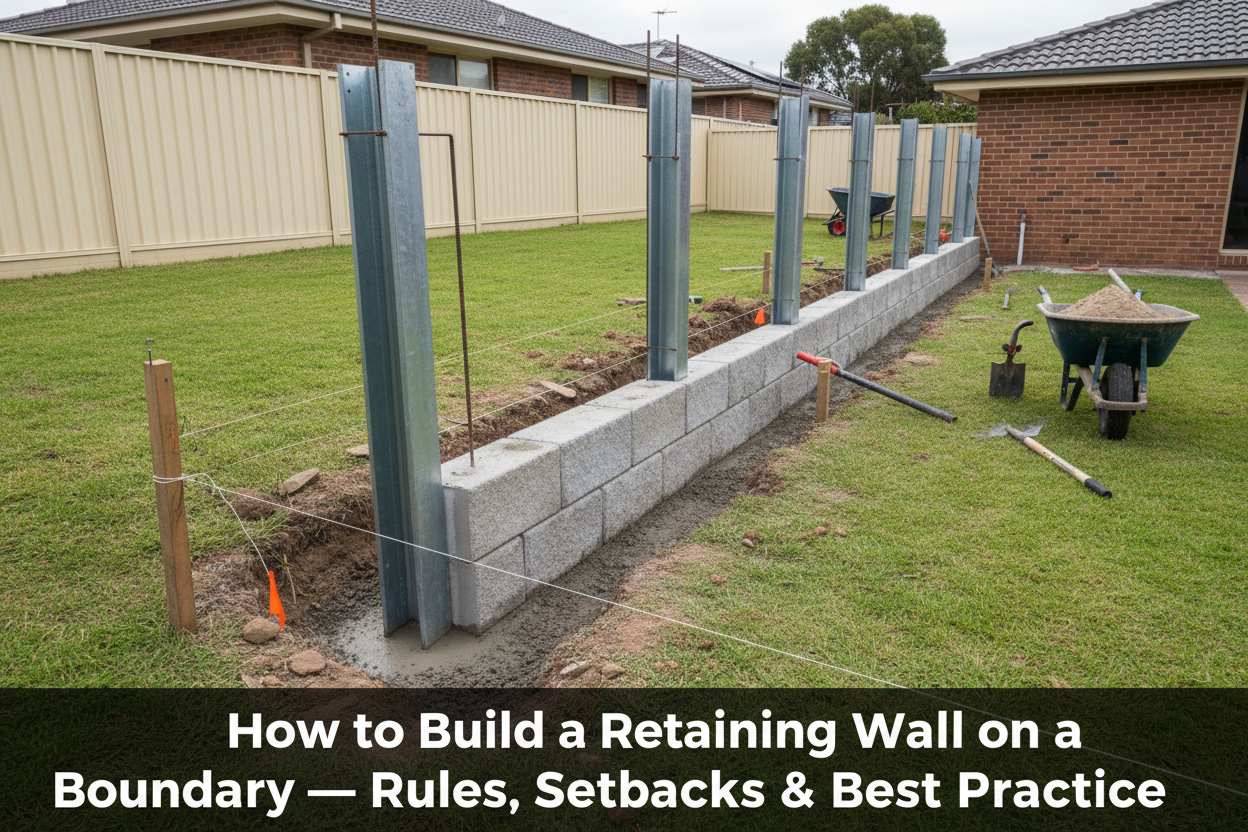
Post length must account for both the above-ground wall height and the in-ground embedment depth. As a general rule, the in-ground portion should be at least one-third of the total post length. For a 1.0m wall: minimum 1.5m post (500mm in ground, 1000mm above). For a 1.2m wall: minimum 1.8m post. See our guide: Retaining Wall Footings.
What post spacing should I use?
Standard post spacing is 1.8–2.0m centres for most residential walls under 1.0m in standard soil. Reduce spacing for taller walls, heavy clay soils, or surcharge loads. For walls over 1.0m, confirm spacing with a structural engineer. See our guide: Retaining Wall Post Spacing.
Drainage
Do I need drainage behind my retaining wall?
Yes, always. Drainage is not optional — it is the most important factor in long-term wall performance. Without ag pipe, geotextile fabric, drainage aggregate, and weep holes, hydrostatic pressure will build behind the wall and cause failure over time. See our guide: Retaining Wall Drainage Guide.
What does a drainage kit include?
Our drainage kits include slotted ag pipe (with geotextile sock), geotextile filter fabric, and weep hole fittings — everything needed for the drainage system in one order.
What size ag pipe do I need?
100mm diameter slotted ag pipe is the standard specification for most residential retaining walls. See our guide: Ag Pipe for Retaining Walls.
What is geotextile fabric and why do I need it?
Geotextile filter fabric is laid between the retained soil and the drainage aggregate. It allows water to pass through while preventing fine soil particles from migrating into the drainage aggregate and blocking it over time. Without geotextile fabric, the drainage system will eventually silt up and fail. See our guide: Geotextile Fabric Guide.
Engineering and Council Approval
Do I need council approval for a retaining wall?
In most Australian states, walls over 1.0m require council approval. Walls near boundaries, easements, or structures may require approval at lower heights. Requirements vary by state and local council. See our guide: Retaining Wall Height Limits & Council Approval.
Do I need an engineer for my retaining wall?
Engineering sign-off is strongly recommended for walls over 1.0m, walls near boundaries or structures, walls retaining driveways or vehicles, or walls in heavy clay soils. It is typically required for council approval for walls over 1.0m. See our guide: Council Approval Guide.
What is a surcharge load?
A surcharge load is any load above the retaining wall that adds to the lateral pressure the wall must resist — driveways, vehicles, structures, or stored materials. Surcharge loads require engineering sign-off and typically require H-beam posts and 100mm sleepers. See our guide: What Is a Surcharge Load?
Quantities and Costs
How many sleepers and posts do I need?
Use our step-by-step quantity calculation guide: How to Calculate How Many Sleepers and Posts You Need. Or contact our team with your wall dimensions and we'll help you calculate quantities.
How much does a retaining wall cost?
For a concrete sleeper wall, expect approximately $250–$450 per lineal metre for materials only (standard 1.0m wall), or $600–$1,200+ per lineal metre installed. See our full cost guide: Retaining Wall Cost Australia.
Delivery
Do you deliver across Australia?
Yes. We deliver concrete sleepers and steel posts across Australia. Delivery is by flatbed or crane-lift truck depending on order size and site access. Contact our team to confirm delivery availability, lead times, and access requirements for your location.
What site access do I need for delivery?
Delivery is by flatbed or crane-lift truck. Confirm with our team whether your site requires crane-lift delivery (for difficult access) or standard flatbed delivery. Advise our team of any access restrictions (gate width, overhead clearance, surface type) when placing your order.
Installation
Can I build a retaining wall myself?
For walls under 1.0m in standard soil conditions without surcharge loads or boundary issues, DIY construction is generally feasible for a competent builder. For walls over 1.0m, near boundaries, or in complex soil conditions, council approval and engineering sign-off are typically required. See our installation guide: How to Build a Concrete Sleeper Retaining Wall.
How long does it take to build a retaining wall?
For a standard residential wall of 10–15m, an experienced team typically takes 1–2 days for installation, plus concrete curing time (24 hours for rapid-set concrete) before backfilling. DIY installation takes longer. Factor in delivery lead times when planning your project timeline.
Have a Question Not Answered Here?
Contact our team — we're here to help you confirm the right specification and quantities for your project before you order. Browse our full range of concrete sleepers and steel posts.