
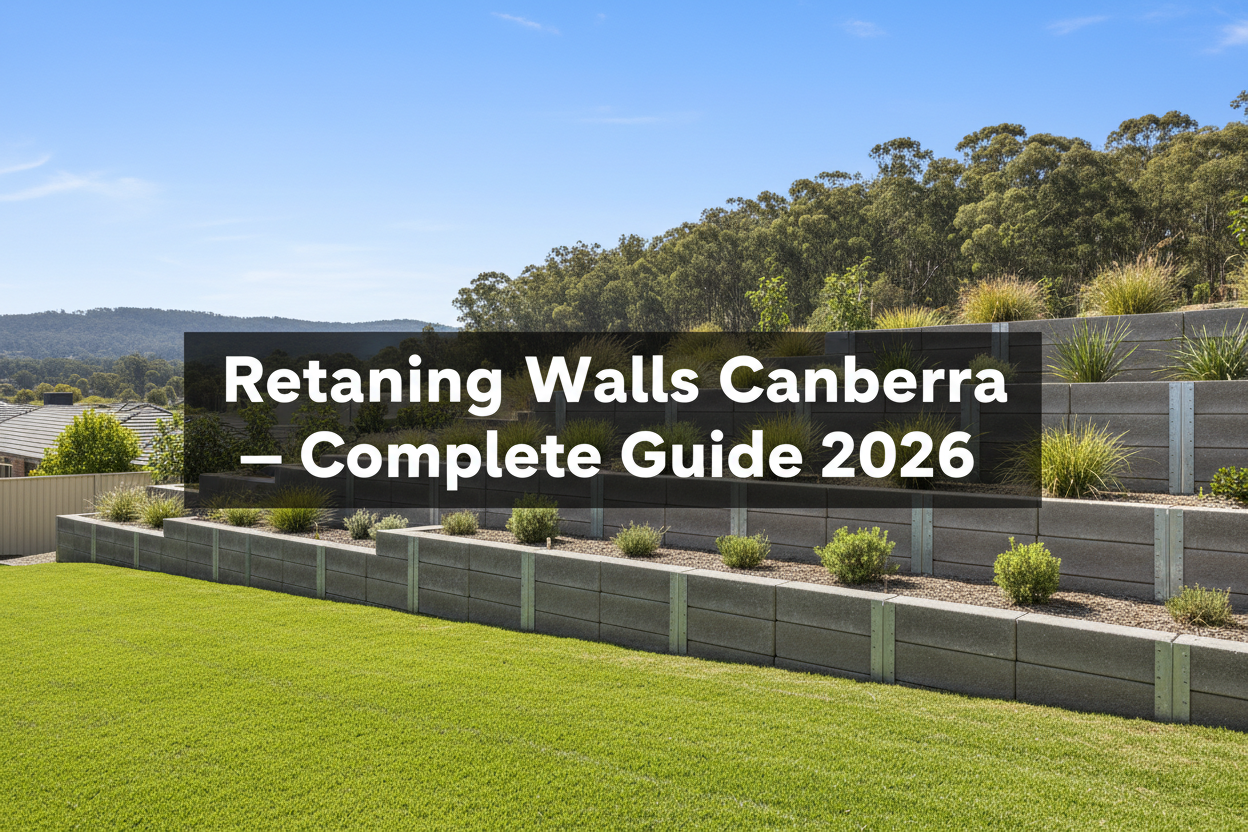

Retaining Walls Canberra — What You Need to Know in 2026
Building a retaining wall in Canberra presents a unique set of challenges not found in any other Australian capital city. Canberra's cold winters, regular ground frost, reactive clay soils across much of the ACT, and the ACT Government's development approval framework all influence how retaining walls must be designed, specified, and built. Get it wrong and you'll be dealing with frost heave, wall movement, and potential compliance issues. This guide covers everything Canberra homeowners, landscapers, and builders need to know to get their retaining wall right the first time.
Written by Lee Bradley, with 40+ years of hands-on experience building retaining walls across Australia, including Canberra's challenging alpine climate conditions.
Canberra Soil Types & Frost Considerations
Reactive Clay Soils — Most of the ACT
The majority of Canberra's residential suburbs sit on reactive clay soils derived from granite and sedimentary rock weathering. These soils expand when wet and contract when dry, placing cyclic lateral loads on retaining wall structures. Canberra's wet winters and dry summers create a pronounced shrink-swell cycle that is more extreme than most Australian cities. For reactive clay sites across Canberra:
- Specify 50MPa concrete sleepers for all walls
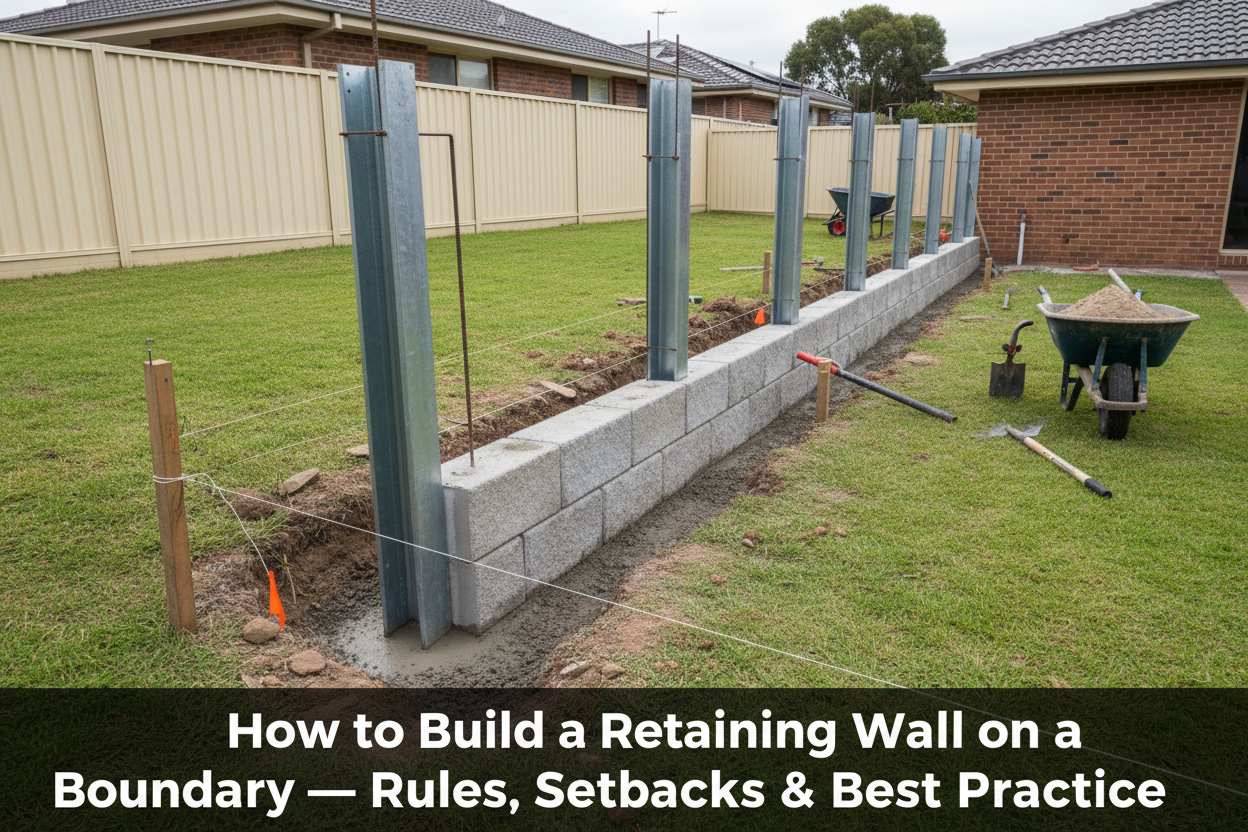
- Specify H-Beam (UC) steel posts for all walls over 800mm
- Install drainage behind the wall to manage winter water pressure
Frost Heave — Canberra's Unique Challenge
Canberra experiences regular ground frost from June through August, with minimum temperatures regularly reaching -5°C to -8°C in outer suburbs like Tuggeranong, Gungahlin, and the Brindabella foothills. Ground frost causes the top layer of soil to expand as water freezes, creating upward pressure on retaining wall posts and sleepers. To mitigate frost heave:
- Increase post embedment depth to a minimum of 900mm below finished ground level (deeper than standard residential requirements)
- Use concrete backfill around posts to the frost depth to prevent frost heave movement
- Specify 50MPa sleepers for all Canberra walls — the freeze-thaw cycle degrades lower-strength concrete over time
- Ensure drainage behind the wall prevents water accumulation at the frost depth
Choosing the Right Concrete Sleepers for Canberra
40MPa Concrete Sleepers
40MPa concrete sleepers are suitable for Canberra retaining walls in stable, well-drained ground conditions for walls under 800mm with no frost exposure. In practice, most Canberra sites benefit from 50MPa due to the freeze-thaw cycle and reactive clay conditions.
50MPa Concrete Sleepers
50MPa concrete sleepers are the recommended specification for all Canberra retaining walls. The higher compressive strength and denser concrete matrix provides superior resistance to the freeze-thaw cycle that degrades standard concrete over Canberra's cold winters. Available in charcoal, woodgrain, and smooth finish.
Choosing the Right Steel Posts for Canberra
C-Channel (PFC) Posts
C-Channel steel posts are suitable for Canberra retaining walls under 800mm in stable, well-drained ground with no frost exposure. For most Canberra sites, H-Beam is the preferred specification.
H-Beam (UC) Posts
H-Beam steel posts are the recommended specification for all Canberra retaining walls over 800mm, all reactive clay sites, and all walls exposed to ground frost. The H-Beam's superior section modulus handles the combined lateral loads from reactive clay and frost heave that C-Channel cannot manage over the long term in Canberra's climate.
ACT Development Approval Requirements
In the ACT, retaining walls are regulated under the Planning Act 2023 and the ACT Government's development approval framework. Key requirements:
- Retaining walls over 1.0m in height generally require development approval from the ACT Planning Directorate
- Walls in bush fire prone areas (Tuggeranong, Weston Creek, Belconnen fringe) may have additional requirements
- All walls requiring development approval must be designed by a Registered Engineer
- All retaining walls must comply with AS 4678-2002 Earth Retaining Structures
Always check with the ACT Planning Directorate before commencing work. See our full Retaining Wall Regulations — State-by-State Guide.
How Much Does a Retaining Wall Cost in Canberra?
Canberra retaining wall costs in 2026 are generally higher than other Australian cities due to the additional engineering requirements, frost mitigation measures, and higher labour costs in the ACT:
- DIY supply-only (materials): $200–$380 per lineal metre for a standard 1.0m wall with concrete sleepers and steel posts
- Installed by a landscaper (no engineer): $500–$900 per lineal metre for a standard 1.0m wall
- Engineer-specified wall over 1.0m: $1,000–$1,800+ per lineal metre including engineering, approval, and installation
For a detailed cost breakdown, see our Retaining Wall Cost Guide Australia 2026.
Drainage — Essential for Canberra Retaining Walls
Canberra's wet winters and spring snowmelt from the Brindabellas create significant water pressure behind retaining walls. Combined with reactive clay soils that hold water, inadequate drainage is the leading cause of retaining wall failure in Canberra. Every Canberra retaining wall must include:
- Coarse gravel or crushed rock backfill directly behind the wall (minimum 300mm wide)
- Slotted agricultural drain pipe at the base of the wall, discharging to a legal point of discharge
- Geotextile fabric between the gravel backfill and native soil to prevent fines migration
- Weep holes through the wall face at regular intervals as a secondary drainage measure
See our full guide: How to Install Drainage Behind a Retaining Wall.
Shop Retaining Wall Materials — Canberra ACT
- All Concrete Sleepers — Canberra ACT
- 40MPa Concrete Sleepers — Canberra ACT
- 50MPa Concrete Sleepers — Canberra ACT
- Retaining Wall Steel Posts — Canberra ACT
- H-Beam Steel Posts — Canberra ACT
- C-Channel Steel Posts — Canberra ACT