









Geotextile fabric is one of the most important — and most commonly skipped — components of a retaining wall drainage system. This guide explains what it is, why it matters, and how to use it correctly in a concrete sleeper retaining wall.
What Is Geotextile Fabric?
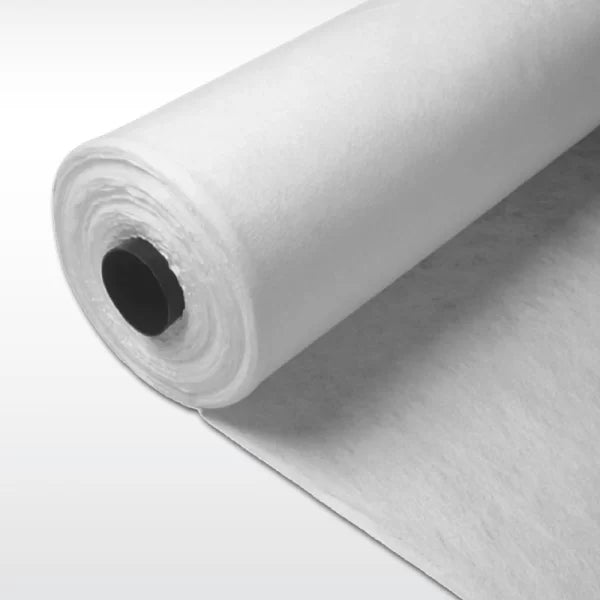
Geotextile fabric (also called filter fabric, drainage fabric, or geofabric) is a permeable synthetic textile used in civil and landscaping applications to separate, filter, drain, or reinforce soil. In retaining walls, it is used as a filter layer behind the drainage aggregate to prevent fine soil particles from migrating through the drainage zone and blocking the drainage system.
Geotextile fabric is not waterproof — it allows water to pass through freely while filtering out soil particles.
Why Geotextile Fabric Matters in a Retaining Wall
A retaining wall drainage system works by collecting water that moves through the retained soil and directing it away from the wall before it can build up as hydrostatic pressure. This system relies on a permeable drainage aggregate (usually crushed rock or gravel) behind the wall.
Without geotextile fabric, fine soil particles from the retained soil gradually migrate into the drainage aggregate over time. This process — called migration or soil piping — silts up the drainage aggregate, reducing its permeability and eventually blocking the drainage system entirely. Once the drainage fails, water builds up behind the wall and the risk of wall failure increases significantly.
Geotextile fabric acts as a filter between the retained soil and the drainage aggregate. Water passes through freely; soil particles are retained on the fabric and do not enter the drainage zone.
Types of Geotextile Fabric
Non-Woven Geotextile
Non-woven geotextile is the most common type used in residential retaining wall drainage. It is manufactured by bonding or needle-punching synthetic fibres into a felt-like mat. Non-woven geotextile has good filtration properties and is suitable for most residential wall drainage applications.
Woven Geotextile
Woven geotextile is manufactured by weaving synthetic yarns. It generally has higher tensile strength than non-woven geotextile but lower filtration performance. Woven geotextile is more commonly used in separation and reinforcement applications rather than filtration.
For residential retaining wall drainage, non-woven geotextile is the standard choice.
How to Use Geotextile Fabric in a Retaining Wall
Where to Install It
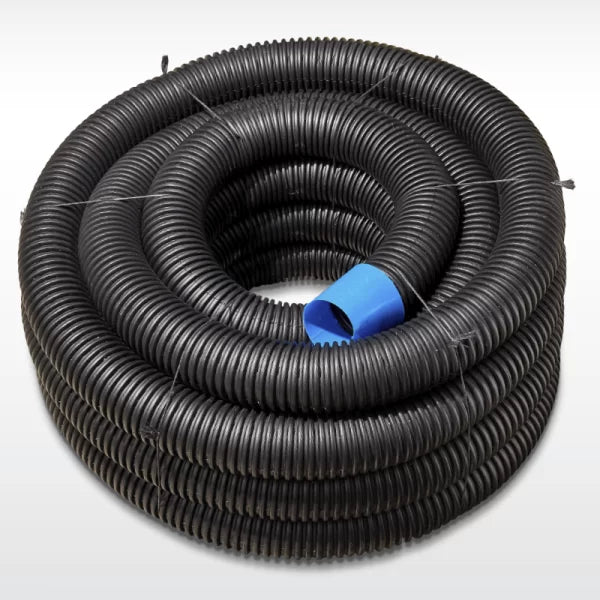
Geotextile fabric should be installed between the retained soil and the drainage aggregate. The fabric lines the drainage zone, preventing contact between the native soil and the drainage material. The drainage aggregate (crushed rock) sits inside the fabric-lined zone. Ag pipe (perforated drainage pipe) sits at the base of the drainage aggregate.
Installation Method
The fabric is typically installed as a continuous sheet that wraps around the drainage aggregate. Start the fabric at the base of the post embedment zone and bring it up the back of the wall. The fabric should extend from the base of the drainage zone to at least the top of the drainage aggregate. Overlap joins by a minimum of 300mm. Secure the top of the fabric against the back of the wall or fold it over the top of the drainage aggregate before backfilling.
The fabric should enclose the drainage aggregate on all sides that contact native soil. The inside face of the wall (facing the drainage aggregate) does not require fabric coverage as it is not in contact with soil.
Do Not Wrap the Ag Pipe in Fabric
Some older guides recommend wrapping the ag pipe itself in "sock" fabric. This is not recommended practice for residential retaining walls. The sock wraps tightly around the pipe and silts up quickly, blocking drainage. The geotextile fabric should wrap the entire drainage aggregate zone, not just the pipe.
Geotextile Fabric and Weep Holes
Weep holes in a concrete sleeper retaining wall provide a secondary drainage path for water that accumulates directly behind the wall face. Geotextile fabric should not block weep holes. If fabric is installed at the wall face, ensure it is cut around weep hole positions or that the weep holes protrude through the fabric.
What Happens Without Geotextile Fabric
Walls built without geotextile fabric often perform adequately for several years before drainage failure becomes apparent. As the drainage aggregate silts up, the drainage system becomes progressively less effective. Warning signs include:
- Weep holes running dry (drainage aggregate fully blocked)
- Water seeping through the wall face or joints
- Soil saturation above the wall after rain
- Wall movement or leaning developing years after construction
Retrofitting drainage fabric to a completed wall is difficult and usually requires partial demolition of the wall to access the drainage zone. Installing it correctly during construction is far more cost-effective.
Geotextile Wall Liners
Geotextile wall liners are pre-cut geotextile panels sized for standard retaining wall post spacings. They are designed to be installed quickly during wall construction, without the need to cut and fit a continuous sheet. Wall liners are installed between the posts before the sleepers are inserted, lining the drainage zone before backfilling.
Browse our geotextile wall liners sized for standard post spacings.
Drainage Kits
Our drainage kits include geotextile fabric, ag pipe, and fittings in a single pack for standard wall lengths. Browse our retaining wall drainage kits.
How Much Geotextile Fabric Do I Need?
To calculate the fabric required for a retaining wall:
- Measure the total wall length in metres.
- Measure the wall height (retained height) in metres.
- Fabric width required = wall height x 2 + 0.5m (to allow for wrapping around the drainage aggregate and overlapping at the top).
- Fabric length required = wall length + 20% for joins and overlaps.
Example: A 10m wall with 1.2m retained height requires approximately 1.2 x 2 + 0.5 = 2.9m wide fabric, and 10 x 1.2 = 12m length.
Browse our geotextile fabric options and drainage kits. For the full concrete sleeper wall system — including C-channel posts and H-beam posts — see our full range. Contact our team if you need help calculating quantities for your project.
Ready to get started?
Get a free delivered quote for concrete sleepers, steel posts and retaining wall materials — delivered Australia-wide.
Leave a comment (all fields required)