
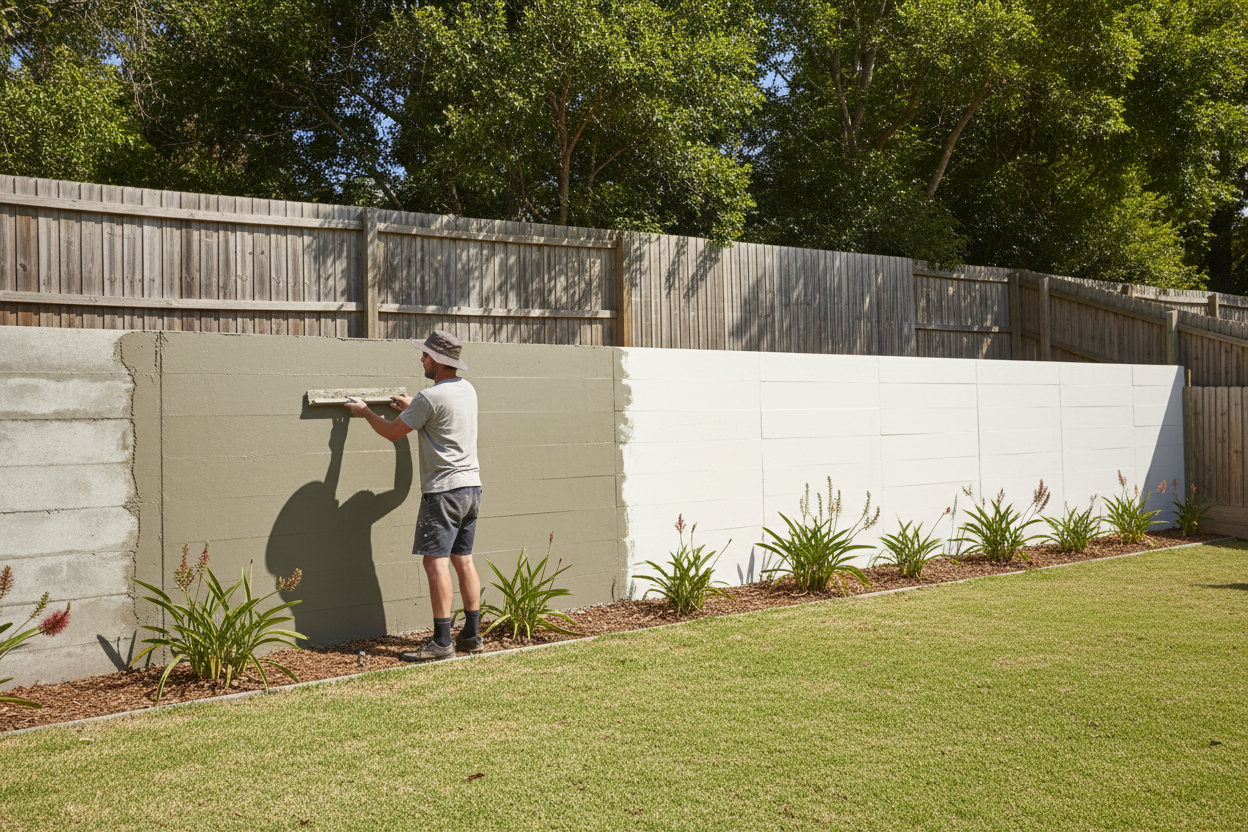

Concrete sleeper retaining walls can be painted or rendered to match surrounding structures, change the wall colour, or achieve a specific aesthetic finish. Done correctly, a painted or rendered concrete sleeper wall looks excellent and holds up well in Australian conditions. Done incorrectly — wrong primer, paint applied too soon after installation, or the wrong product for the surface — the finish will peel, crack, or fail within a season.
This guide covers the correct process for painting and rendering concrete sleeper retaining walls.
Which Sleeper Finish Is Best for Painting or Rendering?
All three concrete sleeper finishes can be painted or rendered, but smooth finish sleepers are the best base for painting and rendering. The flat surface provides better adhesion for paint and render systems than the textured surface of charcoal or woodgrain sleepers.
- Smooth finish sleepers: Best for painting and rendering. Flat surface provides excellent adhesion. Recommended if painting or rendering is planned from the outset.
- Charcoal sleepers: Can be painted, but the dark base colour means multiple coats are required to achieve a lighter colour. The slightly textured surface provides reasonable adhesion.
- Woodgrain sleepers: Can be painted, but the textured surface makes it harder to achieve a uniform finish. Rendering over woodgrain is not recommended — the texture creates an uneven render base.
Curing Time — The Most Important Step
Concrete must cure fully before painting or rendering. Fresh concrete contains moisture and alkaline compounds that will cause paint to blister, peel, or fail if applied too soon. The minimum curing time before painting or rendering concrete sleepers is:
- Painting: Minimum 28 days after installation. 60–90 days is preferred, particularly in humid conditions.
- Rendering: Minimum 28 days after installation. The concrete must be dry and stable before render is applied.
Do not paint or render concrete sleepers immediately after installation, even if the surface appears dry. The internal moisture content of the concrete takes weeks to months to reach equilibrium with the surrounding environment.
Surface Preparation
Proper surface preparation is the most important factor in paint and render adhesion. Skipping or rushing surface preparation is the most common cause of paint and render failure on concrete.
- Clean the surface. Remove all dirt, dust, efflorescence (white mineral deposits), oil, and organic growth (algae, moss, lichen) from the sleeper surface. Use a pressure washer for general cleaning. For efflorescence, use a dilute acid wash (follow manufacturer's instructions and wear appropriate PPE). For oil stains, use a degreaser.
- Allow the surface to dry completely. After cleaning, allow the surface to dry for at least 24–48 hours before applying primer or render. Do not paint or render a damp surface.
- Check for cracks. Fill any cracks or voids in the sleeper surface with a suitable concrete repair compound before priming. Allow the repair to cure fully before proceeding.
- Lightly abrade the surface (for painting). A light sand or wire brush of the surface improves paint adhesion by creating a slightly rougher surface for the primer to bond to. This is particularly important for smooth finish sleepers.
Painting Concrete Sleepers
Primer
A concrete primer (also called a masonry primer or sealer) is essential before painting concrete sleepers. The primer:
- Seals the concrete surface and reduces porosity
- Neutralises the alkalinity of the concrete surface, which can cause paint failure
- Improves adhesion of the topcoat
Use a primer specifically formulated for concrete or masonry surfaces. Apply according to the manufacturer's instructions and allow to dry fully before applying the topcoat.
Paint Selection
Use an exterior-grade masonry paint or concrete paint for retaining wall applications. Key requirements:
- Exterior grade: Must be rated for exterior use and UV exposure.
- Masonry or concrete formulation: Standard interior or exterior house paint is not suitable for concrete surfaces. Use a paint specifically formulated for masonry or concrete.
- Breathable (vapour permeable): Concrete retaining walls are in contact with soil and moisture. A breathable paint allows moisture vapour to escape through the paint film, preventing blistering and peeling. Avoid non-breathable coatings on retaining walls.
- Alkali-resistant: Concrete is alkaline. Use a paint rated as alkali-resistant to prevent saponification (paint breakdown caused by alkalinity).
Application
- Apply primer to the clean, dry surface. Allow to dry fully.
- Apply the first topcoat. Use a roller for large flat areas; a brush for edges and details.
- Allow the first coat to dry fully before applying the second coat. Do not apply a second coat over a wet first coat.
- Apply a second topcoat. Two coats of topcoat over primer is the minimum for a durable finish on exterior concrete.
- Allow to cure fully before exposing to rain or heavy use. Check the manufacturer's cure time.
Rendering Concrete Sleepers
Render System Selection
For concrete sleeper retaining walls, use a polymer-modified render system designed for concrete substrates. Key requirements:
- Polymer-modified: Polymer-modified renders have better adhesion, flexibility, and crack resistance than traditional sand-cement renders. They are the appropriate choice for retaining wall applications where the wall may experience minor movement.
- Exterior grade: Must be rated for exterior use and UV exposure.
- Suitable for concrete substrates: Confirm the render system is rated for application to concrete surfaces.
Application
- Apply a bonding agent (concrete bonding primer) to the clean, dry sleeper surface. Allow to become tacky before applying render.
- Apply the scratch coat (first render coat) to a thickness of 6–10mm. Score the surface with a comb or scratcher while still wet to provide a key for the finish coat.
- Allow the scratch coat to cure for the time specified by the manufacturer (typically 24–48 hours) before applying the finish coat.
- Apply the finish coat to the desired thickness and texture. Finish to the desired texture (smooth, sand finish, or textured) while the render is still workable.
- Cure the render according to the manufacturer's instructions. Keep the render moist for the first 24–48 hours to prevent cracking from rapid drying.
- Once cured, the rendered surface can be painted with an exterior masonry paint if a specific colour is required.
Maintenance
Painted and rendered concrete sleeper walls require periodic maintenance to maintain their appearance:
- Painted walls: Repaint every 5–10 years depending on UV exposure, colour, and paint quality. Clean annually with a pressure washer to remove dirt and organic growth.
- Rendered walls: Inspect annually for cracks. Fill hairline cracks with a flexible exterior filler before they allow water ingress. Repaint the render every 5–10 years.
Frequently Asked Questions
How long after installation can I paint concrete sleepers?
Minimum 28 days. 60–90 days is preferred, particularly in humid conditions. Painting too soon causes blistering and peeling as moisture escapes from the curing concrete.
Do I need a primer before painting concrete sleepers?
Yes, always. A concrete or masonry primer is essential for paint adhesion and to neutralise the alkalinity of the concrete surface. Painting without primer is the most common cause of paint failure on concrete.
Can I use regular house paint on a concrete sleeper retaining wall?
No. Use an exterior-grade masonry or concrete paint that is breathable, alkali-resistant, and rated for exterior use. Regular house paint is not formulated for concrete surfaces and will fail prematurely.
Can I render over woodgrain concrete sleepers?
Rendering over woodgrain sleepers is not recommended — the textured surface creates an uneven render base. If rendering is planned, use smooth finish sleepers from the outset.
Browse Our Smooth Finish Sleepers
If you're planning to paint or render your retaining wall, smooth finish concrete sleepers are the recommended base. Available in 200x75mm and 200x100mm. Or contact our team to discuss your project.