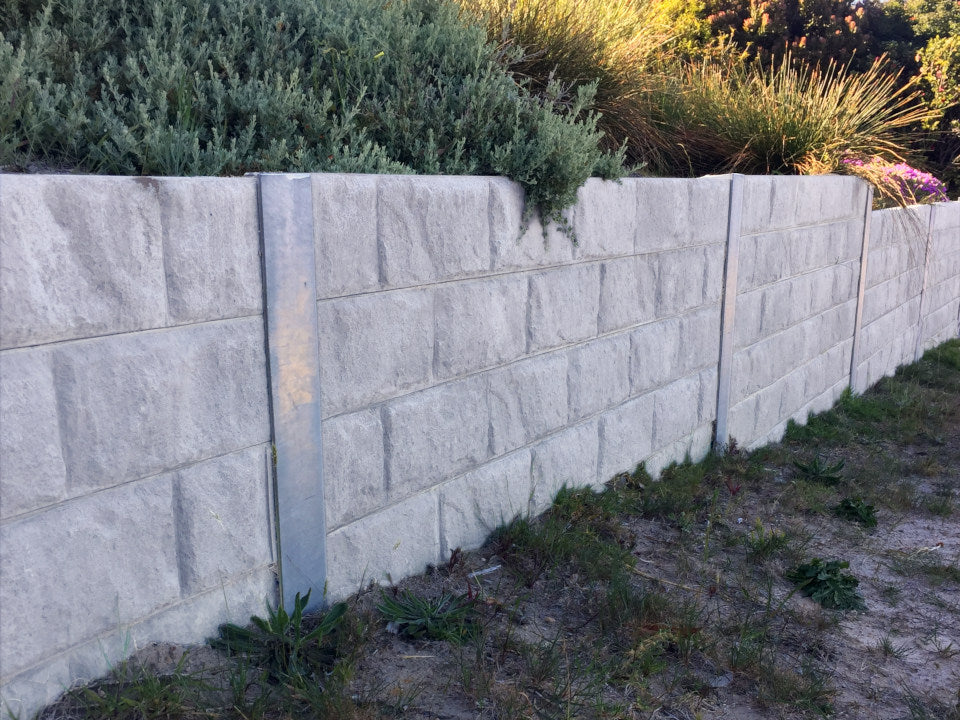
Concrete sleepers are the most durable, lowest-maintenance retaining wall solution available for Australian conditions. Retaining Walls Direct supplies Australian-made concrete sleepers and galvanised steel posts direct to builders, landscapers, tradies and homeowners, with delivery to every state and territory and trade pricing for the building industry.
Every sleeper in the range is 200mm high, steel reinforced, and manufactured in accordance with AS 4678-2002 Earth-retaining structures. Sleepers are available in 1600, 1800, 2000 and 2400mm sizes, thicknesses from 75mm to 130mm, and compressive strengths of 40MPa, 50MPa and 60MPa.
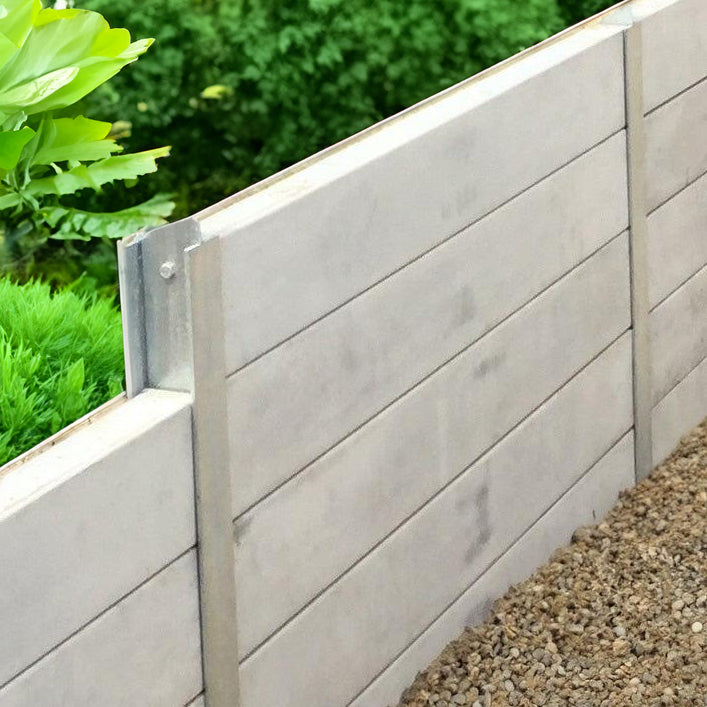
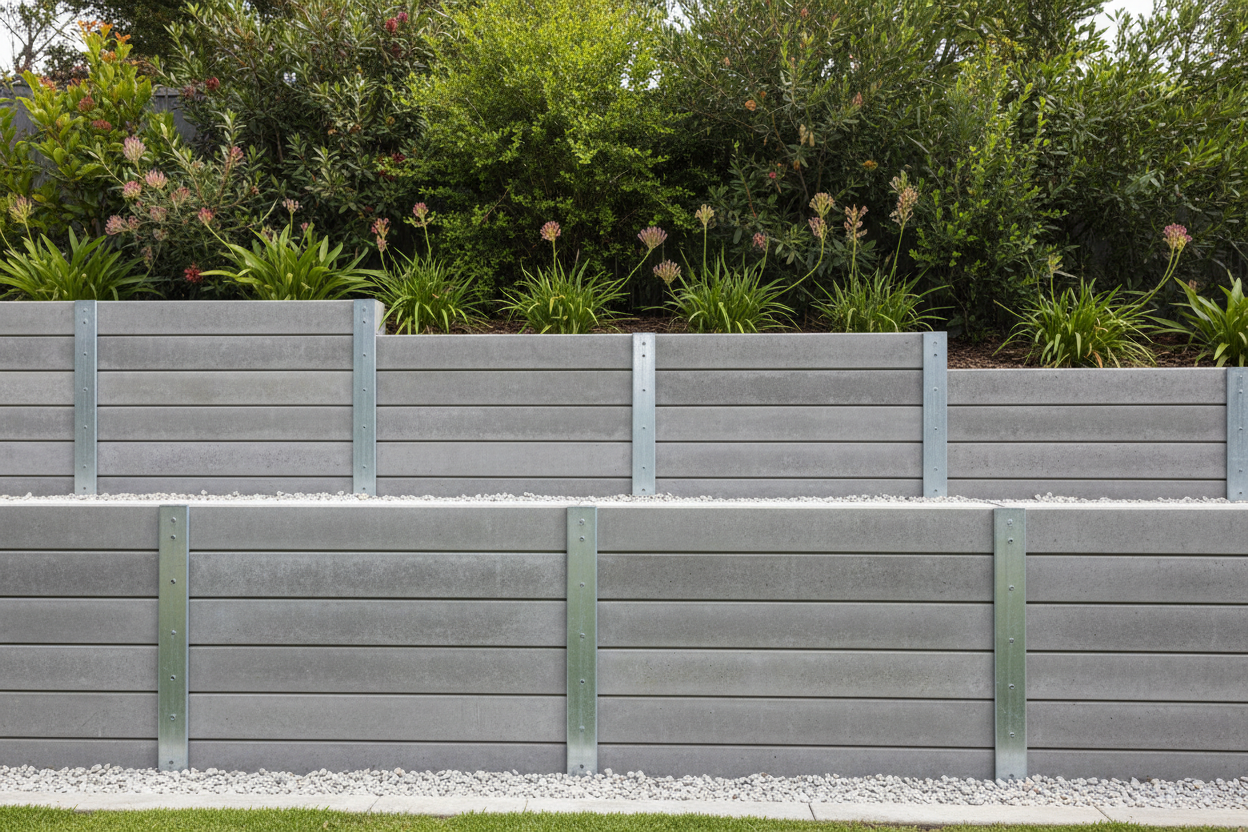
Sleepers stack horizontally between our galvanised steel posts, giving you a fully compatible wall system in a single order — no mixing suppliers, no compatibility issues.
Answer a few quick questions about your wall — height, boundary proximity, whether it carries vehicle load, and your general soil type — and get a recommended MPa grade and post series, plus a reminder to confirm your state's permit threshold before you order.
[Interactive checker widget — build pending, see production notes. Placeholder only.]
This is the single most misunderstood thing about buying concrete sleepers, and getting it wrong means your posts end up in the wrong place.
The size on the product is the distance between post centres, not the physical length of the sleeper. A 2400mm sleeper is physically around 10–15mm shorter than 2400mm, so it seats correctly into the steel post channel at each end. Set your posts out at the stated size — 2400mm centres for a 2400mm sleeper — and the sleeper will drop straight in.
| Size (post centres) | Approx. weight (75mm thick) | Best for |
|---|---|---|
| 1600mm | 57kg | Tight sites, curved and stepped walls, taller walls where load per post matters. Lightest option to handle. |
| 1800mm | — | A middle ground between post count and handling weight. |
| 2000mm | 72kg | The most common residential size. Good balance of post count and weight. |
| 2400mm | 83kg | Long boundary walls and batters. Fewest posts and holes, but the heaviest lift and the highest load per post. |
Longer sleepers mean fewer posts, fewer holes and less concrete, which usually lowers the installed cost per lineal metre. The trade-off is weight and load: a wider span puts more pressure on each post, so taller walls generally use shorter spans. Every size in the range needs a two-person or mechanical lift.
Sleeper thickness is what carries the retained load. 75mm and 80mm suit standard residential walls. 100mm is the heavier-duty option for taller walls or wider post spacing. 120mm and 130mm are available in selected finishes for the heaviest applications.
Every sleeper is 200mm high, so five sleepers make up one metre of wall height, per bay. A 1.0m wall built on 2400mm centres needs 5 sleepers per bay; an 0.8m wall needs 4. Multiply by the number of bays along your wall, and add one post per bay plus one to close the end.
For an exact take-off, use the retaining wall calculator or the material estimator.
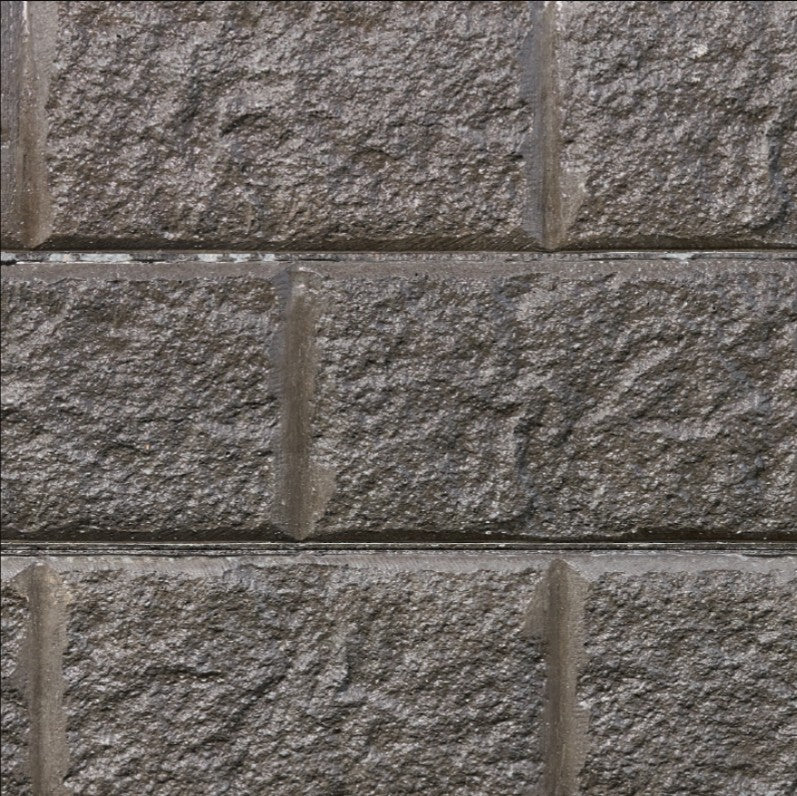
Finish is chosen independently of strength, so you never trade appearance against structural performance.
Colour runs through the concrete rather than sitting on the surface, so coloured sleepers never need sealing or re-coating, and minor chips do not expose a contrasting substrate.
MPa (megapascals) measures compressive strength. Under AS 4678-2002, structural engineers specify minimum concrete grades based on wall height, soil classification and surcharge loads.
All sleepers are steel reinforced. The Classic 200 × 75mm range carries two steel Reo bars and is rated 40+ MPa. Our sleepers are engineered for Australian soil types, from reactive clay in Western Sydney and Melbourne's south-eastern suburbs to sandy coastal soils across Queensland and WA.
Soil type is one of the biggest factors in what grade and post series your wall needs, and it varies significantly across Australia. Broadly:
Not sure which applies to your site? Our state guides go into suburb-level detail: Perth, Sydney, Melbourne and Brisbane. If you're still unsure, a geotechnical report or your local council can confirm your soil classification.
The choice between concrete and timber is the most common question our team receives. Here is a direct comparison on the factors that matter most:
| Concrete sleepers | Treated pine timber | |
|---|---|---|
| Design life | Decades in ground contact | Considerably shorter |
| Ongoing maintenance | None — no oiling, staining or sealing | Periodic re-staining or oiling |
| Termite risk | Not susceptible | A real risk across most of Australia |
| Moisture and movement | Will not rot, warp or split | Swells, warps, splits and splinters |
| Handling weight | Heavy — two-person or mechanical lift | Lighter, easier to handle solo |
| Upfront cost | Higher | Lower |
| Total lifecycle cost | Lower | Higher once replacement and labour are counted |
For a permanent wall in Australian conditions, concrete is the long-term value choice. Timber remains reasonable for temporary works, rural fencing and heritage settings where natural timber is specifically required and longevity is less critical.
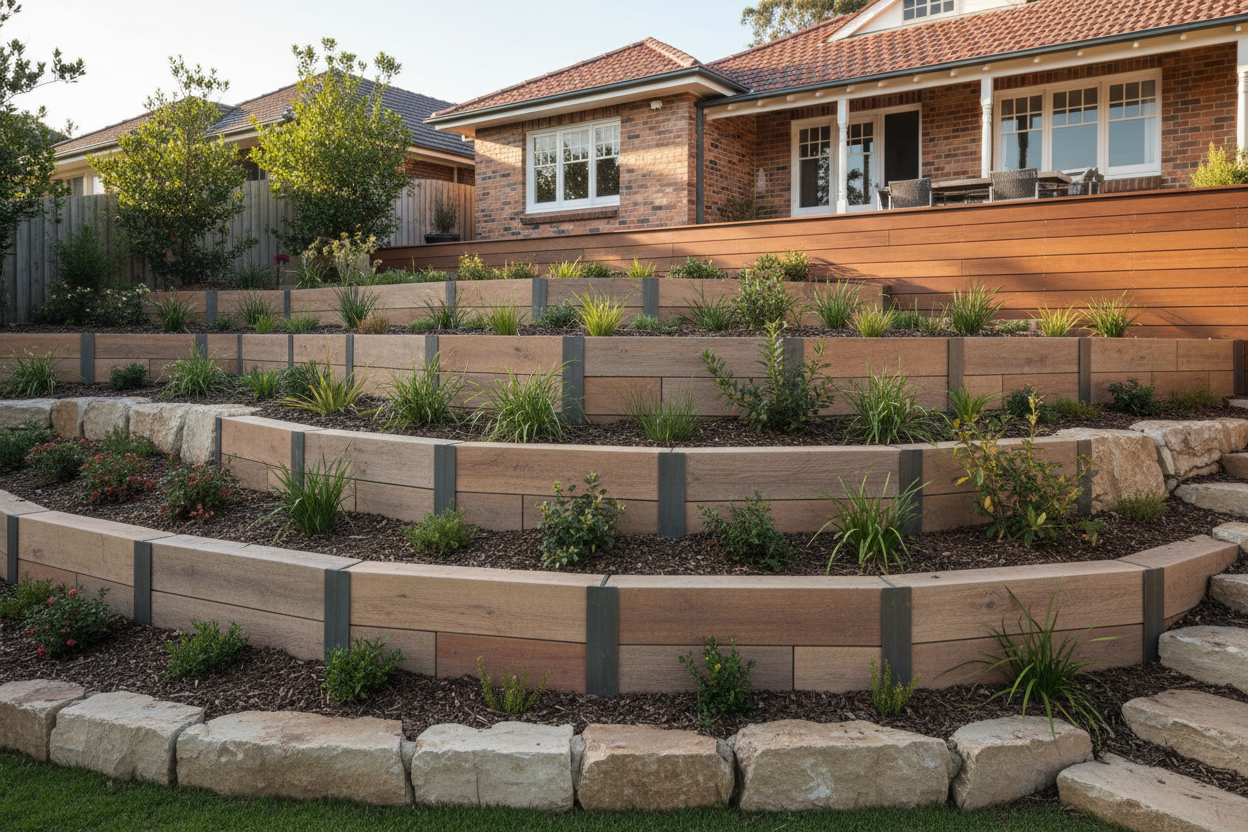
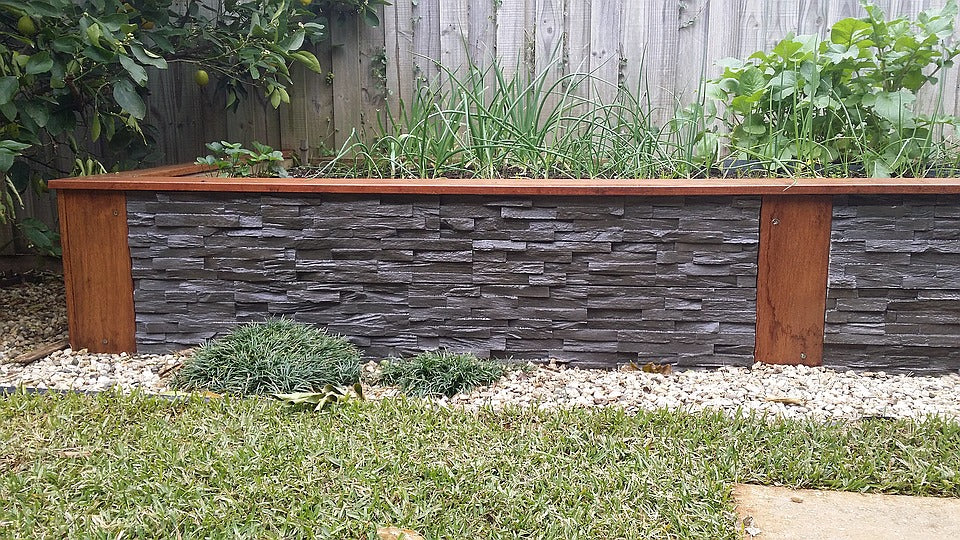
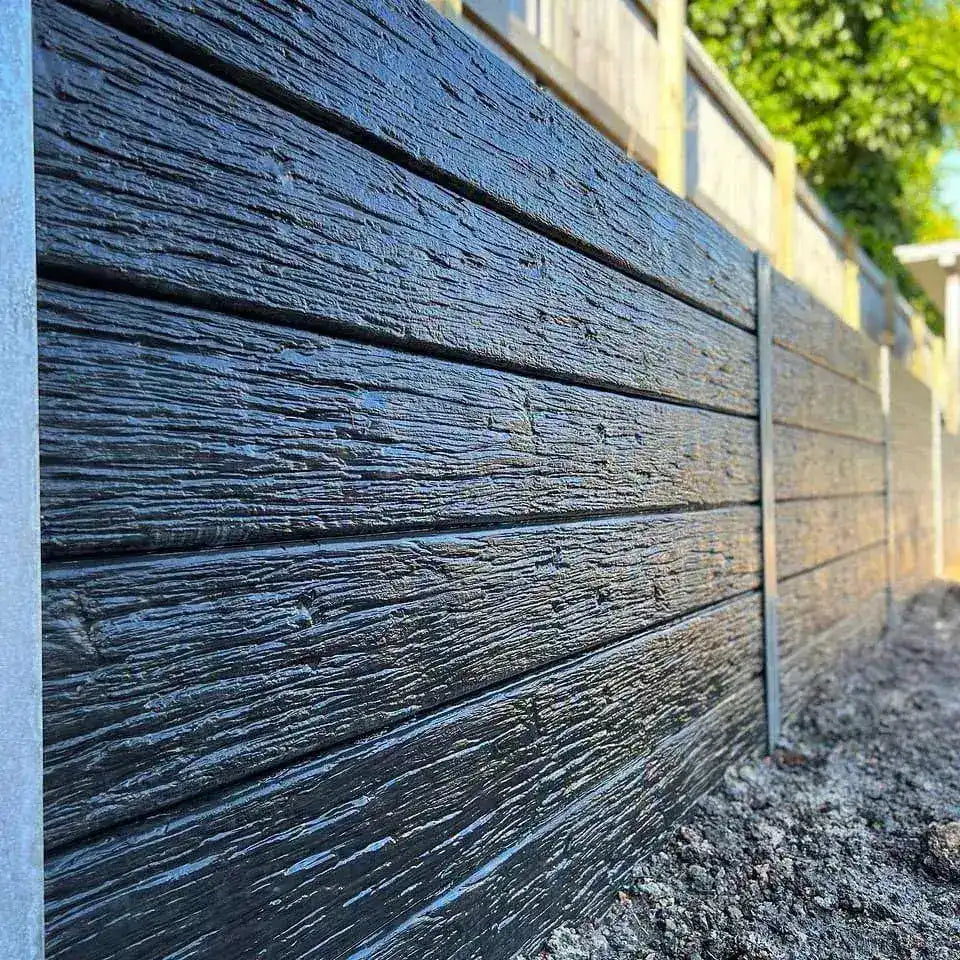
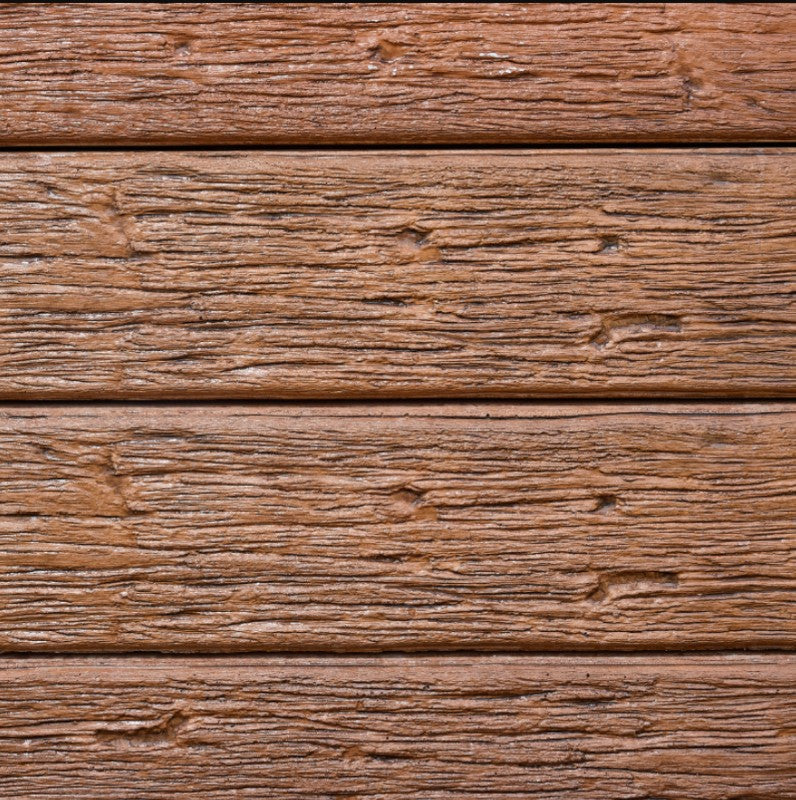
If the timber look is the draw rather than timber itself, our timber-look concrete sleepers and the Ashwood finish give you that appearance with concrete's strength and lifespan.
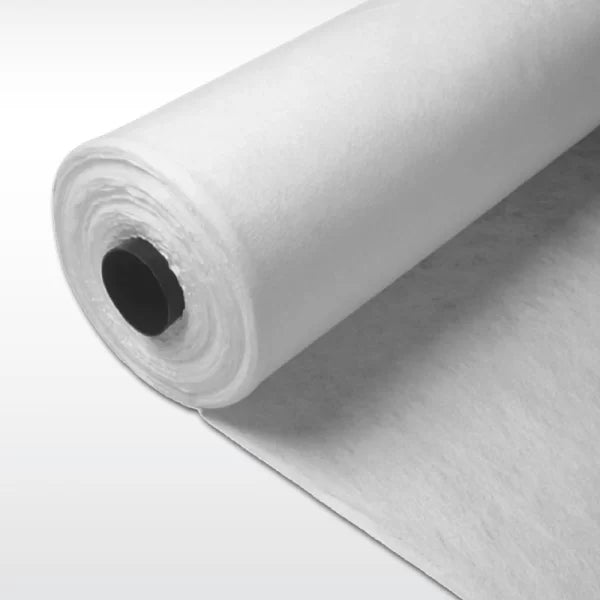
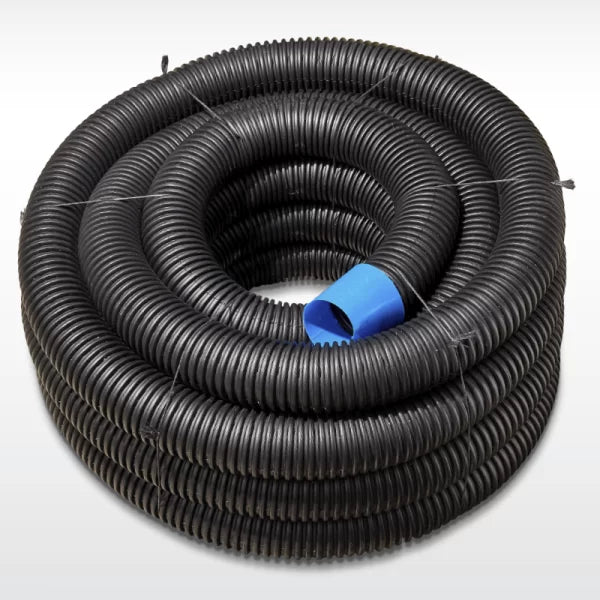
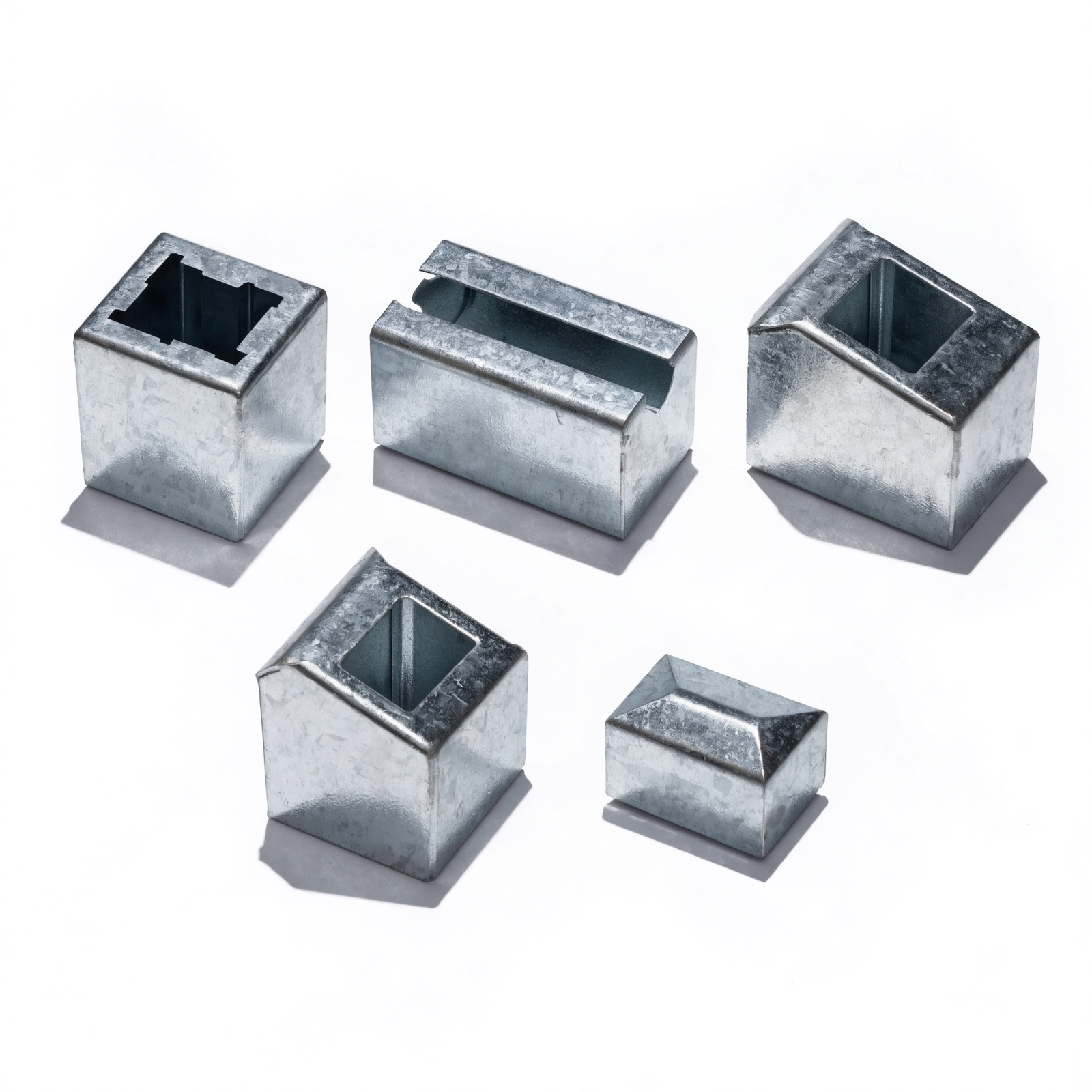
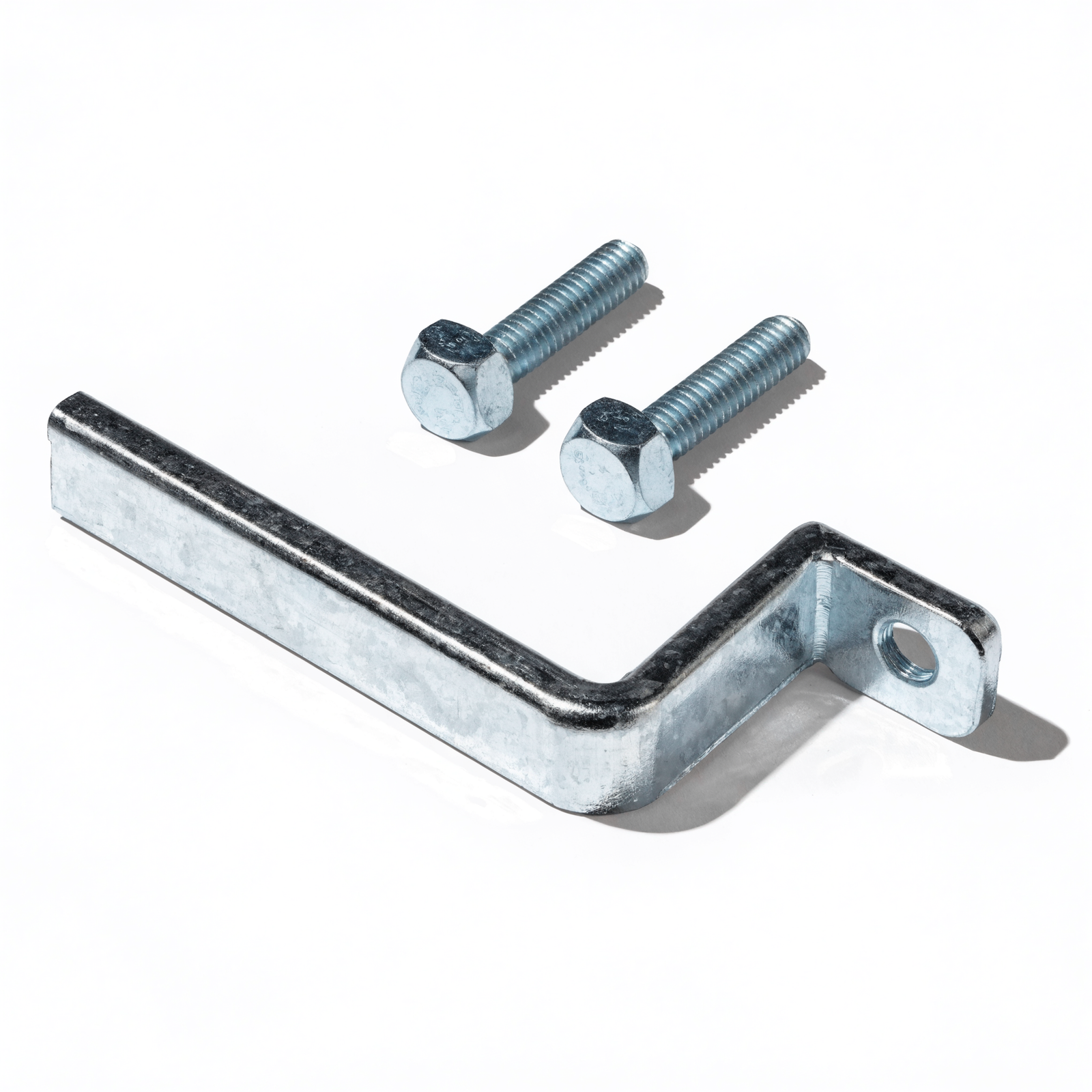
A concrete sleeper wall is a system, not a single product. Ordering components from different suppliers is where most projects run into trouble. Everything below is available in a single order:
Prefer it packaged? Order a complete retaining wall kit, or a bulk sleeper pack for larger jobs.
Water trapped behind a wall is the number one cause of retaining wall failure in Australia. Drainage is not an optional extra — it is a structural component. See our drainage guide and backfill guide.
| Post series | Wall height | Typical application |
|---|---|---|
| 100 Series | Up to 1.0m | Standard residential walls in sandy or well-draining soil, no surcharge load |
| 150 Series | 1.0m–1.5m, or reactive clay/rocky sites | Reactive clay soils, difficult-excavation sites, and walls carrying moderate surcharge |
| 200 Series | Over 1.5m, or engineer-specified | Heavy surcharge, commercial walls, and any engineer-specified application |
This is a general guide only — always confirm post series and spacing against your specific wall height, soil class and surcharge with the steel post sizing guide or a structural engineer for walls over 1m.
A typical wall is built in this sequence. General guide only — follow your engineer's drawings where one has been issued.
Full walkthrough: How to build a concrete sleeper retaining wall.
Sleeper pricing is driven by size, thickness, strength and finish. Across the range, individual sleepers run from around $43.95 to $88.45 each. A 1600mm Plain Grey Smooth sits at the affordable end; a 2400 × 200 × 130mm premium finish sits at the top. Prices indicative, correct as at July 2026 — see individual product pages for current pricing.
Compare quotes on installed cost per lineal metre of wall, not price per sleeper. A cheaper short sleeper often costs more overall once the extra posts, holes and concrete are counted. What moves the total:
Freight is quoted separately based on your location and order size — we contact you with a freight cost within one business day before processing payment. Send your postcode and quantities for a freight quote.
Trade and bulk pricing is available for landscapers, builders and civil contractors. Open a trade account for trade rates and volume pricing.
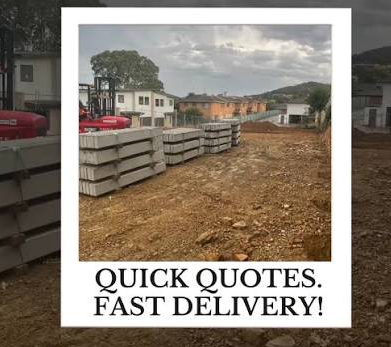
We deliver concrete sleepers and steel posts across Australia, dispatched from supplier depots in NSW, QLD, VIC, SA and WA, to residential, commercial and rural addresses. Sleepers are heavy and palletised, so send your postcode and quantities for a freight quote before ordering.
Dedicated delivery pages: Sydney, Melbourne, Brisbane, Gold Coast, Sunshine Coast (including Maroochydore and Caloundra), Adelaide, Perth, Canberra, Hobart and many more regional centres.
Looking for a concrete sleeper supplier near you? Call 1800 880 124 and we will confirm freight and lead time to your suburb.
New to the system? Start with the concrete sleeper buying guide or the how-to guides.
All our sleepers are 200mm high, in 1600, 1800, 2000 and 2400mm sizes, with thicknesses from 75mm to 130mm depending on the range. Not every combination is available in every finish — check the individual product page.
No. The stated size is the distance between post centres. The physical sleeper is approximately 10–15mm shorter so it seats into the steel post channel at each end. Set your posts out at the stated size.
For 200 × 75mm sleepers, roughly 57kg at 1600mm, 72kg at 2000mm and 83kg at 2400mm. Thicker sleepers weigh proportionally more. Plan for a two-person or mechanical lift on every size.
Five sleepers per metre of wall height, per bay, since each sleeper is 200mm high. A 0.8m wall on 2000mm centres needs 4 × 2000mm sleepers per bay. The retaining wall calculator gives an exact figure.
75mm and 80mm suit standard residential walls. 100mm is the heavier-duty option for taller walls or wider post spacing. 120mm and 130mm are available in selected finishes for the heaviest applications.
40MPa is sufficient for most residential walls up to 1m in standard soil. Step up to 50MPa for walls over 1m, reactive clay, or vehicle surcharge, and 60MPa for commercial structures and aggressive soil environments. When in doubt, consult a structural engineer.
Galvanised steel posts in 100, 150 and 200 series, available in C-channel (PFC) and H-beam (UC) profiles, with corner and joiner posts for returns. Post size and profile depend on wall height and soil — see the steel post sizing guide.
Low walls are within reach of a competent DIYer with the right tools and a second person. Above roughly 1m, post embedment, footing sizing and drainage become critical and the sleepers get heavy enough to need machinery. See engineered walls over 1 metre.
Walls under approximately 1m are often exempt, while taller walls and walls near boundaries, driveways or pools usually require approval and engineering. Thresholds vary significantly by state and council — for example, WA's threshold is as low as 500mm near a boundary, while other states generally sit at 600mm to 1.0m. See our state-by-state regulations hub for your specific requirement, and always confirm locally before you build.
Yes. Use galvanised fence brackets with the steel posts.
High-strength concrete is poured into steel moulds around a steel reinforcement cage, vibrated to remove air voids, and cured under controlled conditions to reach the specified MPa rating. Surface finishes such as woodgrain and sandstone come from the mould face, and colour is added through the mix rather than applied afterwards. Site-made sleepers rarely achieve consistent strength or cover to reinforcement, which is why engineered walls specify factory-manufactured units.
Correctly specified and installed sleepers should not crack in service. Cracking is almost always a symptom of something else — undersized sleepers for the retained load, inadequate drainage causing hydrostatic pressure, or damage during handling.
Yes. For freestanding applications, post sizing and spacing must account for the absence of soil restraint on one face — contact our team for a recommendation specific to your project.
We deliver across most of Australia from depots in NSW, QLD, VIC, SA and WA. Send your postcode and quantities for a freight estimate, or call 1800 880 124.
Change-of-mind returns are not offered on made-to-order heavy goods. Cancellations before dispatch are refunded within 5 business days less card fees, and faulty or incorrect items are always rectified. Your Australian Consumer Law rights always apply. See our returns and delivery policy.
For walls over 1m in height, near property boundaries, or subject to surcharge loads, always engage a qualified structural engineer and check your local council's requirements before construction.
Wall planner
Set your wall dimensions and site conditions to get a materials list you can take to a quote.
Recommended sleeper
40MPa
Standard soil, garden loading, under 1 m.
Send this spec for a delivered price
All figures calculated above are sent with your request, no need to re-enter your measurements.
Sleeper sizes shown are post-centre spacings; the physical sleeper is approximately 10–15mm shorter so it seats into the post channel. Quantities are an estimate for budgeting and do not include waste, cuts or stepping on sloped sites. Post profile, footing diameter and reinforcement must be confirmed by a qualified structural engineer. Walls over 1 m, near a boundary, or carrying surcharge require engineering design under AS 4678:2002 and may require council approval.
Quick reference
Post profile and series depend on wall height, soil conditions and surcharge load. This is a starting reference, not an engineering specification.
| Wall height | Standard soil | Reactive clay / vehicle load |
|---|---|---|
| Up to 0.6 m | 100 Series C-channel | 100 Series H-beam |
| 0.6 m – 1.0 m | 100 Series H-beam | 150 Series H-beam |
| 1.0 m – 1.5 m | 150 Series H-beam | 200 Series H-beam, engineer required |
| Over 1.5 m | Engineer-specified, council approval likely required | |
Post embedment is typically one third of the total post length below ground, increasing on reactive clay or where surcharge loads apply. Walls over 1 m generally require engineering certification and may require council approval regardless of post size.
Read the full sizing guide →