Freight is calculated based on your location and order size.We'll contact you with a freight cost within 1 business day before processing payment.
One of the most overlooked components in a retaining wall drainage system, and one of the most important. In many years of building retaining walls across Australia, we've seen countless drainage systems fail not because the ag pipe was wrong or the aggregate was wrong, but because there was no geotextile fabric separating the soil from the drainage zone. Over time, fine soil particles migrate into the aggregate, clog the drainage path, and the hydrostatic pressure that was supposed to be relieved starts building again. The wall fails. The geo matting is what prevents that.
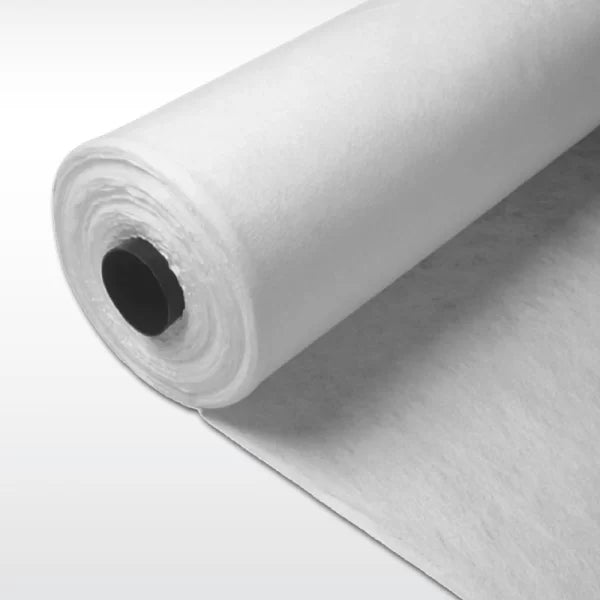
Our geo matting is a 120gsm non-woven permeable geotextile fabric, approximately 1.2mm thick. It's installed between the retained soil and the 20mm drainage aggregate behind your concrete sleeper wall, creating a filter layer that lets water pass freely while holding back soil fines. The result is a drainage zone that stays clean and free-draining for the life of the wall, not just the first few years.
Product specified and supplied by the Retaining Walls Direct trade team. Last updated July 2026.
| Variant | Dimensions | Coverage | Best For | Price |
|---|---|---|---|---|
| 50m × 1m | 50m long, 1m wide | 50m² | Walls up to 1m high, narrow drainage zones, DIY projects | $72.95 |
| 50m × 2m | 50m long, 2m wide | 100m² | Walls 1–2m high, standard residential and trade projects | $133.95 |
| 100m × 2m | 100m long, 2m wide | 200m² | Large walls, civil projects, trade bulk orders | By quote |
Which width do I need? The roll width should match or exceed your wall height. For a 900mm wall, the 1m wide roll is sufficient. For walls over 1m, use the 2m wide roll: it covers the full wall height in a single run without joins, which is both faster to install and more effective as a filter layer.
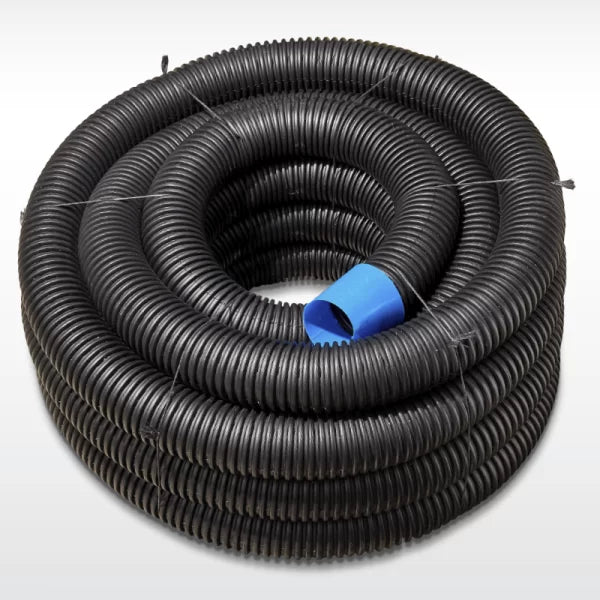
The drainage system behind a retaining wall has one job: get water out from behind the wall before it builds up enough pressure to push the wall over. That system has three components working together: the drainage aggregate creates the free-draining zone, the ag pipe collects and channels the water out, and the geo matting keeps the aggregate clean so the system keeps working. Remove any one of these three components and the system degrades over time.
Without geo matting, fine clay and silt particles from the retained soil gradually migrate into the aggregate zone. Within 5–10 years (faster in reactive clay soils), the aggregate voids fill with fines, drainage capacity drops, and hydrostatic pressure starts building. This is the mechanism behind most retaining wall failures that occur years after construction, not immediately, but gradually as the drainage system silts up.
Geo matting works as part of a complete retaining wall drainage system. You'll also need:
Geo matting (geotextile fabric) is installed between the retained soil and the drainage aggregate zone behind a retaining wall. It acts as a filter, allowing water to pass freely into the drainage zone while preventing fine soil particles from migrating into and clogging the aggregate. Without it, the drainage system silts up over time and loses effectiveness.
120gsm non-woven geotextile is the standard specification for residential and light commercial retaining wall drainage applications. It provides the right balance of permeability (water passes through easily) and filtration (soil fines are held back). For heavy civil applications or high-clay soils, 200gsm or heavier may be specified by an engineer.
Match the roll width to your wall height. For walls up to 900mm, the 1m wide roll is sufficient. For walls 1–2m high, use the 2m wide roll to cover the full height in a single run without joins. Joins in geotextile fabric are a potential weak point, minimise them where possible.
Yes, 120gsm non-woven geotextile is widely used for erosion control on batters and embankments, subgrade stabilisation under driveways and paths, separation layers under gravel areas, and drainage blankets in landscaping. It's a versatile product beyond retaining wall applications.
Calculate: wall length (m) × wall height (m) = area in m². Add 15–20% for overlaps and wastage. Then select the roll width that matches your wall height. For a 10m wall at 1.2m high: 10 × 1.2 = 12m² + 20% = 14.4m². One 50m×1m roll (50m²) covers this comfortably with significant roll remaining for future use.
Standard 120gsm non-woven geotextile has limited UV resistance and should be covered with aggregate promptly after installation, within a few days at most. It is not designed for permanent exposed applications. Once covered by aggregate or soil, UV degradation is not a concern.
Geo matting rolls are delivered Australia-wide via standard freight. Rolls are lightweight and ship efficiently. Send your postcode and quantities for a same-day freight quote.
Trade accounts and volume pricing available for builders, landscapers, and civil contractors. Contact our team to discuss pricing on your next project.