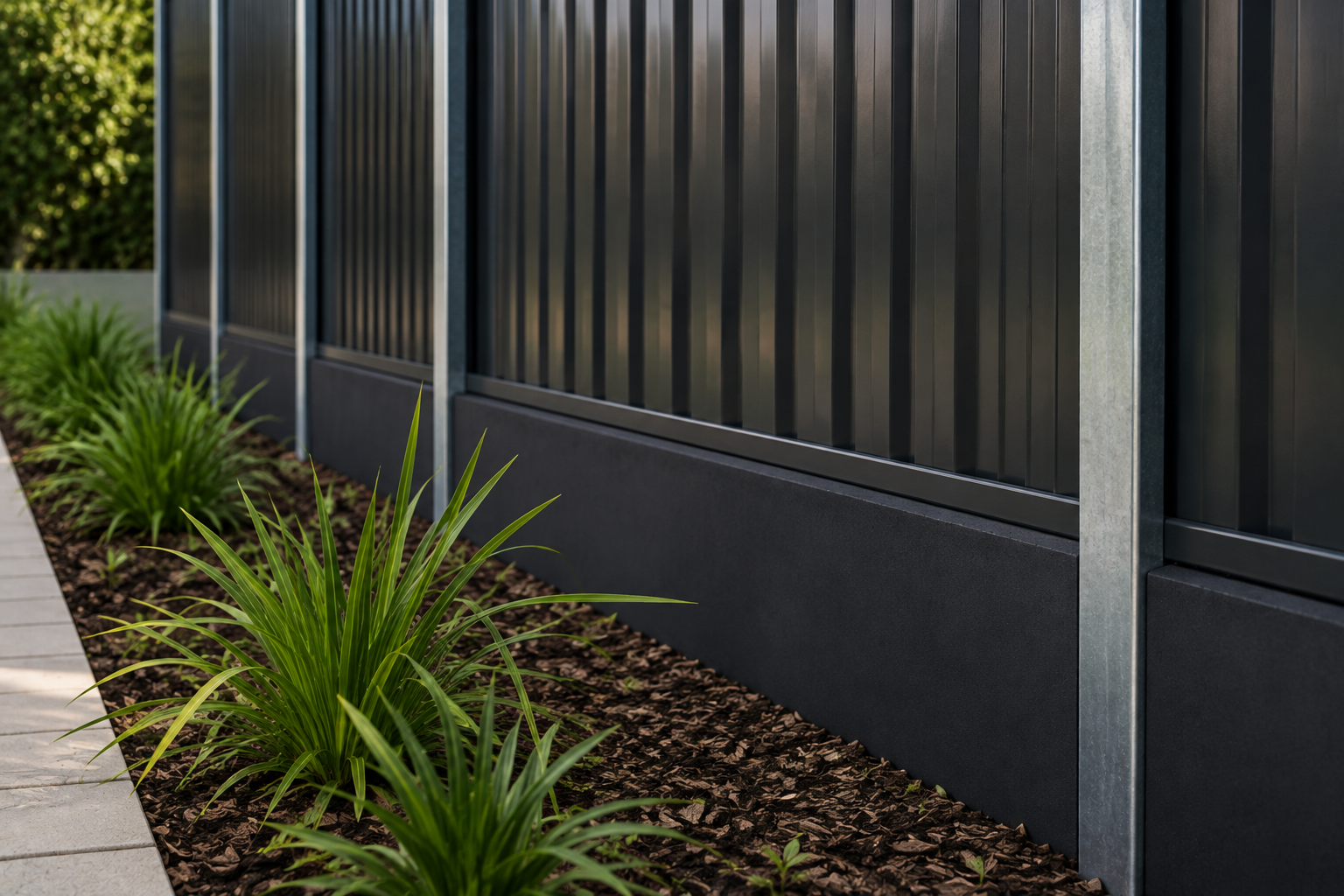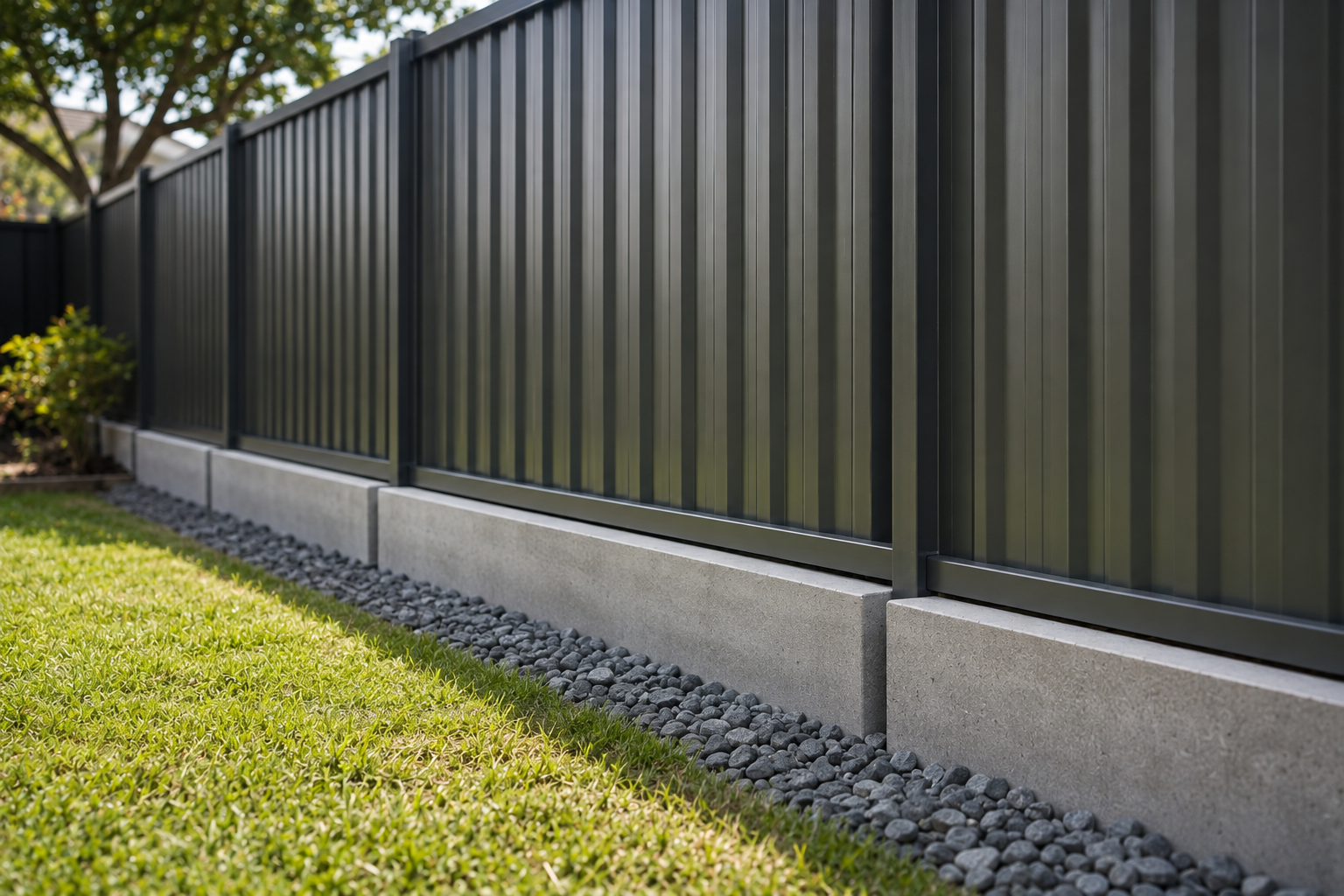


Compare under-fence plinth colours and finishes for Colorbond, timber, aluminium, and concrete fencing projects. Learn how to match your plinth with the fence, nearby concrete sleepers, garden features, and the overall style of your outdoor space.

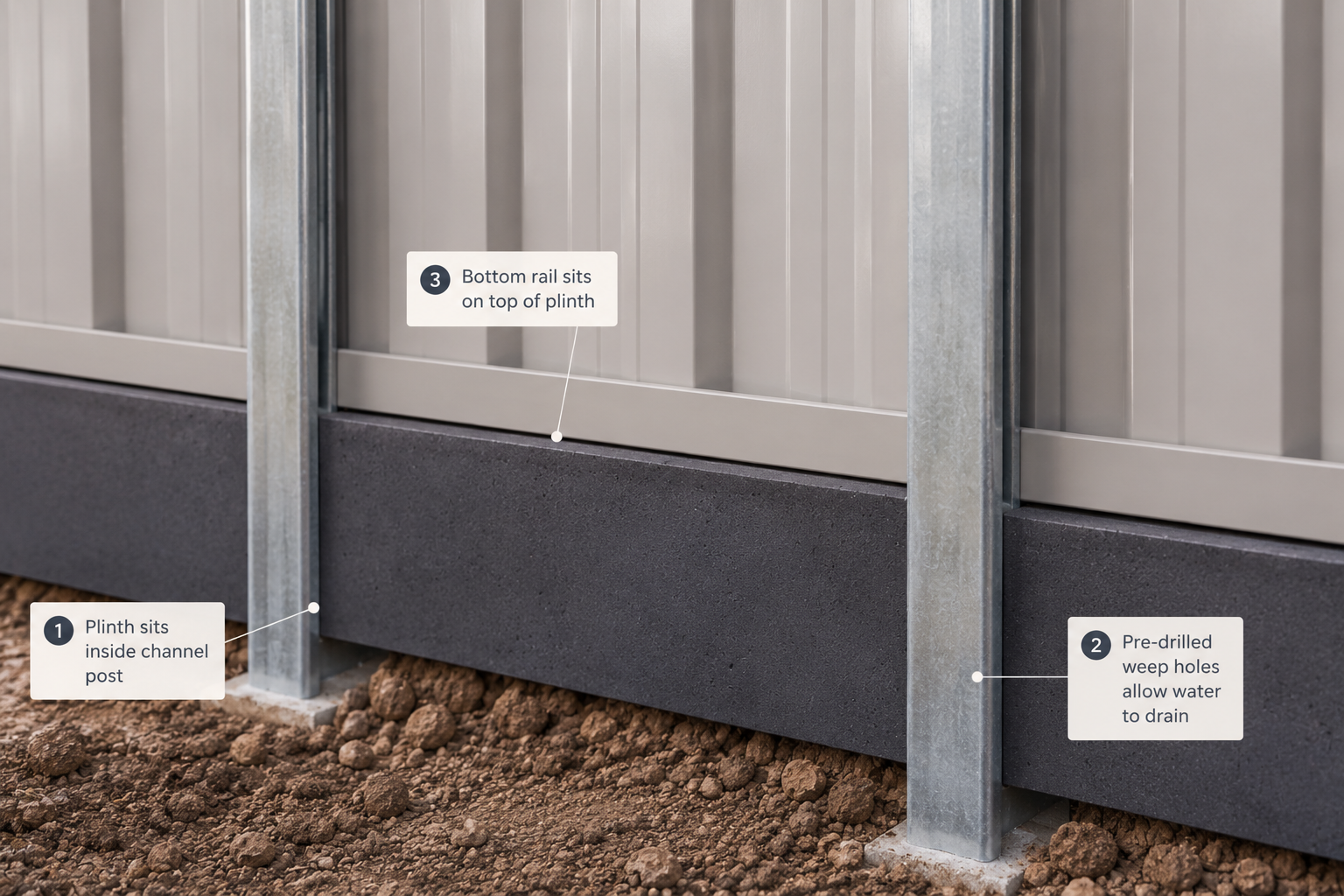
Find out how under-fence plinths work with Colorbond, timber, aluminium, and steel fences. This guide covers suitable fixing methods, installation considerations, and how a concrete plinth can protect timber fencing from soil contact and moisture damage.

Learn how to install under-fence plinths with this practical step-by-step guide. It covers tools, site preparation, levelling, fitting plinths beneath new or existing fencing, backfilling, finishing, and common installation mistakes to avoid.

Explore standard under-fence plinth sizes, dimensions, thicknesses, and soil retention limits. Learn how to measure your fence line, whether plinths can be stacked, and when the required height means you should build a proper retaining wall instead.

Under-fence plinth or full retaining wall? A simple height-based decision framework, plus what happens if you get the size wrong, so you get the right solution first time.

What is an under-fence plinth and when is one enough versus needing a full retaining wall? Sizes, fence compatibility, and how they protect timber and Colorbond fences.

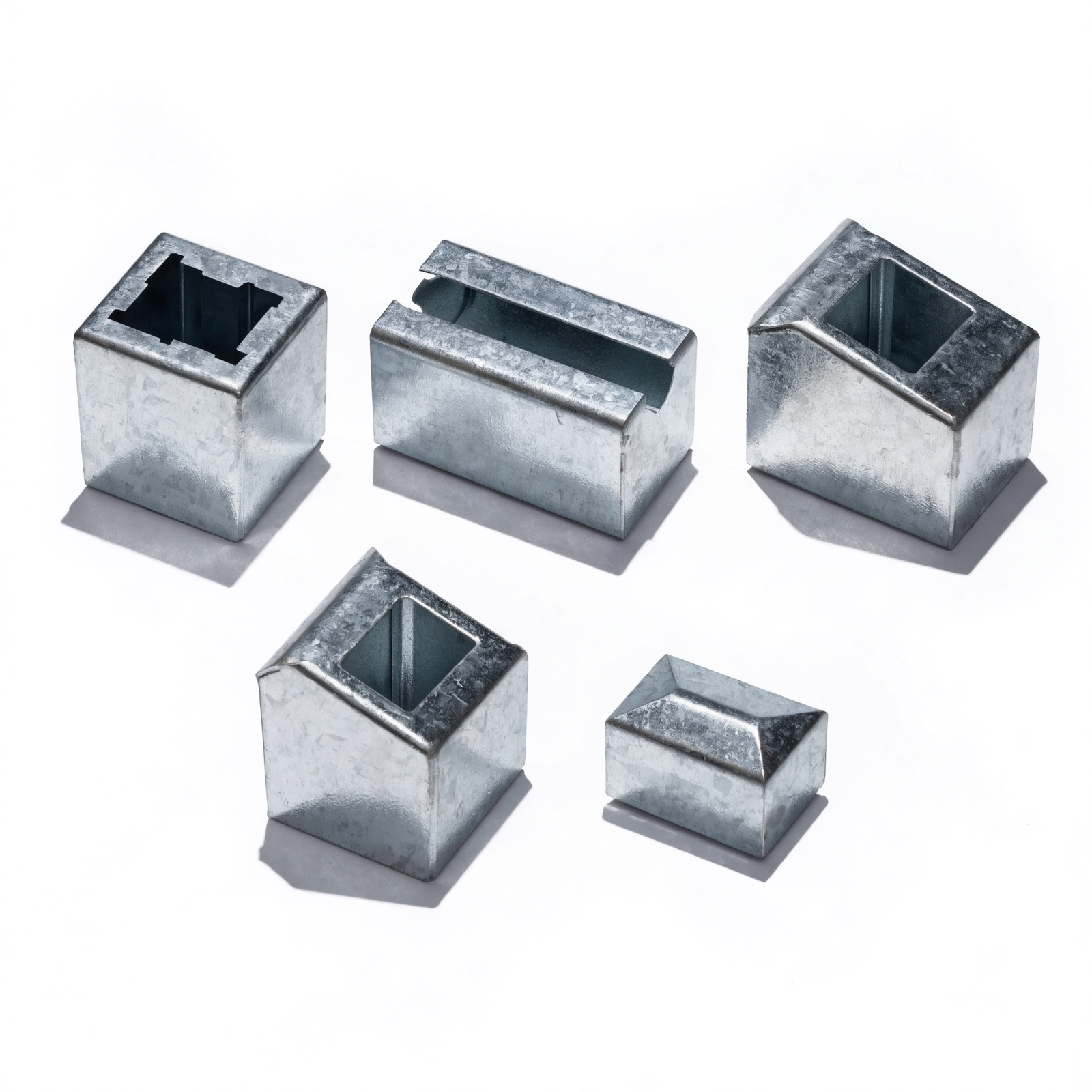
Corner and joiner steel posts explained: 90° vs 45° corners, inline joiners for long runs, and how to plan a wall layout so nothing's missing from your order.

Correct steel post spacing and embedment depth for retaining walls: standard centres, the one-third embedment rule, and how soil type and surcharge change the numbers.

Already picked your sleepers? Here's how to work out which steel posts they need: matching sleeper thickness, wall height and soil type to the right series.

How to size a post support bracket correctly: standard sizes, the 90x90 bracket, and matching brackets to 100 and 150 Series retaining wall posts.

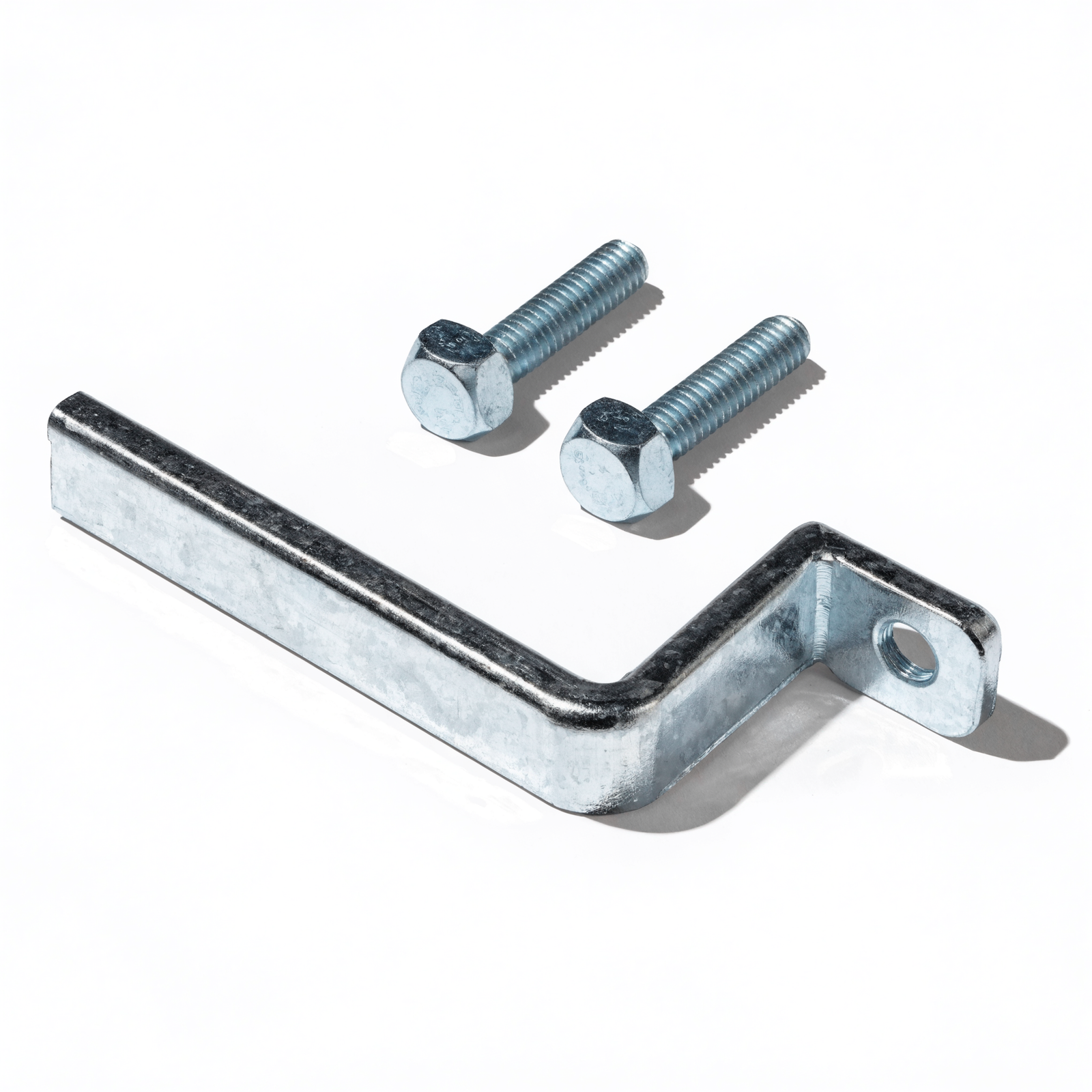
Retaining wall fence brackets explained: welded cleats vs bolt-on brackets, how to fix fencing above a sleeper wall, and choosing the right bracket for 100 or 150 Series posts.

H-beam (UC) and C-channel (PFC) steel posts explained side by side: strength, installation and how to choose the right profile for a DIY or engineered wall.