








Quick Answer
Yes — under-fence plinths work with Colorbond, timber and aluminium fencing. The fixing method changes depending on the fence type, but all three are fully compatible. Timber fences benefit most, since a plinth stops the bottom rail sitting in damp soil and rotting out — the single most common reason a timber fence needs early replacement.

Not sure if an under-fence plinthUnder Fence Plinths will suit your fence, whether it is Colorbond, timber, or aluminium? Short answer: almost certainly yes. The three common Australian fence types — Colorbond, timber and aluminium — all accept a plinth. What changes is how it's fixed, and how much practical benefit it delivers beyond simply closing the soil gap.
This guide breaks down compatibility, fixing methods, and the specific reason timber fences get more out of a plinth than the other two fence types — along with the practical cost and lifespan differences that come with each option, so you know exactly what to expect once the plinth is in the ground.
Compatibility with Colorbond Fencing
Colorbond is one of the most common fence types paired with an under-fence plinth in Australia, and it's a genuinely straightforward combination.
How Plinths Fix to Colorbond Channel Posts
Colorbond fences are typically built on steel channel posts, with the fence sheet sliding into the channel. A plinth sits inside that same channel, below the sheet, and is screwed directly to the post before the bottom rail is fitted. This gives a clean, integrated look — the plinth reads as part of the fence system rather than something bolted on afterwards.

- The plinth sits directly under the sheet, sealing the gap without altering the fence line or requiring the sheet itself to be trimmed.
- Steel channel posts give a solid, stable fixing point for screws or brackets.
- Fitting is generally quicker on Colorbond than timber, since there's no need to pre-drill through dense hardwood posts.
Colour Matching Considerations
A dark charcoal plinth finish sits neatly under most Colorbond colours without standing out, particularly darker Colorbond tones like Monument, Woodland Grey and Basalt. Lighter Colorbond colours — Surfmist, Classic Cream, Paperbark — will show more contrast against a dark plinth, which some homeowners like as a defined base line and others prefer to minimise with a lighter-toned finish where the supplier offers one. There's no technical reason to match plinth colour to fence colour — it comes down entirely to how visible you want the join line to be, and that's a personal preference rather than a compatibility issue.
Fitting to an Existing Colorbond Fence vs a New Install
Both scenarios are common, and the process differs slightly:
| Scenario | What's involved |
|---|---|
| New Colorbond fence | Plinth is fitted into the channel post as part of the standard build sequence, before the bottom rail and sheet go in — no extra steps. |
| Existing Colorbond fence | The bottom rail typically needs to come off temporarily so the plinth can be fitted into the channel post, then the rail goes back on above it. |
Retrofitting to an existing fence takes a little longer than building it in from the start, but it's still a manageable job — most of the extra time is in removing and refitting the bottom rail section by section rather than anything more complex.
Reactive Clay and Colorbond Fences
Colorbond fences on reactive clay sites are particularly prone to gaps opening up under the fence line as the clay expands and contracts with moisture — this is a well-documented issue across much of Australia's eastern seaboard and parts of South Australia. Because Colorbond sheet doesn't flex to follow ground movement the way a timber paling can shift slightly, a gap that opens on reactive clay tends to stay open rather than close back up. A plinth is a common, effective fix for exactly this scenario.
Compatibility with Timber Fencing
Timber fences are fully compatible with under-fence plinths, and this is where a plinth earns its keep the most — more on why in the section below.
How Plinths Fix to Timber Posts
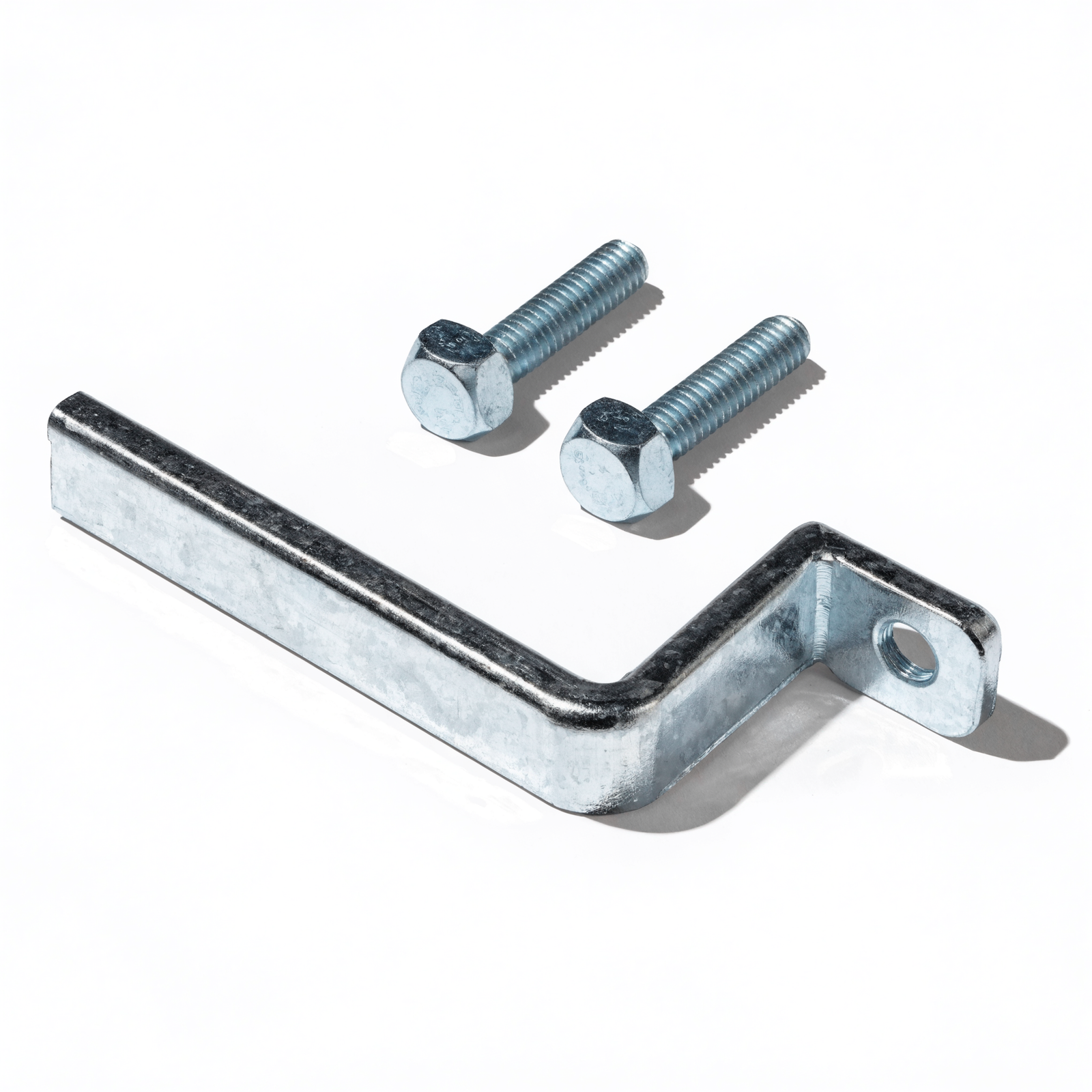
- Galvanised brackets or cleats are screwed into timber posts or bearers, holding the plinth flush against the post line.
- Always use galvanised or stainless fixings — uncoated steel will rust, streak the concrete, and fail years before the plinth or fence do.
- The plinth lifts the bottom paling or rail clear of the soil line, which is the whole point of pairing it with timber.
Treated vs Untreated Timber
Most modern timber fences use treated pine, rated for ground contact or above-ground use depending on the treatment level. A plinth is a genuine benefit either way, but it matters more on above-ground-rated timber, which isn't designed to handle direct soil contact at all. If you're replacing an older fence and unsure of the timber's treatment rating, a plinth removes the guesswork — the timber simply never touches the ground.
Signs Your Timber Fence Already Needs a Plinth
If you're on the fence about whether to bother, these are the signs worth acting on rather than waiting out:
- Dark, soft, or spongy timber at the base of palings or the bottom rail — early-stage rot.
- Visible gaps opening between the bottom of the fence and the ground, especially after dry weather.
- Garden beds or mulch banked up directly against the timber, holding moisture against it constantly.
- A musty smell at the base of the fence line — often a sign fungal decay is already active, even before visible damage.
Compatibility with Aluminium & Steel Fencing
Post Spacing Differences
Aluminium slat and steel picket fences both accept plinths without issue, but post spacing is worth checking before you order. Lightweight aluminium fencing sometimes uses narrower post spacing than the standard 2,300–2,400mm plinth length, which can mean trimming the plinth to fit rather than a straight drop-in. This is more common on decorative slat fencing designed for a lighter visual profile than a solid Colorbond sheet, where manufacturers often prioritise closer post spacing for extra rigidity over matching standard concrete-plinth lengths.
Fixing Considerations for Lightweight Fencing
- Aluminium posts are generally thinner than Colorbond channel posts or timber, so use fixings sized for the post rather than over-tightening and deforming it.
- Aluminium doesn't rot, so the plinth's role here is mainly soil retention and a finished, tidy ground-line look rather than material protection.
- Steel picket fences on concrete plinths pair well aesthetically, since both are low-maintenance, durable materials with a similar expected lifespan.
Worked example:
A Gold Coast property with a slimline aluminium slat fence has posts spaced at roughly 1,800mm rather than the standard 2,340mm plinth length. Rather than leaving an awkward short offcut at the end of each run, the installer trims each plinth to 1,800mm with a concrete saw, keeping the cut edge against a post where it's less visible. The result lines up cleanly with the lighter-gauge posts without over-stressing them.
Why Timber Fences Benefit Most (Rot Prevention)
Timber is the one fence material that actually degrades from ground contact, which makes the case for a plinth strongest here.
The Science of Ground-Contact Rot
Timber rot is fungal decay, and fungi need three things to establish: moisture, oxygen, and a food source (the timber itself). The base of a fence, sitting in or near soil, checks all three boxes — soil holds moisture against the timber far longer than it would dry out in open air, and that constant dampness is what starts the decay process. Once fungal decay begins in a bottom rail or paling, it spreads upward through the timber's grain, well beyond just the section that was originally in contact with the ground.

Timber generally needs a moisture content above roughly 20% before decay fungi can establish and spread at a meaningful rate. Timber sitting on or against soil routinely sits well above that threshold for extended periods, especially after rain or regular garden watering, while timber with a clear air gap below it dries out between wet periods and rarely stays wet long enough for decay to take hold.
How a Plinth Interrupts That Process
A plinth creates a physical break between soil and the timber rail. With the timber no longer sitting in or against damp ground, the moisture side of the decay equation is largely removed. This doesn't make the fence indestructible — timber above ground still weathers and eventually needs maintenance or replacement — but it removes the specific failure mode that causes bottom rails to rot out years before the rest of the fence shows any wear.
Which Fence Type Gets the Most Value from a Plinth?
| Fence type | Main benefit of a plinth | Relative value |
|---|---|---|
| Timber | Rot prevention plus soil retention | Highest — protects a material that actively degrades from ground contact |
| Colorbond | Soil retention and gap closure, especially on reactive clay | Moderate — no rot risk, but real value on movement-prone sites |
| Aluminium / steel | Soil retention and tidy finish | Moderate — mainly cosmetic and functional, not protective |
Cost Comparison: Plinth vs Rail Replacement
| Approach | What's involved | Frequency |
|---|---|---|
| Fit a plinth upfront | One-off material and install cost | Once — concrete doesn't need replacing |
| Replace rotted bottom rail(s) | Removing palings, replacing rail, possibly re-fixing palings | Recurring — the replacement rail faces the same ground-contact risk unless a plinth is added |
If you've already had to replace a rotted rail once without addressing the underlying ground-contact issue, the same section is likely to rot again on the same timeline. Fitting a plinth at that point breaks the cycle rather than just resetting the clock, and it's generally a far smaller job than a full fence replacement down the track.
Worked example:
A homeowner in Adelaide's western suburbs replaced a rotted timber bottom rail two years ago, only for the new section to start showing the same soft, dark timber at ground level already. The underlying cause — garden bed soil banked up against the fence, holding moisture — was never addressed. Fitting a plinth along that section lifts the new rail clear of the soil, at roughly the cost of one more rail replacement, but this time removing the actual cause rather than just the symptom. The homeowner also pulled the garden bed mulch back from the fence line by a few centimetres, which helps keep the area drier overall and reduces the chance of the same issue showing up elsewhere along the run.
Cost Considerations by Fence Type
The plinth itself costs the same regardless of what it's being fixed to — the cost differences between fence types come almost entirely from the fixing hardware and labour time involved.
- Colorbond tends to be the quickest and cheapest to fit, since the channel post is already there to screw into.
- Timber adds a small cost for galvanised brackets and slightly more labour time for drilling into hardwood posts, but this is minor next to the cost of not addressing rot.
- Aluminium can add cost if post spacing means every plinth needs trimming, since that's extra labour and, potentially, an angle grinder or concrete saw hire.
Fixing Methods Per Fence Type
| Fence type | Fixing method | Notes |
|---|---|---|
| Colorbond | Screwed directly into steel channel post | Fitted before the bottom rail; quickest of the three |
| Timber | Galvanised brackets into posts or bearers | Use only galvanised or stainless fixings to avoid rust staining |
| Aluminium / steel | Lightweight brackets matched to post profile | Avoid over-tightening on thinner-gauge posts |
Browse fixing hardware for your fence type in our fence brackets collectionFence Brackets.
Expected Lifespan: Fence With vs Without a Plinth
Lifespan is where the real-world value of a plinth shows up most clearly, and it varies a lot by fence material:
| Fence type | Typical lifespan without a plinth | Typical lifespan with a plinth |
|---|---|---|
| Timber | Bottom rail/palings often need replacement well before the rest of the fence, sometimes within 5–10 years on damp sites | Ground-contact rot largely removed; lifespan more consistent across the whole fence |
| Colorbond | Long-lived regardless, but soil gaps can widen over time on reactive sites | Similar sheet lifespan, but a tidier, more stable base line over time |
| Aluminium | Long-lived regardless — aluminium doesn't corrode the way steel can | Similar lifespan, mainly a cosmetic and soil-retention benefit |
The pattern is consistent: a plinth changes the maintenance outlook most where the fence material is actually vulnerable to ground contact, which is why timber sees the biggest practical benefit of the three.
FAQs
Will a plinth work with an existing fence, or only new installs?
Both. Fitting a plinth to an existing fence is very common — it's usually the reason someone goes looking for this product in the first place, after noticing rot or a soil gap on a fence that's already up.
Does a plinth void my fence warranty?
Generally no, since a plinth doesn't alter the fence panels or sheets themselves — it sits below them. That said, warranty terms vary by manufacturer and installer, so it's worth a quick check if your fence is still under warranty and you're not the original installer.
Can I mix fence types along one plinth run?
Yes — it's common on corner blocks or where a fence transitions from Colorbond to timber. Just plan the fixing method to change at that transition point, using the right bracket type for each section.
Does the plinth colour need to match my fence?
Not strictly, since the plinth sits at ground level and is often partly obscured by garden beds or mulch. Many homeowners choose a dark finish regardless of fence colour simply because it hides dirt and weathering better over time than a lighter finish would.
What if my fence type isn't listed here?
Colorbond, timber and aluminium cover the vast majority of Australian residential fences, but plinths generally work with any fence built on discrete posts — brick pier fences with infill panels, for example, follow a similar logic to timber or aluminium. If you're unsure about a less common fence type, a quick photo to your supplier is the fastest way to confirm fixing compatibility before you order.
Do plinths work on both sides of a shared boundary fence?
Yes, and this is worth raising with your neighbour before installing, particularly if the soil height differs on each side. A plinth fitted on your side won't necessarily address a gap or soil issue visible from the neighbouring property, so a shared conversation — and sometimes a shared cost — makes sense for boundary fences.
Does a plinth help with fence materials other than timber, Colorbond and aluminium?
Brick, block and other masonry fence types generally don't need a plinth in the same way, since they're already ground-contact rated and don't rely on a bottom rail. Where a plinth still adds value on these fence types is soil retention — closing a gap under an infill panel section, for example — rather than protecting the fence material itself.
Ready to fit a plinth to your fence?
Shop the full under-fence plinths range, or check sizing first in our guide to plinth sizes & maximum height.
Shop under-fence plinths →
Leave a comment (all fields required)