Quality concrete sleepers & steel posts delivered Australia-wide

Add your deal, information or promotional text

Retaining Wall Advice

Building a retaining wall on a sloped block requires stepped footings, careful post embedment calculation, and often a tiered wall design to manage large level changes safely. This guide covers everything you need to know about retaining walls on sloped sites in Australia — from design principles to drainage and council approval.
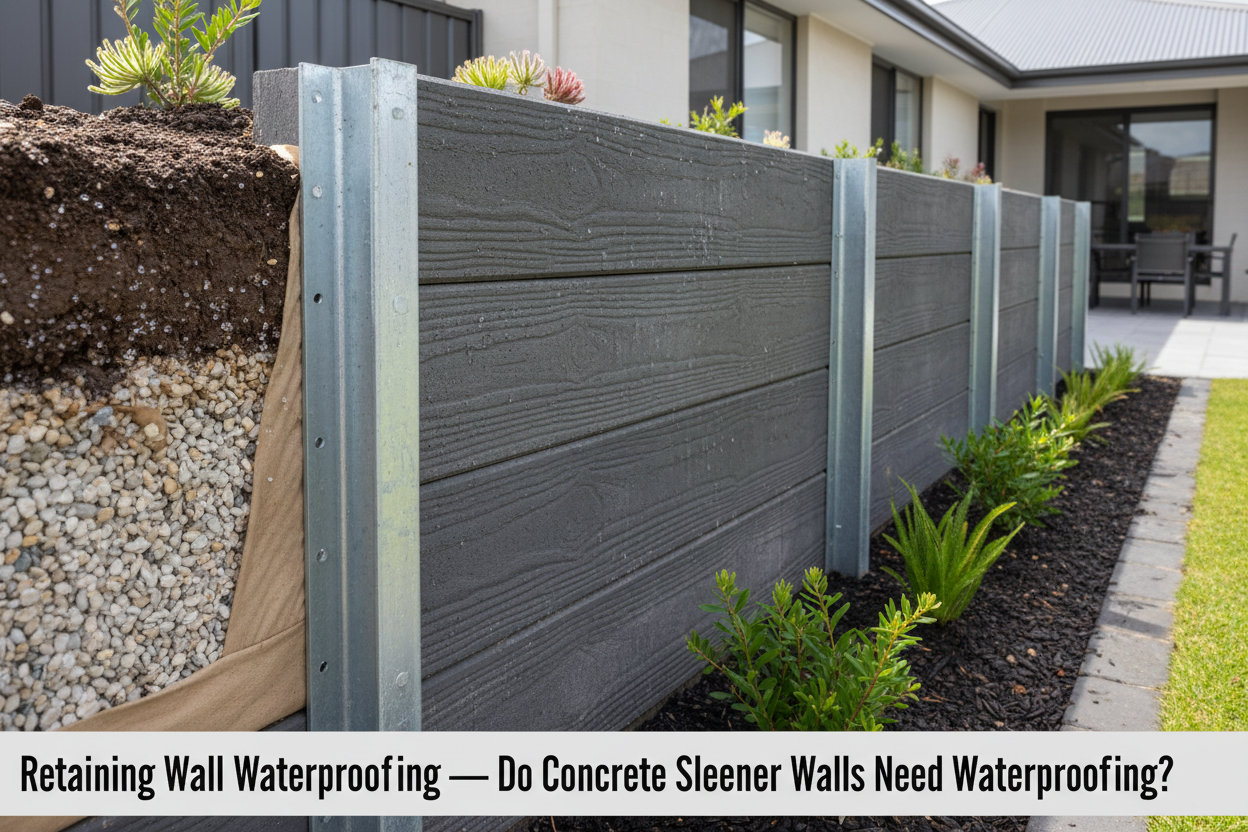
Concrete sleeper retaining walls do not require waterproofing in most residential applications — but they do require correct drainage. This guide explains when waterproofing adds value, what products are used, and why drainage is always the priority for long-lasting retaining walls in Australia.
Choosing between H-beam and C-channel steel posts is one of the most important decisions in any retaining wall build. C-channel suits walls up to 1.0m in standard conditions. H-beam is required for taller walls, heavy surcharge loads, or wider post spacing. This guide explains exactly when to use each, with worked examples and Australian Standards references.
How deep should retaining wall posts be set in Australia? The standard rule is one-third of total post length in the ground — so a 1.5m post needs 500mm embedment for a 1.0m wall. This guide covers embedment depth by wall height, soil type adjustments, surcharge load rules, and worked examples for H-beam and C-channel posts.
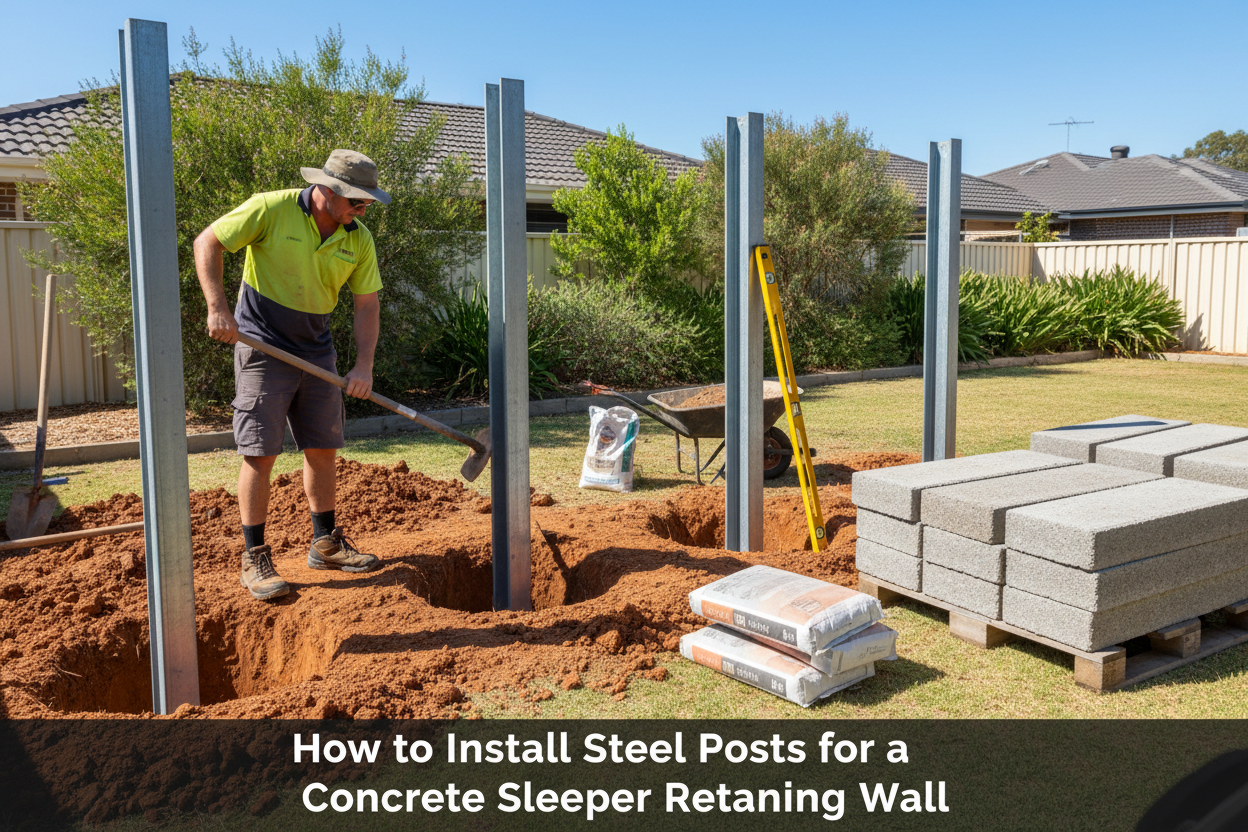
Getting your steel posts right is the most critical step in building a concrete sleeper retaining wall. This step-by-step guide covers post spacing, embedment depth, concrete mix, alignment, and common installation mistakes to avoid.

Search