










Retaining Wall Design Ideas: Choosing a Style for Your Block
Quick answer: The fastest way to choose a retaining wall style is to start from your home, not the wall. A contemporary home generally suits a charcoal or smooth finish. A Federation, heritage or established garden property usually suits a timber-look woodgrain finish. A coastal or civil-style setting often suits a sandstone-look finish. From there, it's about matching tone and texture to what's already on your property - brick, render, fencing and garden.
Start with your Home's Style, not the Wall's
It's tempting to browse finishes first and pick whichever looks best in a product photo. In practice, a finish that looks great in isolation can clash badly once it's sitting against your actual brick, render or fence line. Working backwards from your home's existing style gives a much more reliable starting point.
- Contemporary homes - dark cladding, black window frames, minimalist landscaping - generally suit charcoal or smooth finishes
- Federation, heritage and established-garden homes - generally suit a woodgrain, timber-look finish
- Coastal and civil-style properties - generally suit a sandstone-look or textured finish
These are starting points, not rules. The property itself - and your own taste - should always have the final say.
It's worth being clear about why this "home first" approach works better than browsing finishes in isolation. A retaining wall doesn't exist as a standalone object - it sits directly against, or in clear view of, everything else on the property: brick, render, roofing, fencing, paving and established planting. A finish chosen purely on its own merits, without reference to those surrounding materials, has a real chance of looking like an afterthought once it's actually built, no matter how attractive it looked as an isolated product photo. Starting from the home's existing palette and working outward to the wall avoids this mismatch before it becomes a permanent, expensive part of the property. It's also worth remembering that a retaining wall, once built, is genuinely one of the harder landscaping elements to change your mind about later - unlike furniture, planting or even paving, swapping out a finished concrete sleeper wall for a different finish means demolishing and rebuilding, not simply replacing a surface layer.
Contemporary Homes: Charcoal or Smooth
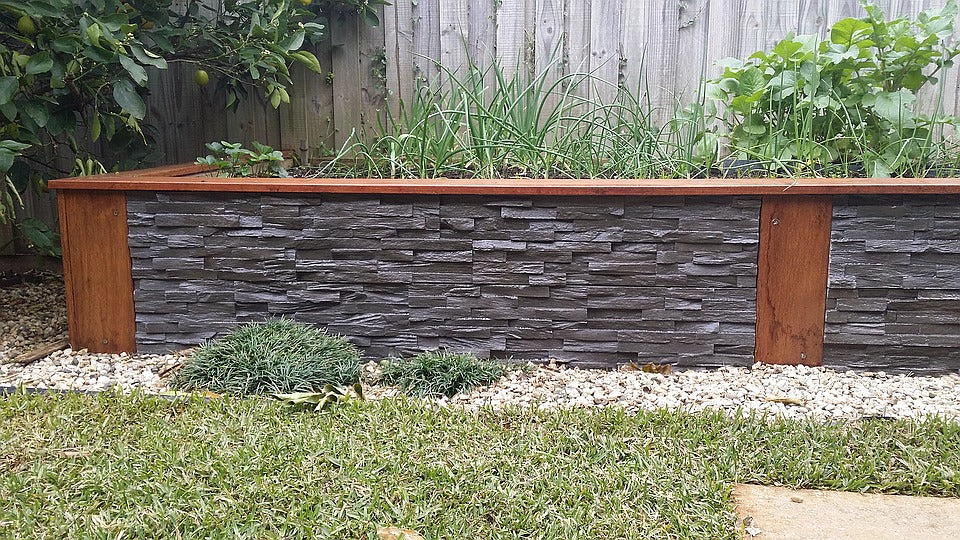
Contemporary homes tend to favour a cleaner, more architectural look. Charcoal is the most common choice here - it pairs naturally with Colorbond Monument or Basalt fencing, dark window joinery and hard-landscaped gardens. A smooth finish, left plain or rendered, works well where an even more minimalist, unbroken surface is wanted.
Both finishes tend to read as "quiet" against a contemporary facade - they support the architecture rather than competing with it.
Within this category, there's still a meaningful choice between charcoal and a light, render-ready smooth finish. Charcoal tends to suit homes with an already dark or monochrome material palette - black cladding, dark roofing, minimal planting - since it continues that tonal language directly into the landscaping. A light smooth finish, particularly one intended to be rendered or painted, suits contemporary homes built around a lighter, brighter material palette, or where the wall needs to match an existing rendered fence or facade rather than contrast against it. Neither is objectively "more contemporary" than the other - the deciding factor is almost always what's already on the rest of the property.
Federation, Heritage and Garden-forward Homes: Woodgrain
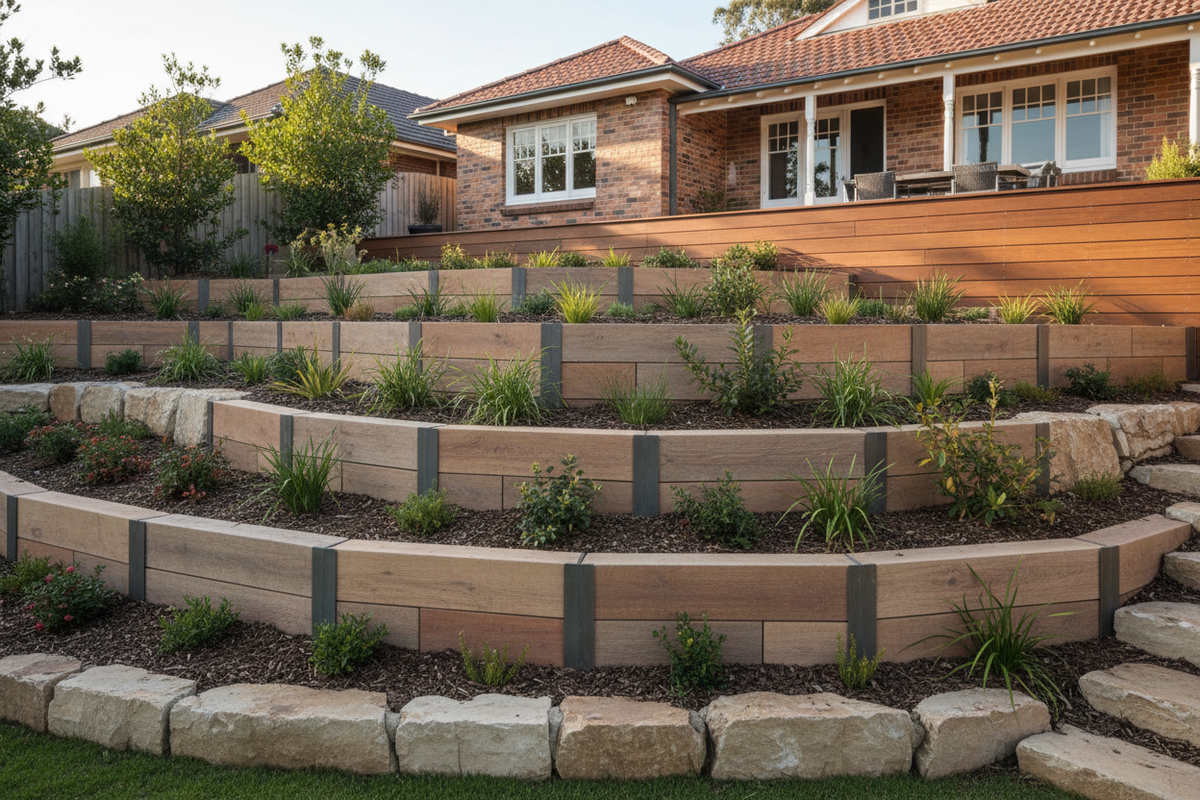
Older homes with established gardens, and properties on rural or semi-rural blocks, generally sit more comfortably with a woodgrain finish. It gives the warmth of a timber sleeper wall - useful if you're replacing an old timber wall and want to keep a similar character - without timber's rot, termite risk or ongoing maintenance.
An Ashwood or similar warm timber-look finish tends to pair particularly well with native planting and established greenery, since it reads as part of the garden rather than a hard architectural addition.
This category covers a genuinely wide range of properties, and it's worth thinking about where on that spectrum your own home sits. A true heritage-listed property with existing sandstone or brick detailing might actually be better served by a sandstone-look finish than a timber-look one, since it echoes the masonry already present rather than introducing a new material language. A more general "established garden" property, without a strong existing heritage character, has more freedom to choose based purely on how much warmth and texture is wanted against the greenery. Woodgrain finishes also tend to vary noticeably in tone between products - some lean warmer and more red-brown, others sit closer to a grey-driftwood tone - so it's worth comparing a couple of options against your specific garden rather than assuming all woodgrain finishes read the same way.
Coastal and Civil-style Properties: Sandstone-Look
A sandstone-look or textured finish suits properties where a heavier, more established feel is wanted - common along the coast and in civil or council-style landscaping, where a plain smooth face can look too utilitarian against natural surroundings.
This finish also tends to sit well next to natural stone paving, exposed aggregate driveways, or other textured hard-landscaping elements already on the property.
Coastal properties often deal with a specific practical consideration alongside the style question: salt air and exposure. While a sandstone-look finish is chosen primarily for its appearance, its heavier, more textured surface can also be more forgiving of the general weathering that coastal exposure brings, since the texture itself masks gradual surface changes better than a flat, smooth face would. This is a secondary practical benefit rather than the main reason to choose it, but it's worth knowing about if a coastal property is also dealing with harsher weathering conditions than an inland block.
What if your Home doesn't Fit neatly into one Category
Plenty of properties don't sit cleanly in a single style bucket - a renovated older home with a contemporary extension, for instance, or a coastal property with a distinctly modern build. In these cases, it's worth identifying which part of the property the wall will actually be seen alongside, rather than trying to categorise the whole house in one go.
- If the wall sits near a newer, more contemporary extension, lean toward the charcoal or smooth guidance even if the original part of the home is more traditional
- If the wall sits near an original facade or established garden, lean toward woodgrain or sandstone-look guidance even if a newer extension elsewhere on the property is more contemporary
- Where a wall will genuinely be visible from both the older and newer sections of a property, a more neutral finish - a mid-tone smooth or a subtly textured option - can act as a bridge between the two styles rather than committing fully to either
This kind of localised thinking - what will this specific wall actually sit next to - tends to produce a better result than trying to force a single style label onto an entire property that doesn't neatly fit one.
Common Mistake: Judging a Finish from a Small Photo
Product photography, especially under studio lighting, tends to flatten the texture and colour variation that makes a finish look convincing in real life. A tone that looks flat brown or grey in a thumbnail can look completely different once it's standing in full sun against your actual brickwork.
Where possible, view a physical sample or a photo of an installed wall in daylight, at the actual point on your property where the wall will sit, before finalising your choice. This one extra step catches most style mismatches before they become a permanent, expensive part of the property.
A closely related mistake is choosing a finish based on how it looks in someone else's garden, in a display yard, or in a project photo from a completely different climate or light condition. Direct northern light, dappled shade under established trees, and the flat, even light of an overcast day can all make the same finish read quite differently. If a sample is available, it's worth viewing it at more than one point during the day before finalising the decision, rather than relying on a single viewing under one particular light condition.
A Simple Way to Narrow it down
If you're still torn between two or three finishes, try this:
- Stand at the spot where the wall will be most visible - the street, driveway or main garden path
- Hold a sample against your existing brick, render or fence line at that exact spot
- Check it again at a different time of day - morning and evening light show texture and warmth that midday sun flattens out
- Rule out whichever finish clearly clashes, rather than trying to pick a single "winner" straight away
For finishes with more texture and personality - sandstone, rock face and other feature-style options - our creative retaining wall ideas guide goes into more depth.
Getting a Second Opinion Before Committing
Because a finish decision is genuinely subjective, it's worth getting at least one outside perspective before finalising a choice, particularly if the wall will be a prominent, street-facing feature. A supplier who sees a wide range of finishes installed across different property styles can often flag a mismatch or a strong pairing that isn't obvious from a sample alone. Photos of similar homes with a specific finish already installed - if your supplier can provide them - are also more useful than a studio product shot, since they show the finish in a genuinely comparable real-world context rather than under controlled lighting.
Thinking About How a Finish Will Age Over time
A finish decision isn't just about how a wall looks on the day it's finished - it's worth thinking a few years ahead as well. Different finishes weather differently, and understanding this upfront can save some disappointment later.
- Charcoal and darker finishes tend to hide dust, mineral staining and general weathering better than lighter tones, which is part of why they remain popular for low-maintenance contemporary properties
- Light smooth or render-ready finishes can show soil splashback, mould in shaded, damp positions, or general grime more visibly over time, particularly if garden beds sit close to the wall face without a buffer of mulch or paving
- Woodgrain finishes generally age gracefully, since their moulded texture already mimics a naturally weathered timber look, meaning subtle colour changes over time tend to read as character rather than as visible wear
- Sandstone-look and heavily textured finishes also tend to age well visually for the same reason - their irregular surface disguises gradual changes far more effectively than a flat, uniform face
None of this should be the deciding factor over how a finish looks against your home today, but it's a useful tiebreaker if you're genuinely undecided between two options that both suit your property equally well on style grounds alone.
Style Considerations for a Wall You'll See Every day
Not every retaining wall gets the same amount of daily attention. A wall along a side boundary, seen only occasionally, doesn't need the same scrutiny as a wall you'll walk past or view from a kitchen window every single day. It's worth being more deliberate about style for the walls that fall into this second category.
- A wall visible from a main living area or kitchen window is worth viewing at the specific times of day you're most likely to be looking at it - morning coffee light is different from evening dinner light
- A wall along a daily walking path, such as from a carport to the front door, benefits from a finish that still looks good up close, not just from a distance, since it will be seen at close range far more often than a garden-bed wall viewed from across the yard
- A wall that forms part of an outdoor entertaining area is worth considering alongside furniture, lighting and any planting already planned for that space, since all of these elements will be viewed together most evenings
Spending a little extra thought - and, where relevant, a little extra budget - on the walls you'll genuinely see every day is generally a better use of attention than applying the same level of scrutiny evenly across every retaining structure on the property, including ones that are rarely seen at all.
Browse the Range
Once you've got a general direction, it's worth browsing the actual finishes to see how they compare in more detail. Our concrete sleeper range covers the full selection, or go straight to woodgrain, charcoal or sandstone finishes directly.
For the full list of ideas this style guide sits alongside, see our main retaining wall ideas guide.
FAQs
How do I know which retaining wall style suits my home?
Start from your home's existing style rather than the wall in isolation. Contemporary homes generally suit charcoal or smooth finishes, heritage and garden-forward homes suit woodgrain, and coastal or civil-style properties often suit a sandstone-look finish. From there, match tone and texture to your actual brick, render and fencing.
Does a more textured finish cost more than a plain one?
Not necessarily. Pricing depends on the specific product, dimensions, strength grade and finish method rather than texture alone. Compare like-for-like quotes on the exact products you're considering rather than assuming texture drives cost.
Can I mix styles across different parts of my property?
Yes. Since all finishes share the same sleeper dimensions and post system, it's practical to use a feature finish on a street-facing section and a simpler finish on hidden or side walls.
What if I can't decide between two finishes I like equally?
That's a reasonable place to be, since most finishes are designed to look good in a range of settings. Checking current stock availability and asking which finish is chosen most often for similar homes are both sensible, low-stakes ways to make the final call.
What if my property doesn't clearly fit one style category?
Focus on what the wall will actually sit next to, rather than trying to label the whole property one style. A wall near a contemporary extension can follow contemporary guidance even if the rest of the home is more traditional, and vice versa.
Should I get a second opinion before choosing a finish?
It's a reasonable step, particularly for a prominent, street-facing wall. A supplier who sees a wide range of finishes installed can often flag a mismatch or a strong pairing that isn't obvious from a sample alone.
Do lighter finishes show dirt and weathering more than darker ones?
Generally yes. Charcoal and other darker finishes tend to hide dust, staining and general weathering better than lighter smooth finishes, which is one reason they remain popular on low-maintenance contemporary properties. This shouldn't override how a finish looks against your home, but it's a useful tiebreaker between two equally suitable options.
Is it easy to change a retaining wall's finish later if I change my mind?
Not really. Unlike paint, furniture or planting, a concrete sleeper's finish is set during casting, so changing it later generally means replacing the sleepers rather than resurfacing them. This is part of why it's worth taking the extra time to confirm a finish choice before building, rather than treating it as easily reversible.
Leave a comment (all fields required)