








Yes, tree roots can genuinely damage and even push over a retaining wall, both directly, by physically forcing their way into cracks and joints, and indirectly, by drawing moisture from the soil in a way that changes the pressure the soil puts on the wall. Some Australian trees are far more likely to cause this than others, and safe planting distance depends heavily on the species and its mature size. Here's how it actually happens, and what to do if it's already affecting your wall.

Trees and retaining walls aren't automatically incompatible, plenty of walls coexist with established trees nearby without any problem. The issue is usually a specific combination: a vigorous, water-seeking root system, planted too close to the wall, in conditions that let roots find their way into existing weaknesses.
How Tree Roots Damage Retaining Walls
Roots cause damage in two distinct ways, and it's worth understanding both, since they call for different responses. The first is direct physical damage, roots growing into existing cracks, joints, or gaps in a wall and gradually widening them as the root itself grows thicker, the same way roots can lift footpaths and crack driveways. This is more common in block, stone, or aged timber walls that already have some joint or crack for a root to exploit, and less common in a sound concrete sleeper wall with no existing gap for a root to get into.
The second, and often more significant, is indirect damage through moisture. Large, established trees draw substantial amounts of water from the soil around them, which can dry out and shrink the soil behind a retaining wall unevenly, particularly in reactive clay soils that already expand and contract with moisture. This uneven drying can change the pressure the soil puts on the wall in ways the wall wasn't built to handle, contributing to the same kind of soil pressure problems covered in our guide to why retaining walls fail.
Which Australian Trees Cause the Most Damage
Some species are considerably more likely to cause root-related wall problems than others, mainly due to how aggressively and how far their root systems spread in search of water.

- Eucalyptus and gum trees, extremely common across Australia, have fast-growing, far-reaching root systems and are frequently implicated in damage to nearby structures, including retaining walls.
- Willows, planted near water or on slopes, are notorious for aggressive, water-seeking roots that can travel considerable distances from the trunk.
- Poplars, often planted as windbreaks or screening, have similarly vigorous and far-spreading root systems.
- Figs, including ornamental varieties, develop substantial root systems capable of significant structural damage over time.
These are well-established problem species in Australian horticulture and arboriculture, though species behaviour can vary somewhat by region and local climate, so this list is a general guide rather than a site-specific assessment.
Smaller, slower-growing, or non-invasive species, many ornamental and native shrub-sized plants, for instance, are far less likely to cause this kind of problem even planted relatively close to a wall.
Safe Planting Distances by Tree Size
As a general guide, safe planting distance scales with a tree's expected mature height and root spread, not its size at planting:
| Tree mature size | General minimum distance from a retaining wall |
|---|---|
| Small (under 6m, e.g. many ornamentals) | 2–3 metres |
| Medium (6–15m) | 4–6 metres |
| Large (over 15m, e.g. most eucalypts) | 8–12 metres or more |

These are general landscaping guidelines rather than an engineering standard specific to retaining walls, so treat them as a starting point, not guarantees, a known aggressive root system like willow or fig may warrant even more distance than the table suggests, while a naturally well-behaved species might be safely planted closer. If you're planting new trees near an existing wall, it's worth researching the specific species' root behaviour rather than relying on size alone.
Root Barriers: What They Are & How They Work
A root barrier is a physical barrier installed in the ground between a tree and a structure, designed to redirect root growth downward or sideways rather than letting roots grow straight toward the wall. It's worth being clear about what does this job properly: a dedicated root barrier panel, typically a rigid, impermeable material installed vertically in a trench, is the product actually designed and marketed for this purpose.

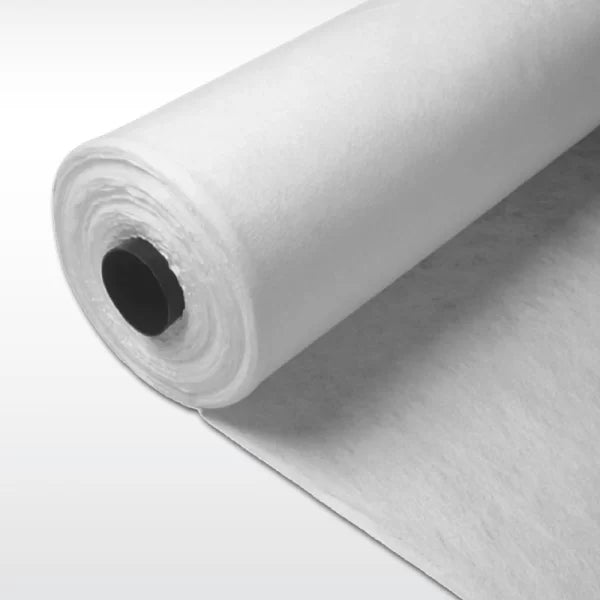
It's worth being precise here: RWD's geotextile fabric is a drainage and soil-separation product, designed to let water through while filtering out fine soil particles. That's a genuinely valuable function, but it's not the same job as a dedicated root barrier, which is typically a rigid or coated membrane specifically engineered to resist root penetration. A permeable drainage fabric may offer some limited, short-term resistance to roots, but it isn't built or sold for that purpose, and shouldn't be relied on as one. Our drainage guide covers geotextile fabric's actual role in a retaining wall's drainage system.
Signs Tree Roots Are Affecting Your Wall
A few signs point specifically to root involvement rather than another cause: visible roots at or breaking through the wall's surface or joints, cracking or displacement concentrated near where a tree's root zone would reasonably extend, a wall problem that's appeared or worsened as a nearby tree has matured and grown larger, or soil that seems unusually dry near the wall compared to the rest of the garden, suggesting a tree is drawing significant moisture from that area. Our full guide to signs your wall is failing covers the broader range of warning signs if you're not yet sure root damage is actually what's going on.
Solutions: Protecting Your Wall from Root Damage
If a tree is already established near a wall and showing signs of causing problems, options generally fall into a few categories. Installing a proper root barrier between the tree and the wall can redirect future root growth without removing the tree, though it won't undo damage roots have already caused. Improving and maintaining the wall's drainage, covered in our full drainage guide, can offset some of the moisture-related soil pressure issues roots contribute to, even if it doesn't address direct physical root intrusion. In more severe cases, where a tree's root system has already significantly compromised a wall's structure, addressing the wall itself, through repair or replacement, covered in our repair vs replace guide, may be unavoidable regardless of what's done about the tree.
Building a New Retaining Wall Near Existing Trees
If you're planning a new wall near trees that are already established, the planning stage is the easiest time to avoid future root problems. This means respecting safe distance guidelines for the specific species involved where possible, considering a root barrier installed during construction rather than retrofitted later, and being realistic about how much a young tree will grow, a safe distance from a small tree today may not stay safe as it matures over the following decade or two.
When to Remove the Tree vs Replace the Wall
This is rarely a simple choice, and it depends on factors beyond just the wall. Removing a mature, healthy tree is a significant decision in its own right, sometimes restricted by council tree protection regulations depending on species and location, and trees provide shade, privacy, and value that a replaced wall doesn't replicate. Generally, tree removal is worth considering when the tree is the clear and ongoing cause of damage, is relatively young or easily replaceable with a more suitable species, or when its root system is large enough that a root barrier alone wouldn't meaningfully help. Replacing the wall while leaving the tree in place makes more sense when the tree is mature, valuable, or protected, and when a root barrier combined with a properly built, well-drained replacement wall can reasonably coexist with the existing root system going forward.
Tree removal rules are set at the council level in Australia, and vary considerably between councils, even within the same state, so check with your local council directly before removing or significantly pruning a tree, rather than assuming a blanket state-wide rule applies.
FAQs
Can tree roots really push over a retaining wall?
Yes. Roots can physically force their way into existing cracks or joints, and large trees can also dry out soil unevenly in a way that changes the pressure on a wall, both of which can contribute to a wall failing.
How far should trees be from a retaining wall?
It depends heavily on the species and its mature size, roughly 2–3 metres for small trees, 4–6 metres for medium trees, and 8–12 metres or more for large trees like most eucalypts, though known aggressive species may need more distance still.
Does geotextile fabric stop tree roots?
Not reliably on its own. Geotextile fabric is primarily a drainage and soil-separation product. A dedicated, rigid root barrier is the product actually designed to redirect root growth away from a structure.
See our full guide on retaining wall problems for an overview of this whole topic, or our guide to why retaining walls fail for other causes beyond tree roots.
Leave a comment (all fields required)