





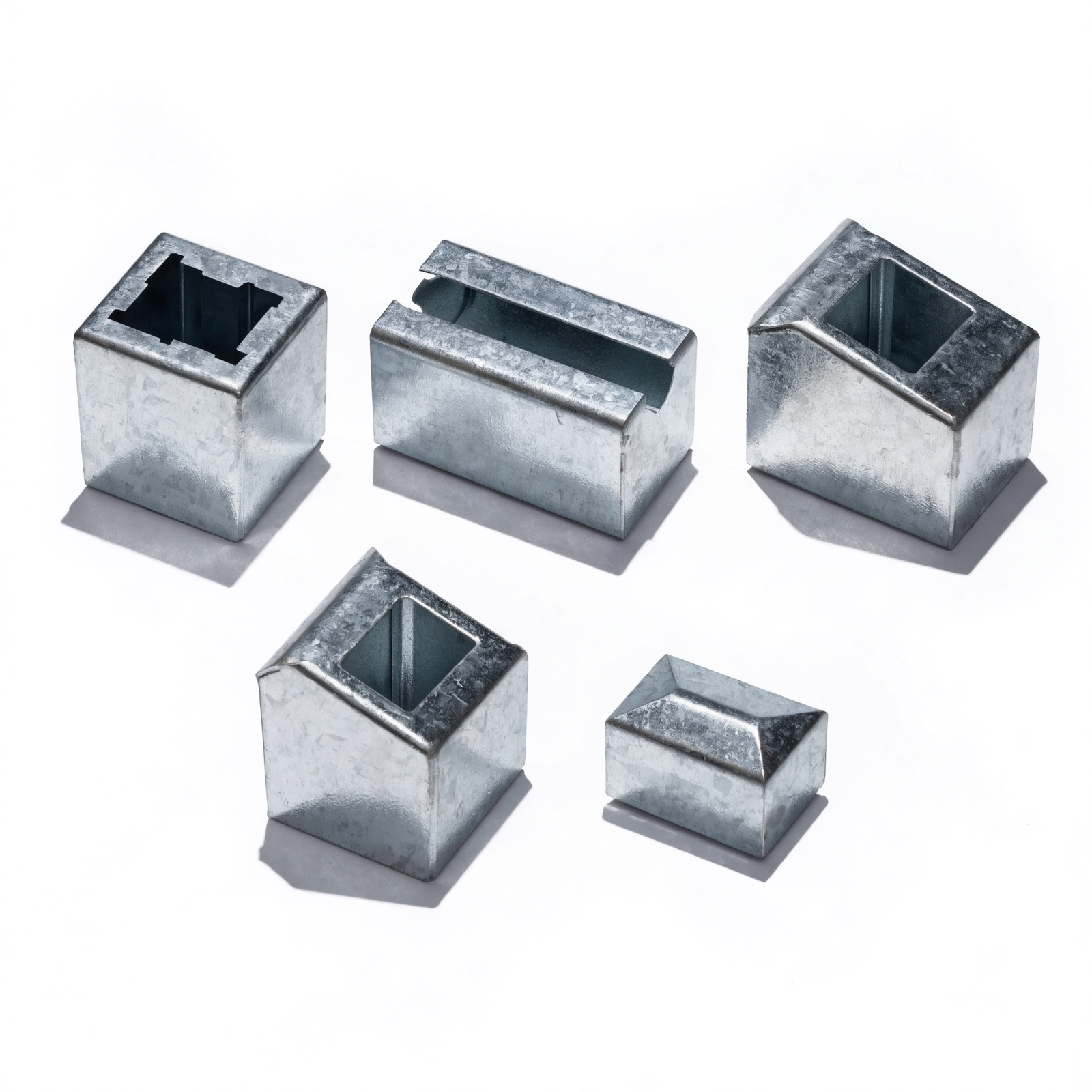

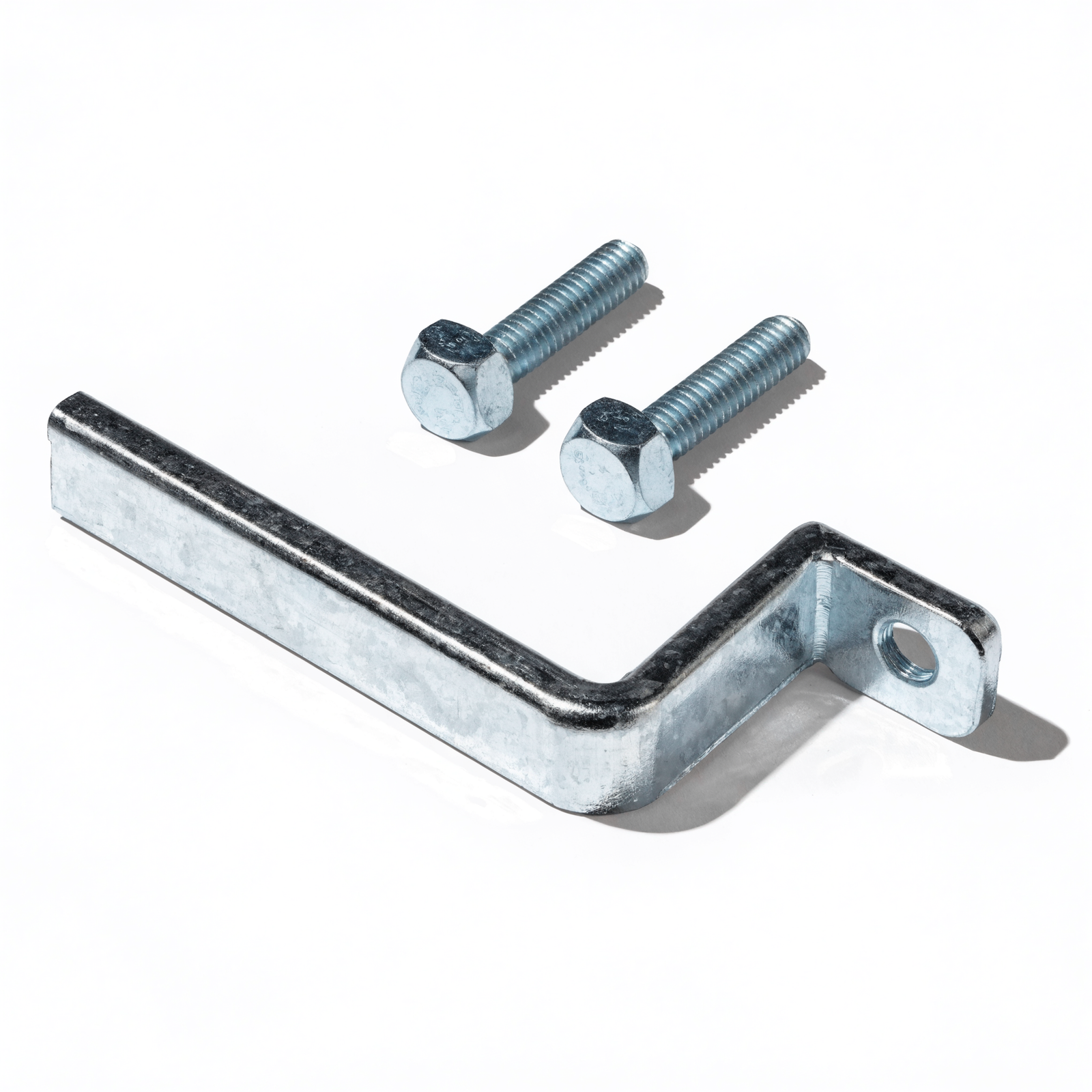



A post base bracket bolts a fence post to an existing concrete surface, such as a slab, paved path or the top of a retaining wall, instead of setting the post into a dug and concreted hole. It's a real alternative for light fencing on a sound slab, and a poor one for a tall or heavily loaded fence, because the bracket relies entirely on the fixings and the concrete's own strength rather than the post being buried and braced by the ground around it.

How a Post Base Bracket Works, and How It's Different From an In-Ground Post
A post set in the ground gets its stability two ways: the buried length resists the post trying to tip over, and the concrete around that buried length locks it in place. A surface-mount bracket has neither. It relies on:
- The bracket's own stiffness, so it doesn't flex under sideways load.
- The fixings into the concrete, usually masonry anchors or chemical anchors, which have to resist the post trying to lever the bracket off the surface.
- The concrete slab itself, which has to be thick enough and in good enough condition to hold those fixings without cracking or pulling out.
That's a fundamentally different load path, and it's why a post base bracket is not simply a lighter version of digging a footing. It's a different structural approach, better suited to some jobs and not others.
When It's a Reasonable Choice
- Low fences, generally under about a metre, where wind and impact loads on the post are modest.
- A sound, adequately thick concrete slab or paving that isn't cracked, hollow-sounding, or laid over an unknown base.
- Situations where digging isn't possible or sensible, such as fencing on top of an existing slab, over services you don't want to disturb, or on a rooftop or deck.
- Temporary or semi-permanent fencing, where you may want to relocate the post later.
When It's Not a Safe Substitute
- Taller fences, especially anything approaching standard 1.8m boundary fence height, where wind loading on a solid panel is considerable.
- Thin, cracked, or unknown-quality concrete. A bracket is only as strong as what it's anchored into, and a thin path slab is a common example of a surface that looks solid but isn't thick enough to hold a fence post securely.
- Anywhere a structural load is being carried, such as a retaining wall's own posts, which need the embedment and concrete footing a surface-mount bracket doesn't provide.
- Anywhere local regulations set a minimum footing depth for the fence height and type. A surface-mount bracket doesn't meet a footing-depth requirement, it's a different method entirely, so check with your local council or an engineer before relying on one for a fence that needs to meet a standard.
This article deliberately gives no specific load ratings or maximum fence heights for a post base bracket, since that depends on the bracket product, the anchors used and the concrete it's fixed to. Anyone unsure should get advice from the bracket manufacturer or a structural engineer rather than rely on a rule of thumb.
What to Check Before Choosing This Method
- Confirm the concrete's condition and thickness. A crumbling, thin, or already-cracked slab is a poor base regardless of how good the bracket is.
- Match the anchor type to the load. Chemical anchors generally hold more load than simple expansion anchors in the same size hole, and are commonly preferred for anything carrying real sideways force.
- Check the fence height and wind exposure. A tall, solid panel fence in an exposed position puts far more sideways load through the base than a low, open picket fence.
- Ask whether council approval or a minimum footing standard applies. Fence height limits and structural requirements vary by state and council, so check locally rather than assuming.
- Consider a hybrid approach for borderline cases. Some situations use a post base bracket for a short run and a dug footing for taller or more exposed sections of the same fence.
How This Differs From RWD's Retaining Wall Footings
RWD's own retaining wall guidance covers the embedded, concrete-poured footing method used for the steel posts that hold up a sleeper retaining wall. That's a structural load-bearing situation, holding back soil, and a surface-mount bracket is not an appropriate substitute there. This article covers a different scenario: a standalone fence post going onto an existing hard surface, not a retaining wall post going into the ground.
For the embedded, structural footing method used for a retaining wall's own steel posts, see RWD's Retaining Wall Footings guide and Steel Post Spacing & Embedment guide.
Expansion Anchors vs Chemical Anchors
The anchor choice matters as much as the bracket itself, and the two work quite differently.
- Expansion (mechanical) anchors work by wedging or expanding against the sides of the drilled hole as the bolt is tightened. They're quick to fit and don't need curing time, so the fixing is load-ready almost immediately. Their holding power depends heavily on the concrete right around the hole being sound, since that's where all the clamping force is concentrated. In cracked or poor-quality concrete, an expansion anchor can pull a cone of concrete out with it under load, rather than the anchor itself failing.
- Chemical anchors use a resin injected into the hole, which bonds a threaded rod or bolt along its full embedded length. Because the load is spread along that length rather than concentrated at one point, chemical anchors generally tolerate more marginal concrete and carry higher loads for the same diameter. The trade-off is cure time, often several hours to a full day depending on temperature and the resin used, during which the fixing shouldn't be loaded, and correct hole cleaning before injection, since dust left in the hole weakens the bond significantly.
For a fence post base carrying real sideways load, particularly anything at the upper end of what a surface-mount bracket should be used for, a chemical anchor is the more forgiving choice. For a genuinely light, low fence on good-quality concrete, a mechanical anchor is often adequate and considerably faster to install.
Post Base Bracket vs Dug Footing vs a Screw-In Ground Spike
It helps to see the post base bracket alongside the two other common ways of setting a fence post, since each suits a different situation.
| Method | Best suited to | Depends on | Typical drawback |
|---|---|---|---|
| Dug and concreted footing | Any fence height, especially taller or heavily loaded fencing | Embedment depth and concrete quality below ground | Slower, more disruptive, needs curing time before loading |
| Surface-mount post base bracket | Low fencing on existing sound concrete | The bracket's fixings and the concrete slab's own strength | No buried resistance at all, so entirely dependent on the fixing and the slab |
| Screw-in ground spike | Low, temporary or semi-permanent fencing in unpaved ground | Soil density and the spike's length and diameter | Poor in loose, sandy or very soft soil, and not an option where there's existing concrete |
The three aren't interchangeable substitutes for each other. Choosing between them comes down to what's underfoot, whether the fence needs to be permanent, and how much load it will actually carry.
Installing a Post Base Bracket: The General Sequence
The exact steps vary by bracket and anchor type, but the sequence is broadly consistent.
- Position and mark. Set the bracket where the post needs to go and mark the anchor hole locations through the bracket's fixing points.
- Drill the anchor holes. Use the bit size and depth specified for the anchor being used, and drill square to the surface. An angled hole weakens an anchor's holding capacity.
- Clean the holes thoroughly, particularly for a chemical anchor, since dust left in the hole is one of the most common causes of a weak bond. Blow or brush out the debris.
- Set the anchors. Fit expansion anchors and tighten to the torque specified for that anchor. For chemical anchors, inject the resin to the depth specified, insert the rod with a slight twisting motion to distribute the resin, and leave undisturbed for the full cure time before loading.
- Fit and secure the bracket, then the post, checking it's plumb in both directions before final tightening.
- Don't load the fence (attach panels, rails, or gates) until any chemical anchor has fully cured.
What Bracket or Slab Failure Looks Like
Since a surface-mount bracket relies entirely on the fixing and the concrete rather than buried resistance, it's worth knowing the early warning signs rather than waiting for an obvious failure.
- Hairline cracking radiating out from an anchor hole, which suggests the anchor is loading a small area of concrete beyond what it can take.
- The bracket rocking or lifting slightly on one side under sideways pressure, which points to a loosened or failing anchor rather than the bracket itself bending.
- A gap opening up between the bracket base and the concrete surface, sometimes with fine concrete dust visible, indicating the anchor is working loose under repeated load cycles such as wind gusts.
- Rust staining around the anchor holes, if the anchors themselves aren't corrosion-resistant, which can precede the anchor weakening from within.
Any of these is worth acting on promptly rather than waiting, since a surface-mount fixing that starts to fail tends to get worse quickly once the concrete around the anchor is compromised, unlike a buried post which has the surrounding soil as a backup.
Yes, using a post base bracket, but it suits low fences on sound concrete. For taller or heavier fences, an embedded, concreted post is the more reliable method.
How Strong Does the Concrete Need to Be?
Strong enough, and thick enough, to hold the anchor fixings under the sideways load the fence will put on them. A thin path slab is a common example of concrete that looks fine but isn't up to the job. If in doubt, ask an engineer or the bracket manufacturer.
Does a Post Base Bracket Meet Council Footing Requirements?
Not necessarily. Footing depth requirements are usually written around a dug and concreted post, so a surface-mount bracket may not satisfy them. Check with your local council.
Browse the Fence Brackets collection and the Hardware, Brackets & Cleats collection.
Leave a comment (all fields required)