





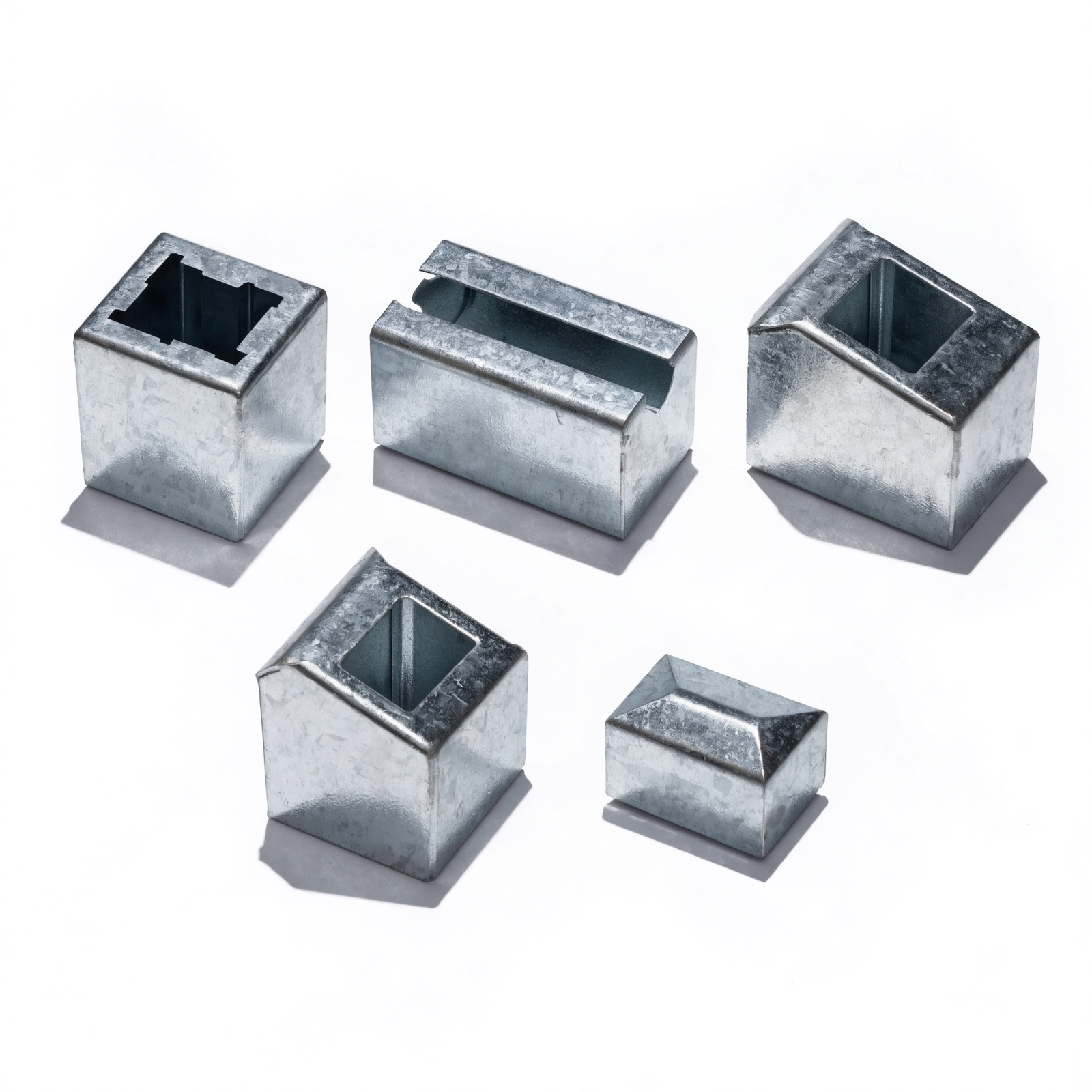

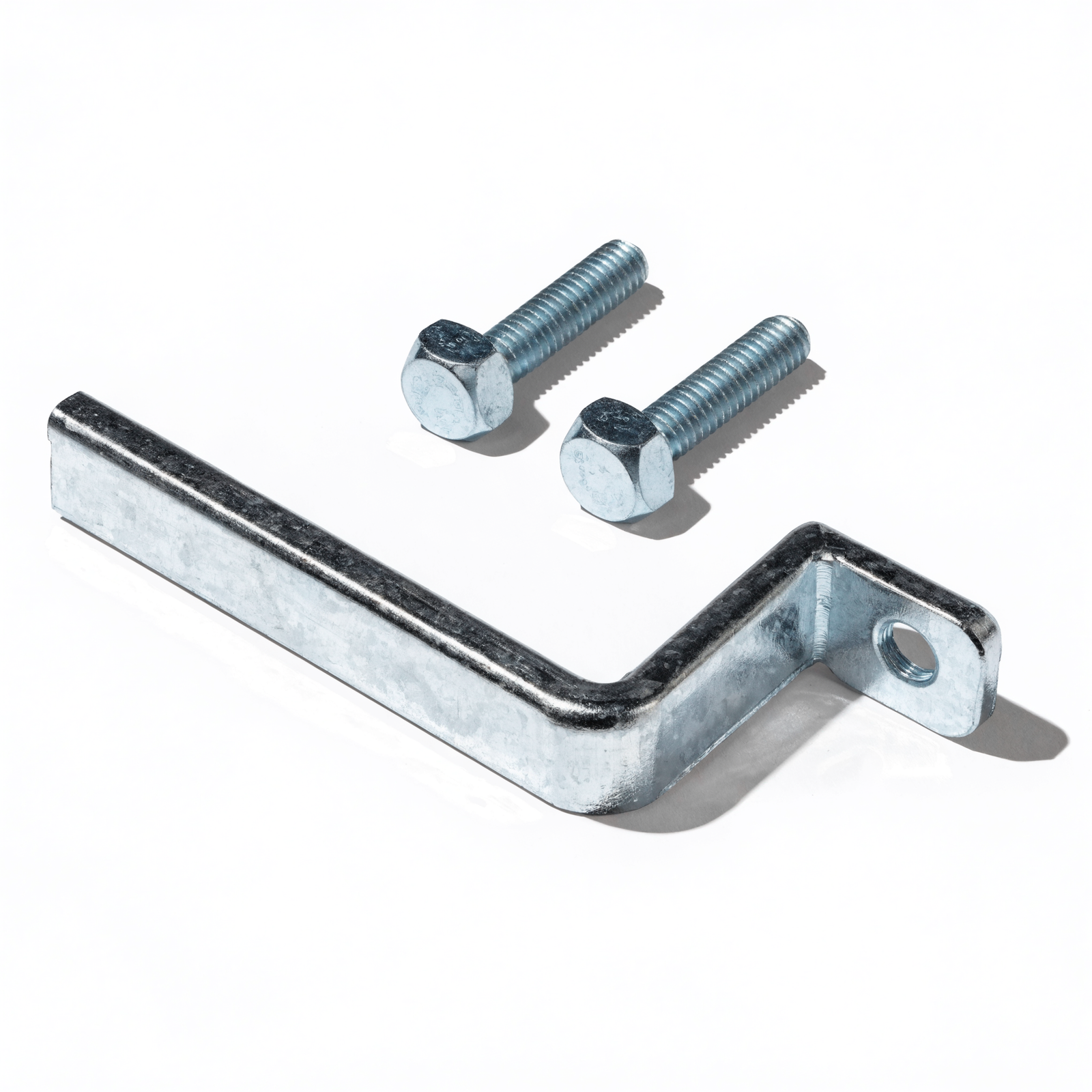



An extension bracket bolts to the top of an existing fence post and lets you fix additional height, either straight up or angled outward, without pulling out the post and starting again. Straight extensions simply raise the fence line. Angled extensions, often called anti-climb brackets, lean outward at the top, which is common on pool fencing and boundary fences where discouraging climbing matters as much as the extra height.
Straight vs Angled Extensions
- Straight extensions add height in the same plane as the existing fence. They're the simpler option, used when you just want a taller fence line, for privacy or to meet a height requirement.
- Angled extensions lean the added section outward, usually somewhere between 30° and 45° from vertical, so the additional panel or wire sits over the top of the original fence rather than continuing straight up. This makes the fence harder to climb, because a person scaling it hits an overhang near the top rather than a continuous vertical surface.

Both types depend on the same thing: the existing post being strong enough to carry the extra height and the extra leverage that height creates.
Why Post Condition Matters More Than the Bracket
Adding height to a post increases the sideways force the wind and any contact puts through the base of that post, because the leverage arm is longer. A post that was adequate for a 1.2m fence isn't automatically adequate for the same post extended to 1.8m or 2m. Before adding an extension bracket, it's worth checking:
- The post's condition. Timber posts with any rot or softness at the ground line shouldn't be asked to carry more height. Steel posts should be free of significant corrosion at the base.
- The post's embedment. How deep it's set and how well it's concreted in determines how much extra leverage it can resist. A shallow-set post is a poor candidate for extension.
- The post's original sizing. A post sized for a low fence may simply not be substantial enough to extend safely, regardless of the bracket used.
If any of these are in doubt, extending the post is the wrong fix. Replacing the post with a taller, adequately embedded one is the safer approach, even though it's more work.
Anti-Climb Angled Brackets: What They're Commonly Used For
Angled extensions come up most often around pool fencing, where many jurisdictions have specific requirements for fence height, gaps, and climbability, including rules about horizontal or angled elements near the top of the fence that could provide a foothold. Because pool fencing standards are safety-critical and vary by state, anyone adding an angled bracket near a pool boundary should check their local pool fencing regulations directly rather than relying on general advice, and in many cases will need the work inspected or certified.
Outside pool contexts, angled extensions are also used on general boundary fences for privacy or security, where the same climbing-deterrent logic applies without the specific pool safety rules attached.
What to Check Before Installing an Extension Bracket
- Confirm the post can take the extra height, as above.
- Check any relevant height limits. Many councils cap fence height, and some set different limits depending on whether the fence is on a boundary, and whether it's a pool fence. An extension that pushes the fence over a local limit can create a compliance problem even if it's structurally fine.
- Match the bracket to the fence material. A bracket designed for timber won't necessarily suit a Colorbond post, and vice versa.
- Consider the angle and any overhang rules, particularly for pool fencing, where an angled top rail can sometimes work against compliance rather than for it if it creates a climbable foothold or reduces the effective fence height as measured under the relevant standard.
- Weigh extension against replacement. For a post that's marginal, or a fence that needs a significant height increase, a taller replacement post is often the more reliable long-term fix.
How Extension Brackets Actually Attach to the Post
The attachment method affects both strength and how the extension behaves under load, and it varies by post material.
- Clamp-on brackets grip the outside of the post with bolted plates on two or more sides, relying on friction and clamping force rather than penetrating the post. They're common where drilling into the post isn't desirable, and they can sometimes be adjusted or repositioned, but their holding strength depends entirely on how tightly and evenly the clamp is torqued.
- Through-bolted brackets pass a bolt fully through the post and the bracket, which generally gives a stronger, more positive connection than a clamp, since the joint doesn't rely on friction alone. This does mean drilling into the post, which matters for a galvanised steel post's coating (see our galvanised finish guide) and for a timber post's structural integrity if it's already marginal.
- Sleeve or insert brackets fit inside a hollow post, such as round or square steel tube, extending upward from within rather than clamping or bolting to the outside face. These suit hollow sections specifically and aren't an option for solid timber.
Extending Different Post Materials
- Timber posts can usually take a through-bolted extension bracket if the timber itself is sound, though the extension timber should match or exceed the original post's dimensions, not be a lighter batten bolted on top. A common mistake is extending a post with a noticeably thinner top section, which shifts the point of maximum bending stress to a weaker piece of timber.
- Steel posts, particularly hollow or round sections, often suit a sleeve-style extension that continues the same profile upward, giving a cleaner load path than a clamped-on bracket.
- Colorbond-style posts are part of a manufactured system, and an extension not made for that specific profile may not seat correctly or may compromise the post's own coating and colour match. Checking with the fence system's manufacturer before extending is worth the extra step here.
Pool Fencing and Angled Extensions: What to Know Before Relying on General Advice
In Australia, pool fencing is generally governed by AS 1926.1, which sets requirements around fence height, gaps a child could climb through or under, and horizontal or angled elements near the top of the fence that could be used as a foothold. States and some councils apply and enforce these requirements slightly differently, and many require the finished fence to be inspected or certified before a pool can be used.
This matters for angled extensions specifically because the very feature that makes them effective as an anti-climb measure, an angled or overhanging top section, is also the kind of detail pool fencing standards scrutinise closely. An angled extension that isn't installed correctly can sometimes work against compliance, for instance if it inadvertently creates a new foothold lower down the fence, or if the measured fence height doesn't account for the angle the way the standard requires. This is not an area to guess on. If the extension is anywhere near a pool boundary, get the specific requirements from your state authority or a licensed pool fence installer before proceeding, rather than relying on general guidance like this article.
Signs an Existing Extension May Already Be Overloading Its Post
If you're assessing a fence that already has an extension bracket fitted, rather than planning a new one, a few signs suggest the post is being asked to do more than it should.
- Visible lean or movement at the top of the post when the fence is pushed, more than you'd expect for its height.
- Cracking or gapping in the concrete around the base of an in-ground post, suggesting the footing is being levered by the added height.
- A visible gap or looseness where the extension bracket meets the original post, indicating the connection itself is working loose under repeated load.
- Any softness or rot at the timber post's ground line, which means the post shouldn't be carrying extra height regardless of how sound the bracket connection is.
If any of these are present, the safer move is addressing the post itself, either by replacing it or removing the extension, rather than continuing to rely on it.
Only if the post is sound and adequately embedded for the extra height and leverage. A post that's borderline for its current height shouldn't be extended.
Are Angled Extension Brackets the Same as Anti-Climb Brackets?
Often yes. The outward lean that adds height is also what makes the fence harder to climb, which is why they're common around pool fencing.
Do I Need Council Approval to Add Fence Height With a Bracket?
Possibly. Many councils set maximum fence heights, and pool fencing has its own specific rules. Check locally before installing, particularly near a pool boundary.
Browse the Fence Brackets collection. For the buying guide covering RWD's fence bracket kit and fitting steps, see the Retaining Wall Fence Brackets: Sizes, Fitting and Buying Guide.
Leave a comment (all fields required)