









Choosing the right steel post for your retaining wall is just as important as choosing the right sleeper. The post is the structural backbone of the wall — it resists the lateral pressure of the retained soil and transfers load into the ground. Get the post wrong and the wall will fail, regardless of how good the sleepers are.
Last updated: June 2026 | Written by the team at Retaining Walls Direct — with many years of trade experience supplying retaining wall materials across Australia.
Table of Contents
- H-Beam vs C-Channel Steel Posts — Which Do You Need?
- Post Sizing — How to Choose the Right Section
- Post Spacing — How Far Apart Should Posts Be?
- Post Embedment — How Deep Do Posts Need to Go?
- Galvanising — Why It Matters and What to Specify
- Corner, End, and Joiner Posts
- Posts for Special Applications
- Active Soil Pressure — Why It Determines Your Post Choice
- Frequently Asked Questions
1. H-Beam vs C-Channel Steel Posts — Which Do You Need?
H-Beam (UC) posts are stronger in bending and suit taller walls, heavier surcharge loads, and any wall near a driveway, pool or building. C-Channel (PFC) posts are lighter and suit lower residential walls under 1.0m and garden applications where loads are modest. For the full comparison, see H-Beam vs C-Channel Steel Posts — Which Do You Need?
2. Post Sizing — How to Choose the Right Section
Post size (section dimensions and weight per metre) must be matched to wall height, post spacing, and surcharge loads. As a general guide for residential concrete sleeper walls:
- Walls up to 0.6m: 100UC or 100PFC minimum
- Walls 0.6m–1.0m: 100UC or 150PFC
- Walls 1.0m–1.5m: 150UC or 200PFC
- Walls over 1.5m: engineering certification required — post size specified by engineer. See: Engineered Retaining Walls Over 1 Metre
These are indicative only. Always confirm with an engineer for walls over 1m or where surcharge loads apply. Understanding active soil pressure is essential to correct post sizing.
3. Post Spacing — How Far Apart Should Posts Be?
Standard post spacing for concrete sleeper retaining walls is 1.8m to 2.4m centres. Closer spacing (1.5m or 1.0m) may be required for taller walls, heavy surcharge loads, or poor soil conditions. Wider spacing is not recommended for structural walls.
Full spacing guide: Retaining Wall Post Spacing — How Far Apart Should Posts Be?
4. Post Embedment — How Deep Do Posts Need to Go?
Posts must be embedded deep enough to resist the overturning moment from the retained soil. The general rule is a minimum embedment of one-third of the total post length. For a wall with 1.2m of exposed height, posts are typically 2.4m long with 1.0–1.2m embedded below ground.
In soft or expansive soils (clay), increase embedment by 20–30%. For walls over 1.5m, an engineer will specify exact embedment requirements.
Full embedment guide: How Deep Should Retaining Wall Posts Be? Post Embedment Guide
Installation guide: How to Install Steel Posts for a Concrete Sleeper Retaining Wall
5. Galvanising — Why It Matters and What to Specify
All steel posts used in retaining walls must be hot-dip galvanised after fabrication. Hot-dip galvanising provides a zinc coating that protects the steel from corrosion for 50+ years in typical residential environments.
Do not use paint-coated or cold-galvanised posts for in-ground applications — these coatings fail rapidly in soil contact. Specify AS/NZS 4680 hot-dip galvanised posts for all retaining wall applications. See AS 4678-2002 for full material compliance requirements.
6. Corner, End, and Joiner Posts
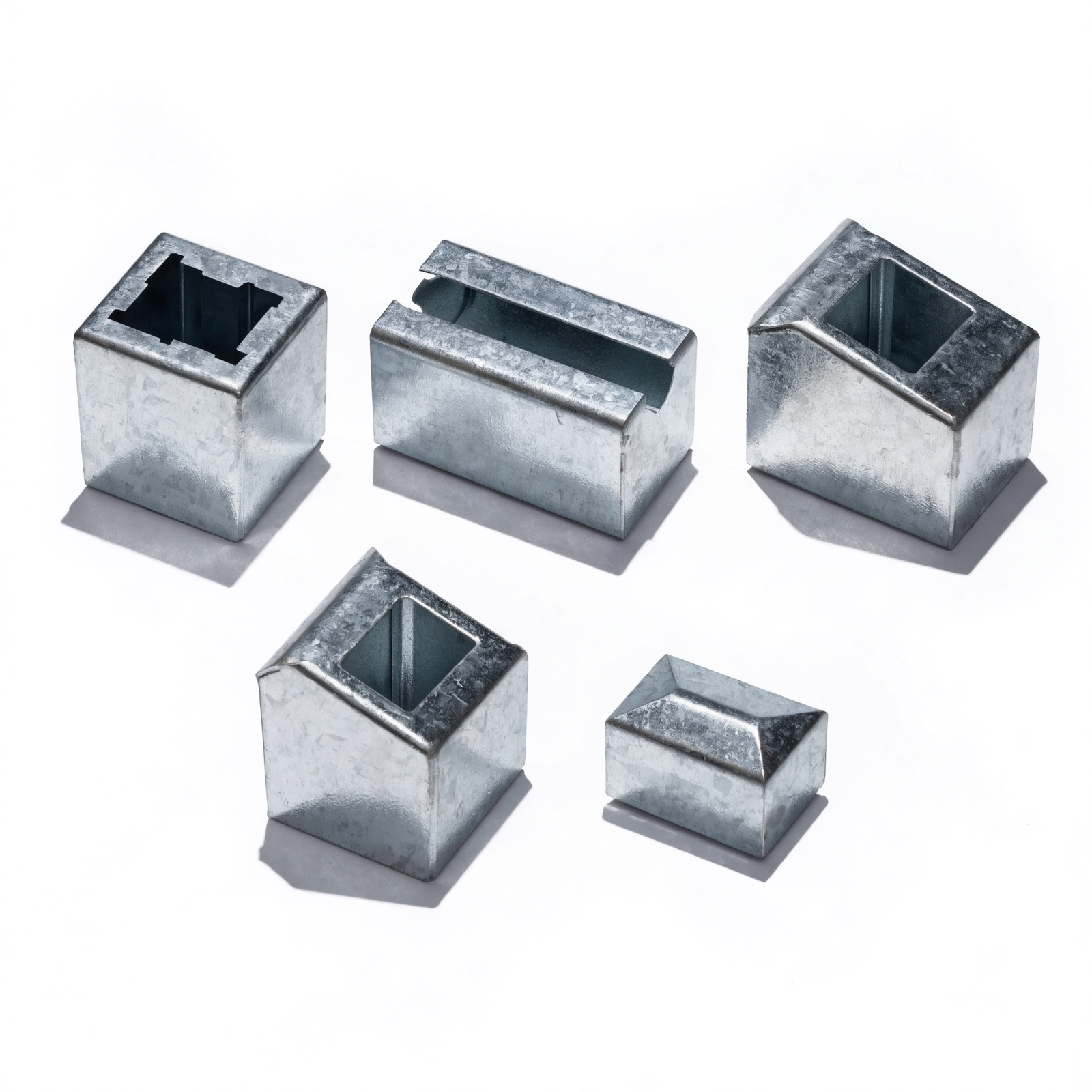
Standard H-beam and C-channel posts are designed for straight wall runs. For corners, returns, L-shapes, and wall joins, you need purpose-made corner and joiner posts. These are fabricated to allow sleepers to slot in at 90° or to join two wall sections cleanly.
Using standard posts at corners is a common DIY mistake — it results in an unsupported sleeper end and a structurally weak corner. Always use the correct corner post profile for your wall type. See: How to Build a Retaining Wall Corner — L-Shapes, Returns & 90° Joins
7. Posts for Special Applications
Coastal properties: In marine environments, standard hot-dip galvanising may not provide sufficient corrosion protection. Consider duplex coating (galvanise + powder coat) or stainless steel fixings. See: Retaining Walls for Coastal Properties
Pool surrounds: Posts near pools are subject to chlorine and salt exposure. Specify duplex-coated posts and ensure all fixings are stainless steel or hot-dip galvanised. See: Retaining Walls for Swimming Pools
Tiered walls: Each tier of a tiered retaining wall requires its own post and footing system. Posts for lower tiers must account for the surcharge load from the upper tier. See: How to Build a Tiered Retaining Wall
Driveway walls: Vehicle surcharge dramatically increases lateral load. Always use H-Beam posts and 60MPa sleepers for driveway retaining walls. See: Driveway Retaining Walls
8. Active Soil Pressure — Why It Determines Your Post Choice
Active soil pressure is the horizontal force that retained soil exerts against your wall. It is the primary load your posts must resist. Clay soils, reactive soils, and surcharge loads all increase active soil pressure significantly — requiring heavier post sections and deeper embedment.
Full guide: What Is Active Soil Pressure? How It Affects Your Retaining Wall
9. Frequently Asked Questions
Can I use RHS (rectangular hollow section) instead of H-beam or C-channel?
RHS is not recommended for in-ground retaining wall posts. It is difficult to slot concrete sleepers into and provides inferior bending resistance compared to H-beam profiles of equivalent weight.
Do I need to paint my steel posts?
Hot-dip galvanised posts do not require painting for corrosion protection. If you want to paint for aesthetic reasons, use a zinc-compatible primer before applying topcoat.
How long do galvanised steel posts last in the ground?
In typical residential soil conditions, hot-dip galvanised posts will last 50+ years. In aggressive soils (high acidity, high moisture, coastal) lifespan may be reduced — consider duplex coating for these environments.
What's the difference between UC and UB sections?
UC (Universal Column) sections have roughly equal flange and web dimensions, making them strong in bending in both directions. UB (Universal Beam) sections are deeper than they are wide, optimised for vertical load. For retaining walls, UC sections are preferred.
Shop Steel Posts by City
- Steel Posts — Sydney NSW
- Steel Posts — Melbourne VIC
- Steel Posts — Brisbane QLD
- Steel Posts — Perth WA
- Steel Posts — Adelaide SA
- Steel Posts — Gold Coast QLD
- Steel Posts — Canberra ACT
Related Guides
- H-Beam vs C-Channel Steel Posts — Which Do You Need?
- How to Choose the Right Steel Post for Your Retaining Wall
- How to Install Steel Posts for a Concrete Sleeper Retaining Wall
- How Deep Should Retaining Wall Posts Be?
- Retaining Wall Post Spacing Guide
- What Is Active Soil Pressure?
- How to Build a Retaining Wall Corner
- The Ultimate Guide to Concrete Sleeper Retaining Walls in Australia
- Retaining Wall Cost, Planning & Design Ideas — Complete Australian Guide
Leave a comment (all fields required)