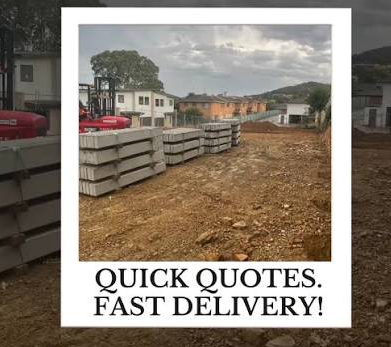
Freight is calculated based on your location and order size.We'll contact you with a freight cost within 1 business day before processing payment.
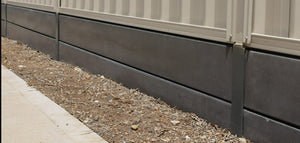
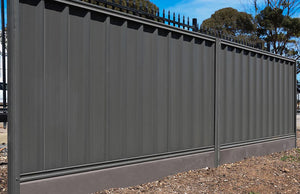
After many years of building retaining walls and fencing systems across Australia, the under-fence plinth is one of the most underrated finishing products on any job. A concrete plinth laid at the base of your fence line does what no amount of backfill or gravel can: it permanently seals the gap between the fence and the ground, stopping soil washout, weed intrusion, pet escapes, and the ongoing maintenance headache of a fence that never quite sits flush with the ground.
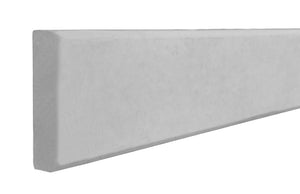
Our under-fence plinths are pre-stressed reinforced concrete, 50mm thick, Australian-made, and available in three finishes to match your fence style. They're the same product we specify on our own retaining wall and fencing jobs, not a compromise product, not a lightweight alternative.
Product range reviewed and specified by the Retaining Walls Direct trade team. Last updated July 2026.
| Finish | Dimensions | Best For | Price |
|---|---|---|---|
| Plain | 2350 × 200 × 50mm | Colorbond, steel, or any fence where the plinth won't be visible | $51.60 |
| Timberlook | 2350 × 200 × 50mm | Timber paling, hardwood, or timber-look composite fences | $56.97 |
| Composite | 2380 × 200 × 50mm | Composite fence panel systems with specific rail spacing | $51.60 |
Not sure which finish to choose? Plain is the most popular, it sits below fence height and is rarely visible once installed. Timberlook suits any job where the plinth face is exposed and you want it to blend with a timber fence aesthetic. Composite is sized specifically for composite fence systems where the 2380mm length matches panel module spacing.
We've seen timber plinths rot within 3-5 years in reactive clay soils, and plastic alternatives crack under ground movement. Pre-stressed reinforced concrete is the only material that genuinely lasts in Australian ground conditions, it won't rot, warp, crack under normal load, or attract termites. In reactive Class H clay soils (common across Brisbane, Western Sydney, and Melbourne's outer suburbs), concrete is the only sensible choice. It moves with the ground without failing.
Note: On sloped sites, plinths can be stepped down the slope in increments. Contact our team for advice on stepped plinth installation on sites with significant fall.
Under-fence plinths work as part of a complete fencing and retaining wall system. Browse our related products:
An under-fence plinth is a pre-stressed reinforced concrete strip installed at the base of a fence line to seal the gap between the fence and the ground. It prevents soil washout, weed growth, pet escapes, and erosion. Standard size is 2350×200×50mm.
Properly installed concrete plinths last the life of the fence, typically 30-50+ years in Australian conditions. Unlike timber (which rots in 3-5 years in clay soils) or plastic (which cracks under UV and ground movement), pre-stressed concrete is unaffected by moisture, termites, or seasonal ground movement.
Plain has a smooth concrete face, best where the plinth won't be visible or for Colorbond fences. Timberlook has a moulded timber-grain texture on the face, suits timber paling or hardwood fences. Composite is 30mm longer (2380mm) to match composite fence panel module spacing.
In most residential applications, no. The plinth sits between posts in a shallow trench and is held in place by backfill and its own weight (approximately 55-60kg per plinth). On exposed or high-wind sites, a construction adhesive bead on the post face can be used for additional security.
Yes, on sloped sites, plinths are stepped down the slope in increments matching the fall. Each plinth sits level within its bay, with the step occurring at each post. Contact our team for advice on your specific site gradient.
One plinth per fence bay (post to post). For a standard 2400mm post spacing, one 2350mm plinth fills each bay. Divide your total fence length by 2.4 to get the number of bays, then round up.
We deliver under-fence plinths Australia-wide via our crane truck and freight network. Plinths are heavy goods, freight is calculated by postcode and quantity. Send your postcode and quantities for a same-day freight quote.
Trade accounts and volume pricing available for builders, landscapers, and fencing contractors. Contact our team to discuss trade pricing on your next project.