





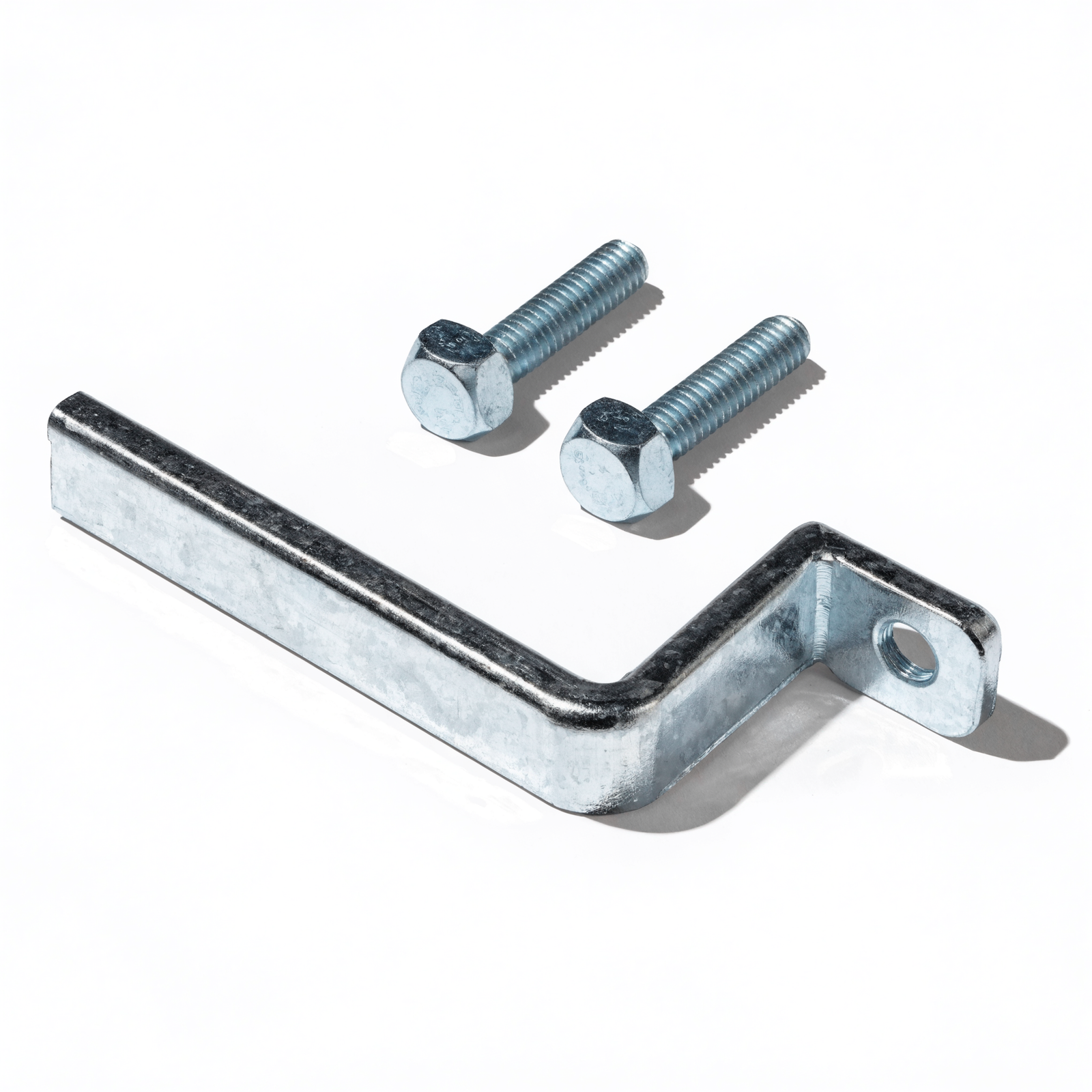



A hot-dip galvanised bracket is the right finish for a fence-on-wall connection, and how long it lasts depends far more on where you live and how it's fitted than on the label. Under Australian standard AS/NZS 4680, the zinc layer gets thicker as the steel gets thicker, so RWD's 6mm-plate kits carry a heavier minimum coating than the 3mm kit. In a dry inland garden a galvanised bracket can outlast the fence. Near the surf it can need attention within a decade. Drilling and cutting expose bare steel, and that's where most brackets actually start to rust.
This article is about the coating. For which kit suits your fence, see the Retaining Wall Fence Brackets: Sizes, Fitting and Buying Guide, which covers the three variants and the fitting steps.

"Galvanised" Can Mean Four Different Things
The word covers several finishes with very different lifespans, and a product listing rarely tells you which one you're buying.
| Finish | How it's made | Typical outdoor life | Weak point |
|---|---|---|---|
| Hot-dip galvanised after fabrication (AS/NZS 4680) | The finished part is dipped in molten zinc, coating every face, edge and hole | Long, decades in mild conditions | Damage from drilling or cutting after it's coated |
| Pre-galvanised sheet (for example Z275 or Z350) | Sheet is coated in the mill, then cut and bent into brackets | Shorter, galvanizing industry comparisons put it at roughly 2.5 to 4 times less durable than a batch-dipped part | Cut edges and drilled holes are bare steel from day one |
| Electro-galvanised or zinc-plated | A very thin zinc layer is deposited electrically | Short outdoors | Thin layer wears through quickly. Fine indoors, poor for fences |
| Stainless steel | The whole part is corrosion-resistant alloy | Very long, with grade mattering near the coast | Cost, and can pair badly with other metals |
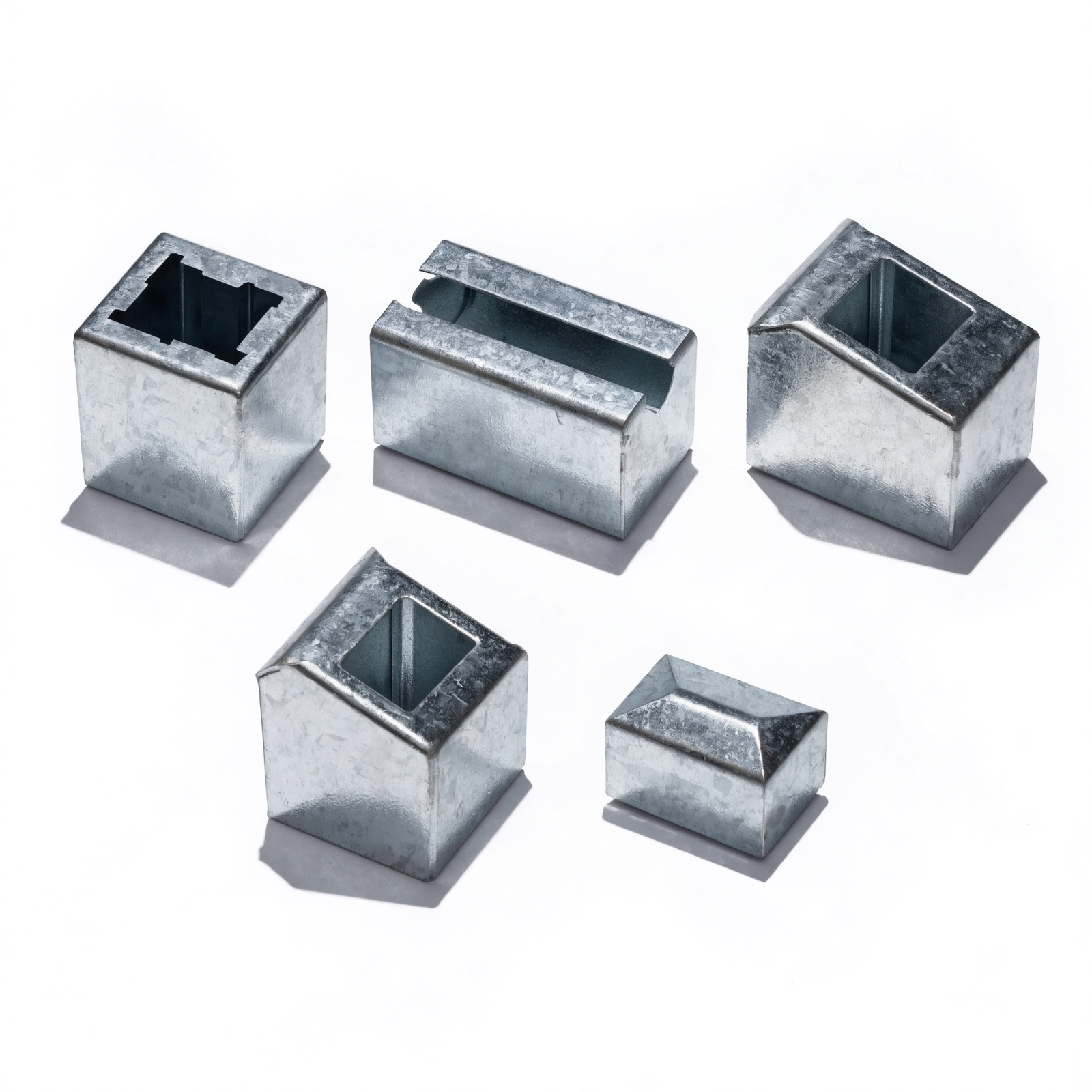
RWD's Galvanised Steel Fence Bracket Kit is hot-dip galvanised to AS/NZS 4680, the standard for hot-dip zinc coatings on fabricated steel articles. That matters because the zinc covers cut edges and holes as well as flat faces. The same standard is used for RWD's steel retaining wall posts, so the bracket and the post it bolts to are protected to the same specification.
You may also see the spelling "galvanized" on overseas listings. It's the same process. What matters is the standard it's made to, not the spelling.
Why Steel Thickness Changes the Coating
In hot-dip galvanising, thicker steel takes on a thicker zinc layer, so AS/NZS 4680 sets its minimum coating by steel thickness.
| Steel thickness | Minimum average coating |
|---|---|
| Over 1.5mm up to and including 3mm | 55 µm |
| Over 3mm up to and including 6mm | 70 µm |
| Over 6mm | 85 µm |
Source: AS/NZS 4680:2006 Table 1, as reproduced by the Galvanizers Association of Australia. These are minimums, not measured values. Actual coatings are usually thicker.
RWD's kit uses 3mm plate for the Standard variant and 6mm plate for the Heavy Duty and Offset variants. So the two 6mm kits fall into the 70 µm band, one step up from the 3mm kit's 55 µm band. That's a modest extra margin from the coating alone, separate from whatever load difference the thicker plate provides.
The manufacturer certifies the kit to AS/NZS 4680 rather than publishing a separately tested coating thickness. A mill certificate is available on request from RWD if you need one for a specific project. That means the coating figures above are the standard's own minimums for the relevant steel thickness, which is what that certification guarantees, rather than a measured reading unique to this kit.
How Long It Lasts: It Depends Where You Are
Zinc corrodes slowly, and the rate is driven by moisture, salt and air pollution. Australia is divided into corrosivity zones under AS 4312, and galvanizing industry guidance turns those zones into estimated years before a coating first needs maintenance.
| Environment | 55 µm coating (3mm and under) | 70 µm coating (over 3mm to 6mm) |
|---|---|---|
| Dry inland or rural (C2) | About 78 to 100 years | 100+ years |
| Typical suburban, mild coastal fringe (C3) | About 26 to 78 years | About 33 to 100 years |
| Industrial, or nearer the coast (C4) | About 13 to 26 years | About 16 to 33 years |
| Coastal, high salt (C5) | About 6 to 13 years | About 8 to 16 years |
| Surf beach or severe industrial (CX) | About 2 to 6 years | About 2 to 8 years |
Estimated years to first maintenance, from galvanizing industry specification guidance based on ISO 9223 categories. They're planning estimates, not warranties, and "first maintenance" means the point the coating starts needing attention, not where the bracket fails structurally.
The takeaway for a fence bracket is simple. For most suburban walls the coating is unlikely to be the limiting factor. If your wall is close to the ocean or in an industrial area, the difference between the 3mm and 6mm kits is meaningful, and it's worth checking your zone. A local galvaniser or the AS 4312 maps can tell you which category your address falls in.
Where a Bracket's Coating Actually Gets Damaged
The factory finish is rarely the problem. Damage happens on site.
- Drilling the retaining wall post. The fitting sequence involves drilling bolt holes in the post at fence rail height, which removes zinc from the hole walls and edges.
- Grinding or cutting. If a bracket or post is trimmed to fit, that cut edge is bare steel.
- Scraping during installation. Dragging a bracket across a post, or levering it into position, can scratch through to the steel.
- Over-tightening. Cranking a bolt can crush the coating under the head and washer.
- Trapped moisture. Faces that sit hard against each other, or a spot where soil and mulch pile up, stay wet longer than open surfaces.
The standard itself includes repair methods for damaged galvanised coatings. In practice, small areas of damage are commonly touched up with a zinc-rich paint applied to clean, dry, rust-free steel. Larger areas need a proper repair method, so ask your galvaniser or the post supplier. Touch-ups take a few minutes and are worth doing on every drilled hole before the bolt goes in.
What's Normal, and What Isn't
- Dulling to a matt grey over the first year or two is normal. The bright, spangled finish weathers as a protective layer forms on the zinc.
- White powdery staining, sometimes called white rust, can appear on new zinc that's been stored wet or in stacked bundles. It's superficial and usually weathers off, though bundles should be dried out on arrival.
- Red or brown rust means the zinc is gone at that spot. Clean it back and repair it promptly. Spot rust on a hot-dip bracket is much easier to fix early than late.
A Simple Inspection Habit
Because the coating is doing quiet, long-term work, it's easy to forget about once the fence is up. A short annual check is enough for most properties: look at the drilled bolt holes for any bare metal starting to show through the touch-up paint, check for rust staining running down the post below the bracket, and check that mulch or garden bed soil hasn't built up against the bracket or post base. Coastal properties benefit from checking twice a year rather than once, given the shorter maintenance intervals in the table above.
Painting or Powder-Coating Over Galvanising
You can paint or powder-coat over galvanised steel if you want a colour match, for instance to blend with a Colorbond fence. Galvanised surfaces need the right preparation and primer for paint to stick, and a coating applied over a poorly prepared surface will peel. If appearance matters, ask the supplier what preparation the surface needs before you order. Do not paint over drilled bolt holes until you've touched them up with zinc-rich paint first, or you'll seal rust in rather than out.
When Stainless Is Worth the Extra Cost
Stainless steel brackets suit very exposed coastal sites where galvanising would need early maintenance, and locations where you can't easily inspect or repair the fitting. The trade-offs are cost and the fact that the bracket, the post and the bolts are then different metals. Mixing them is manageable but needs care, which our fence bracket fasteners guide covers in detail. For most inland and suburban walls, a hot-dip galvanised bracket to AS/NZS 4680 is the standard, cost-effective choice.
Buying Checklist
- Does the listing say hot-dip galvanised after fabrication and name AS/NZS 4680, or does it just say "galvanised"?
- Is it made from pre-galvanised sheet? Look for bare cut edges and holes.
- Does the steel thickness suit the load and the environment?
- Are the bolts and nuts also galvanised, so the weak link isn't the fixing?
- Do you have zinc-rich paint on hand to touch up drilled holes?
FAQs
Is Galvanised Good Enough for a Coastal Fence Bracket?
For most coastal fringes, yes, with maintenance. In very high-salt positions the coating can need attention in under ten years, so consider the 6mm kit, regular inspection, or stainless steel.
Do I Need to Paint a Galvanised Bracket?
No. Galvanised steel is designed to be used unpainted. Paint is for appearance, not protection.
Can I Weld or Cut a Galvanised Bracket?
You can, but you'll damage the coating at that point and need to repair it. Welding galvanised steel also releases fumes, so it needs good ventilation and the right precautions.
Does a Thicker Bracket Last Longer?
It carries a thicker minimum zinc layer, which helps, but where you live and how well the drilled edges are treated matter more.
Ready to choose a variant? See the Galvanised Steel Fence Bracket Kit, or browse the Fence Brackets collection and the Hardware, Brackets & Cleats collection.
Leave a comment (all fields required)