








Yes, on most posts a cap is worth fitting, but the reason depends on what the post is made of. On timber, the cap protects the exposed end grain, which soaks up water faster than any other part of the post and is where decay usually starts. On steel, the cap keeps rain, leaf litter and insects out of an open or hollow top. Which cap fits comes down to the post material, three measurements and how the cap attaches, all covered below.

This guide is about caps for the top of a post. Capping the top of a retaining wall is a different job, covered in our Retaining Wall Caps & Capping guide, and isn't repeated here.
The Short Version, by Post Type
| Post type | Cap worth fitting? | What it's doing | What to match |
|---|---|---|---|
| Timber (treated pine or hardwood) | Yes, unless the top is cut to a sealed slope | Stops water entering the end grain | Measured width and depth of your post, not the label size |
| Colorbond-system steel posts | Usually, and most systems have their own | Keeps water and debris out, finishes the top | The fence system's own cap profile |
| Hollow steel or round pipe | Yes | Blocks water, debris and nesting insects | Outside size for a slip-over cap, inside size for a push-in |
| Steel retaining wall posts (100 series H-beam, C-channel) | Yes | Seals the open top | RWD stocks these — see below |
| Steel retaining wall posts (150/200 series) | Not currently stocked by RWD | Same reasons as above | Source separately for now |
Why the Top of a Post Is the Weak Spot
Timber is made of long fibres running along the length of the post. Cut across them, as at the top of a post, and you've exposed thousands of tiny open ends. Water travels along those fibres far more readily than it soaks through the sides. The top of a post also gets full sun and full rain, so it cycles between wet and dry constantly. That cycling opens fine cracks, known as checking, and the cracks hold water for longer, which is what fungal decay needs.
Treated pine adds a wrinkle. The preservative is strongest near the outer surface and can be lighter toward the core, so a freshly cut top is the least protected part of the post. That's why cut ends of treated timber should be brushed with a preservative before anything is fixed over them, and why a cap on top of untreated cut end grain is only half a fix.
Steel fails differently. A galvanised post won't rot, but an open top lets water and debris collect. Leaf litter holds moisture against the metal, and in a hollow section water can sit inside where you can't see it. Open tops also invite insects and small animals to nest, and a raw cut edge is sharp. A cap deals with all of that at once.
Is a Cap Ever Purely Cosmetic?
Sometimes, and it's worth being honest about it. If a timber post has been cut to a shallow slope so water runs off, and the end has been sealed, a cap adds little protection. It's mostly a finish. Decorative caps such as ball or pyramid styles, or ones with a solar light, are largely about looks.
A cap can also do harm if it's fitted badly. A flat cap pressed onto damp timber can trap moisture against the end grain, so the cap that was meant to protect the post ends up keeping it wet. A cap needs a dry, sealed top to sit on, and its own top surface should shed water rather than pond it.
A cap also won't save a post from rot at the ground line. In-ground decay is the more common way timber posts fail, and it's driven by moisture at and below the surface, not by the top. Think of a cap as protecting one vulnerable point, not the whole post.
How Caps Attach
The attachment style matters because it decides which posts a cap can go on.
- Slip-over caps sit over the outside of the post. They suit solid timber, and steel posts where the cap is shaped to the profile.
- Push-in caps have a plug that goes inside a hollow post. They only work on hollow sections, so they're no use on solid timber.
- Fixed-down caps, usually flat or pitched timber or metal, are screwed or nailed through the top or sides into the post.
- Adhesive-fitted caps are glued or sealed on. They're common for lighter plastic or decorative caps, but a poor choice on a post that flexes or gets wet.
For timber, a slip-over or fixed-down cap is the practical choice. For hollow steel, a push-in or slip-over both work, depending on the profile.
Sizing: Measure Your Post, Not the Label
Timber posts are commonly sold in nominal sizes such as 75 x 75, 100 x 100, 125 x 125 and 150 x 150mm, with 200 x 200mm used for larger structural posts. These roughly track the fence type they're used for:
| Nominal post size | Typical use |
|---|---|
| 75 x 75mm | Light fencing, garden borders |
| 100 x 100mm | Standard timber boundary fencing |
| 125 x 125mm and up | Taller or heavier fencing, gate posts |
| 150–200mm | Structural posts, gate posts under load |
Actual sizes can differ from the nominal size, particularly on dressed timber, and weathered posts can swell or shrink. Buying a cap by the label size is the most common reason a cap doesn't fit.
- Measure the top of the post in both directions. Posts aren't always square. Use a tape or, better, callipers.
- Measure round posts by outside diameter.
- For push-in caps, measure the inside of the hollow section, and note the wall thickness.
- Allow a little clearance for a slip-over cap. Too tight can split timber. Too loose rattles or lets water in.
- Test-fit one cap before buying the lot. With a long fence line, a wrong size repeated fifty times is an expensive mistake.
Materials, and What Pairs Well With What
- Galvanised steel is durable and matches steel posts. It can dent, and cut or scratched edges lose their zinc protection.
- Aluminium is light and won't rust, and it usually costs more than basic steel.
- Powder-coated metal offers colour matching, which is why it's common on Colorbond-style fences.
- Plastic is cheap and easy to fit, though UV can make it brittle over a few years.
- Timber caps match timber fences visually. They need their own end grain sealed, or the problem is only moved up a level.
- Copper looks good and ages attractively, but copper runoff can stain timber. Copper in contact with galvanised steel is a dissimilar-metal pairing that can corrode the zinc.
Fixings matter as much as the cap. RWD's own guidance on the fence brackets collection is to use stainless steel or hot-dip galvanised fasteners to prevent galvanic corrosion at the fixing point, and the same logic applies to cap screws. Some modern timber preservatives contain copper compounds that can attack uncoated steel and aluminium, so check what your posts are treated with before choosing fixings.
Styles: Flat, Pyramid, Ball and Others
Style affects how a cap performs as well as how it looks. A pitched or pyramid cap sheds water in every direction. A flat cap looks clean, but it only sheds water if it has a slight fall, otherwise it ponds. Ball and decorative styles are mostly about looks and can add noticeable height above the fence line, so check that before you buy if you're working to a height limit.
DIY Fence Post Cap Ideas
If you're capping timber posts yourself rather than buying pre-made caps, a few approaches hold up well:
- A bevelled or pyramid-cut timber cap, glued and screwed on, with all faces sealed before fitting. The pitch is what does the work, not the shape.
- A folded metal flashing cap, bent to overhang all four sides slightly, fixed with a single centre screw so water can't track down a screw shaft into the end grain.
- A simple angled cut to the post itself, sealed and left uncapped, on posts where a cap isn't practical, such as a post with a fitting already on top.
Whatever the design, the same rules apply as for a bought cap: the top surface needs to shed water, the underside needs to sit on a dry, sealed post, and the fixings need to match the post's exposure. A cap that looks good but ponds water is worse than no cap at all.
Colorbond Posts: Match the System
Colorbond-style fencing is typically sold as a system, with posts, rails and panels designed to fit together. Post profiles differ between suppliers, and a generic cap often won't fit properly. The reliable approach is to buy the cap made for your fence system, in the matching colour where available. If a cap has gone missing and you're not sure who made your fence, take a measurement of the post, or the old cap, to a fencing supplier.
Common Mistakes
- Buying by nominal size and finding the cap doesn't fit.
- Capping wet timber and sealing the moisture in.
- Mixing metals without thinking, such as copper caps on galvanised posts.
- Skipping the cut-end treatment on treated pine, then relying on the cap alone.
- Using a flat cap with no fall on an exposed post.
- Forgetting the steel posts in a fence-on-wall build, because the fence gets all the attention.
- Pushing a plug cap into a post with burrs, which can crack the cap or stop it seating.
Fitting a Cap: The Sequence
- Prepare the top. Cut it clean and level, and file burrs off steel.
- Treat the cut. On timber, brush on preservative and let it dry fully. On cut galvanised steel, touch up the bare metal with a zinc-rich paint.
- Dry-fit the cap without fixing it, checking the fit and that it sits level.
- Fix it. Use matching galvanised or stainless fasteners, with pilot holes on timber to avoid splitting.
- Check that water will run off. The cap should not leave a pocket for water to sit in.
Capping Steel Retaining Wall Posts (What RWD Stocks)
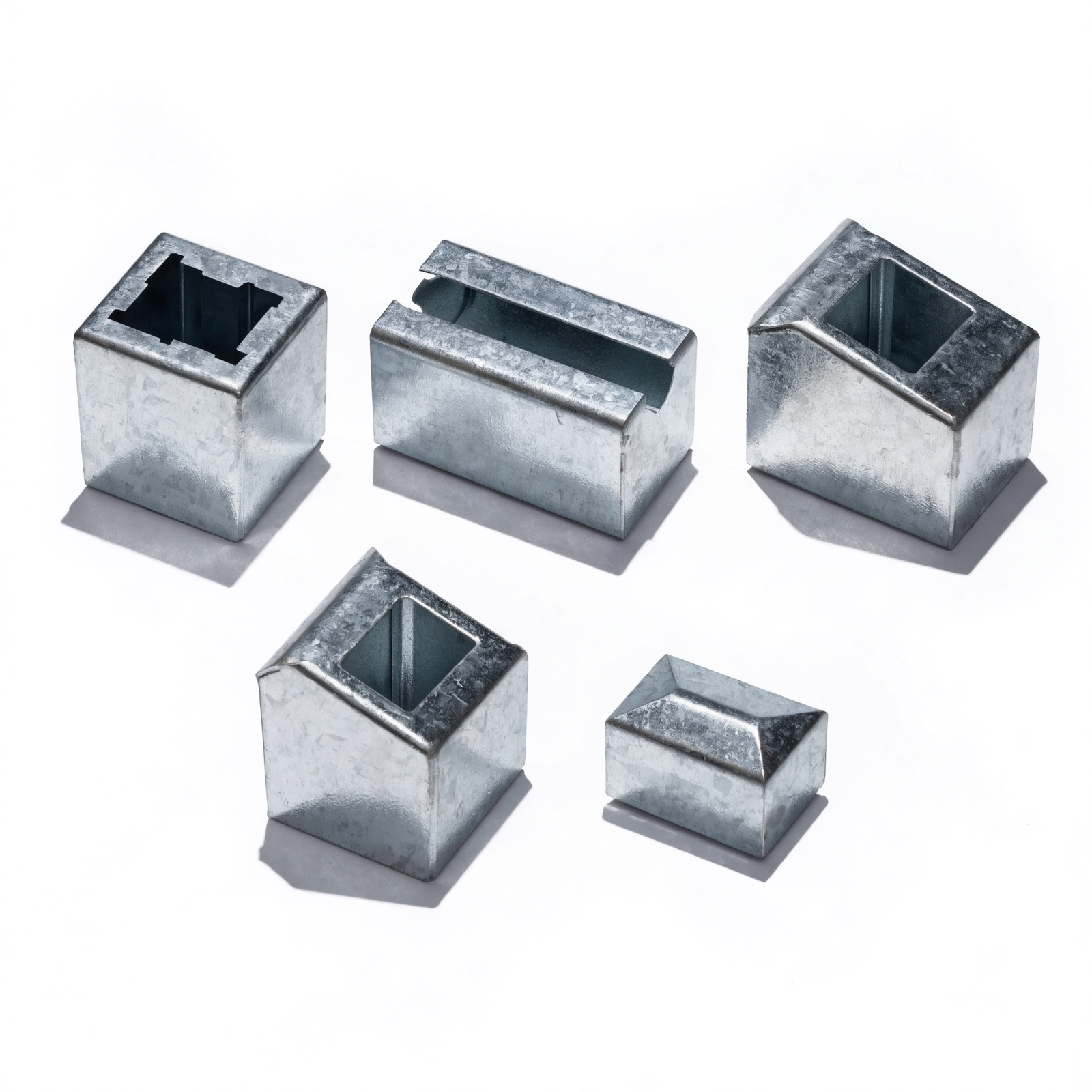
If you're building a fence on top of a retaining wall, the wall's steel posts have open tops too. RWD's Galvanised Steel Post Caps are made for those posts. They are not made for timber or Colorbond fence posts.
The caps come in profile-matched variants:
- H Post Cap suits 100UC H-beam middle posts
- C Post Cap suits 100PFC C-channel end posts
- 45° Post Cap suits 45° angle posts
- LH and RH Post Caps are left- and right-hand caps for L-shaped and joiner posts
They're hot-dip galvanised to match the post finish, sold individually, and you need one per post. They seal the post top against water and debris and tidy the exposed end.
To be clear about the range: RWD stocks caps for 100 series retaining wall steel posts only. There is currently no cap for RWD's 150 or 200 series posts, so if you've built with those, you'll need to source a cap separately for now.
Where the Cap Fits in the Install Sequence
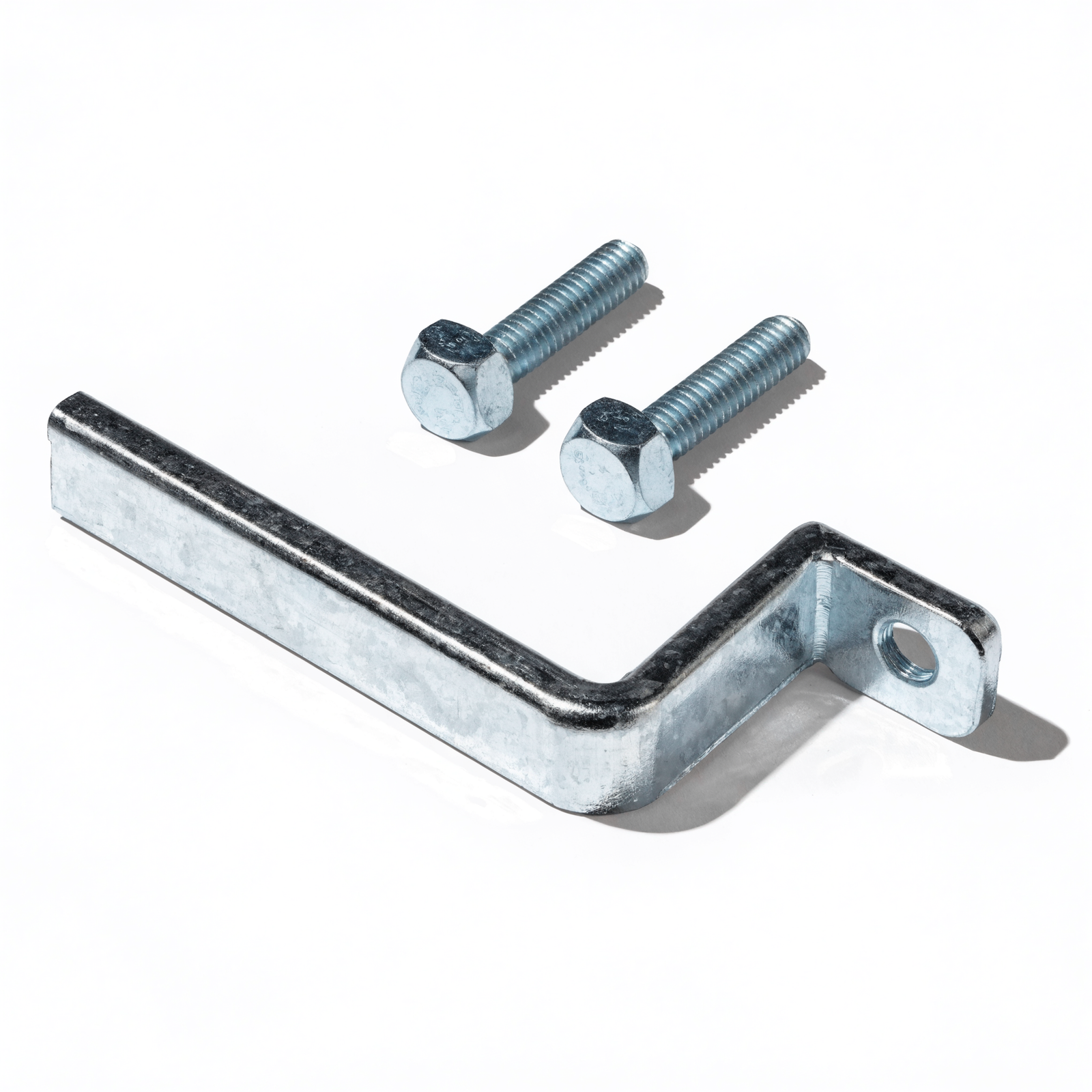
If you're fitting a fence to the wall, the cap goes on last. The order is: set the post, fit the Galvanised Steel Fence Bracket Kit, put the fence panels in, then knock the caps on. The bracket bolts to the post web at fence rail height and the cap sits on top of the post as a water seal and finishing piece, so they're at different heights and don't get in each other's way.
For the bracket itself, see the Retaining Wall Fence Brackets: Sizes, Fitting and Buying Guide, which covers the kit variants and fitting steps this article doesn't. For finishing the wall itself, the Retaining Wall Caps & Capping guide covers the capping beam or block across the top of the wall structure, a different job from a post cap. This article covers the posts and fence posts above it.
FAQs
Do Fence Posts Need Caps?
Timber posts benefit most, because of the exposed end grain. Steel posts benefit from a cap that keeps debris and water out of the top. A sealed, sloped-top timber post can go without, though most people still cap for a tidier finish.
Can I Make My Own Fence Post Caps?
Yes. A common approach is a pitched or bevelled timber cap in a durable species, sealed on all faces, with a small overhang so water drips clear of the post. Fix it with galvanised or stainless screws. Seal the end grain underneath first, or you've just moved the problem.
Will a Cap Stop My Posts Rotting?
It slows decay at the top, but it doesn't help at the ground line, which is where timber posts most often fail.
Should I Glue Caps On?
On light plastic or decorative caps, adhesive is common. On timber or exposed posts, a mechanical fixing with matching fasteners is more secure.
Does RWD Have Caps for 150 and 200 Series Posts?
Not at the moment. RWD's Galvanised Steel Post Caps fit 100 series posts only. For larger posts you'd need to source a cap separately.
Should I Fit the Cap Before or After the Fence Bracket?
After. Fit the bracket and panels first and add the cap last. The bracket sits at fence rail height, well below the top of the post.
Are Steel Retaining Wall Post Caps the Same as Fence Post Caps?
No. They're shaped to fit H-beam and C-channel steel profiles. Timber, Colorbond and round fence posts each need a cap made for that profile.
Browse the full range in the Fence Brackets collection or the Hardware, Brackets & Cleats collection.
Leave a comment (all fields required)