









Steel Posts / Retaining Wall Advice
100 PFC Dimensions: Full Specification Guide

Quick answer
100 PFC (Parallel Flange Channel) is a standardised Australian steel section defined under AS/NZS 3679.1: 100mm deep, 50mm flange width, 6.7mm flange thickness, 4.2mm web thickness, and 8.3kg per metre. Any post sold as 100PFC is expected to match this section — it's the definition of the profile, not one supplier's number.
Because 100PFC and 150PFC are standardised section names under AS/NZS 3679.1, their dimensions and mass per metre are fixed by the standard itself, not by whichever supplier is selling them. This guide sets out the full 100PFC specification, in the same order you'd want it for a materials take-off or a quick sanity check against a drawing.
For the 150PFC equivalent, see our 150 PFC dimensions guide, or the 100PFC vs 150PFC overview if you're still deciding between the two sizes.
Whether you're specifying posts for a DIY sleeper wall, pricing up a trade job, or just double-checking a delivery against what was ordered, the numbers below are the same ones an engineer, certifier or steel estimator would work from — sourced from the section standard itself rather than a single retailer's product listing.
What "100 PFC" Actually Means
In Australian structural steel, a section name like "100PFC" isn't a brand or a model number — it's a designation defined by AS/NZS 3679.1: Hot-rolled bars and sections, published by Standards Australia and Standards New Zealand. The standard sets out the exact geometry — depth, flange width, flange thickness, web thickness, root radius — that every mill producing a genuine 100PFC section has to roll to.
The full commercial designation you'll sometimes see on a delivery docket or mill certificate is 100PFC8.3: the depth in millimetres, the profile code (PFC for Parallel Flange Channel), and the mass per metre in kilograms. Drop the trailing number and you're just naming the profile family; include it and you're specifying the exact section.
This matters practically because it means a 100PFC post from one supplier and a 100PFC post from another should be dimensionally identical, provided both are genuinely rolled to AS/NZS 3679.1 and not a similar-looking but non-standard channel. It's also why a spec sheet for this profile doesn't need to be supplier-specific — the numbers below come from the standard itself, not from a single retailer's catalogue.
100 PFC Dimensions
Standard section properties for 100PFC under AS/NZS 3679.1:
| Depth | 100.0mm |
| Flange width | 50.0mm |
| Flange thickness | 6.7mm |
| Web thickness | 4.2mm |
These figures describe the steel section itself — the raw geometry defined by the standard. They're not a statement about what wall height or load a 100PFC post can safely carry in your ground; that depends on spacing, embedment, soil and surcharge, covered further down.
Each dimension has a practical role beyond the spec sheet:
- Depth (100mm) is the overall height of the channel's cross-section, measured across the web. It's the dimension that primarily governs the post's bending resistance in the direction the wall pushes against it.
- Flange width (50mm) is how far each flange extends from the web. This is the dimension that determines what fits inside the channel — it's directly why the 100 Series pairs with 75mm and 80mm sleepers rather than a different thickness.
- Flange thickness (6.7mm) is the thickness of the horizontal flange plates. Thicker flanges resist local buckling and give bolted brackets and post caps more material to bite into.
- Web thickness (4.2mm) is the thickness of the vertical connecting plate between the two flanges. It contributes to shear capacity and overall section stiffness.
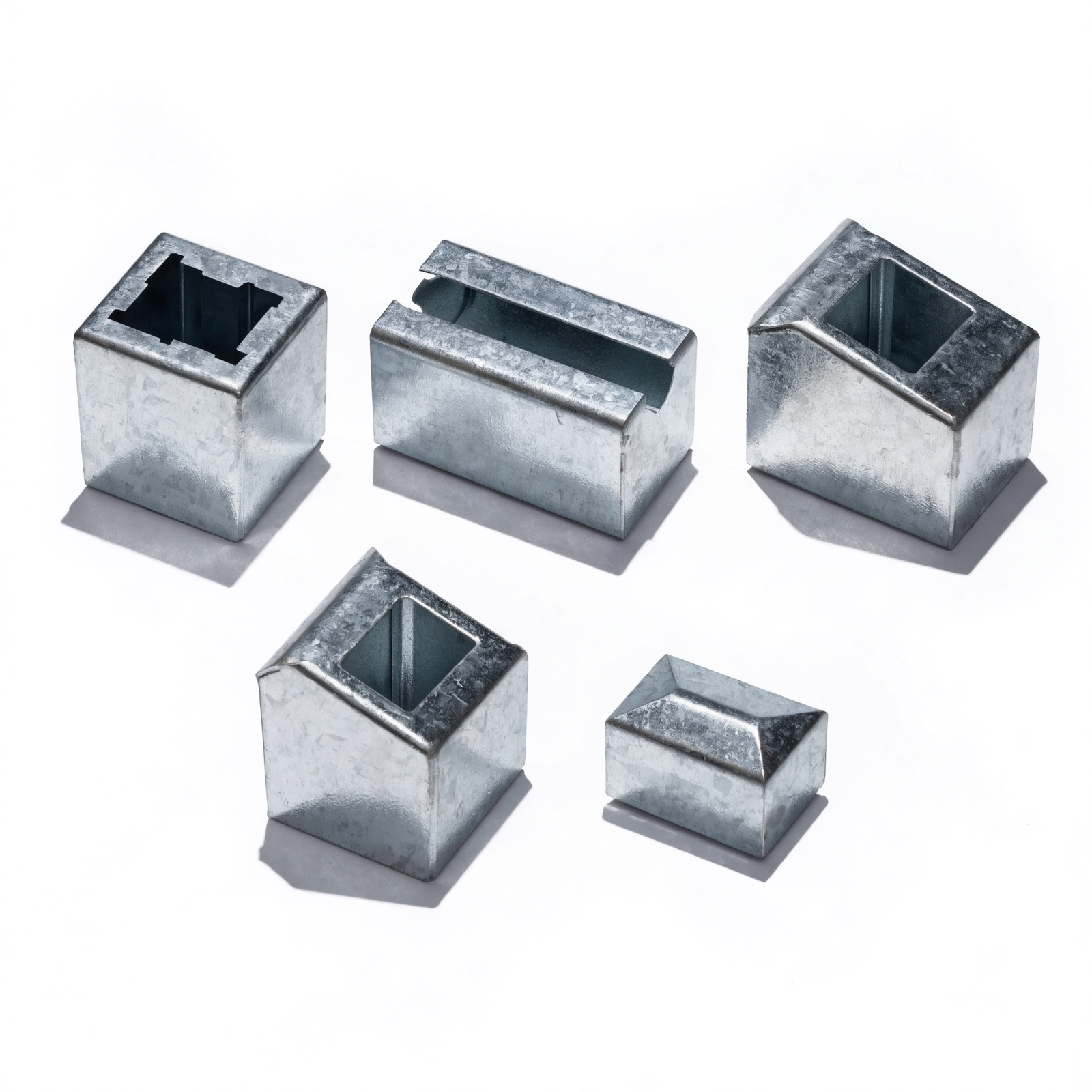
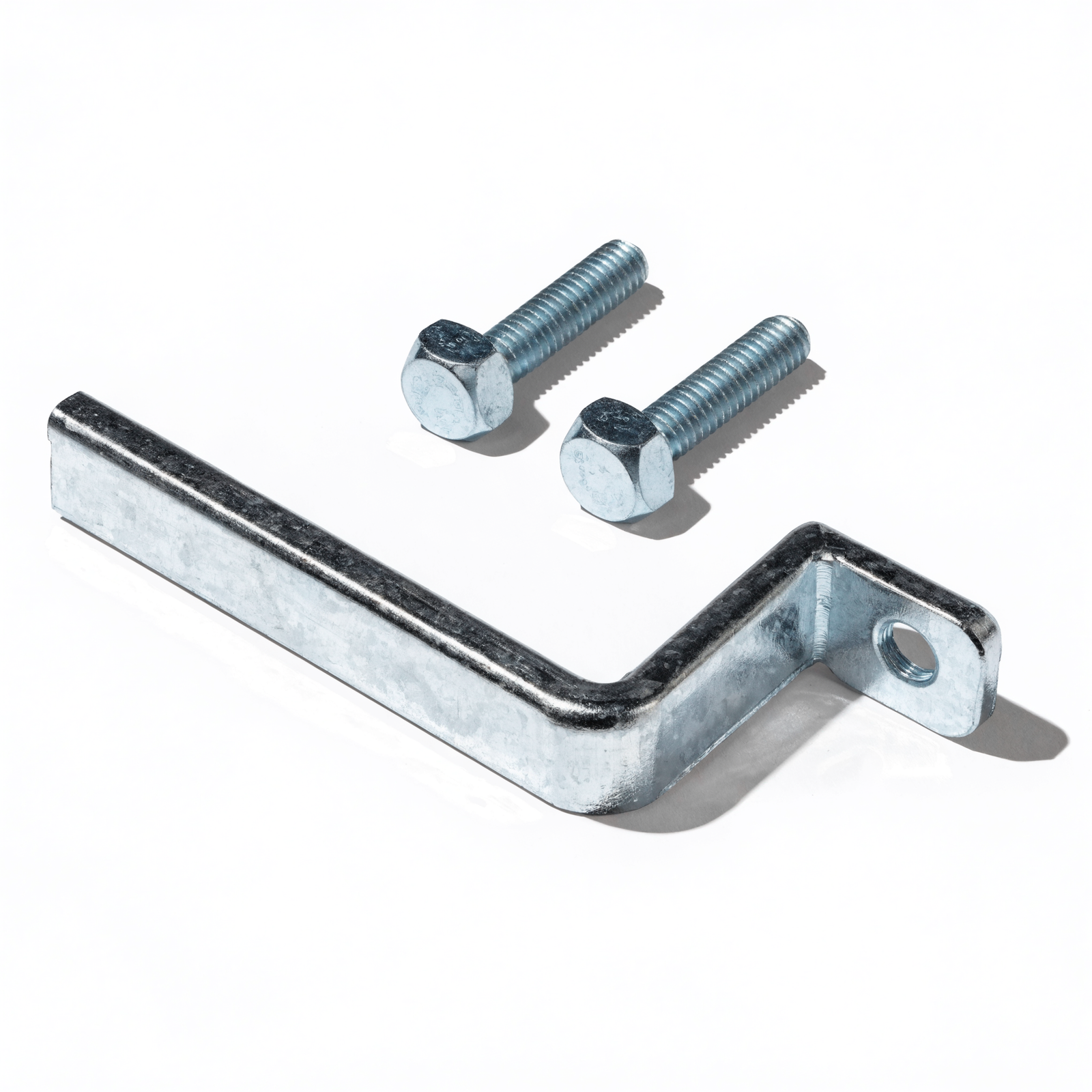
If you're fitting third-party brackets, cleats or post caps to a 100PFC post, these are the dimensions to check against the hardware's stated fit range — particularly flange width and flange thickness, which determine whether a bracket clamps or bolts on cleanly.
Weight Per Metre
100PFC weighs 8.3kg per linear metre. This is the mass figure built into the section's full designation (100PFC8.3) and is useful for freight estimates, manual handling planning, and cross-checking a delivery against what was ordered.

Weight per metre matters for a few practical reasons beyond curiosity. It affects how many posts can go on a single pallet or vehicle load, whether a post can reasonably be handled by one person on site, and it's a quick way to sanity-check a delivery — if a supposed 100PFC post feels noticeably lighter than expected for its length, it's worth checking the mill certificate before installing it.
Approximate total weight by stocked length:
| Length | Approx. weight |
| 400mm | 3.3kg |
| 600mm | 5.0kg |
| 800mm | 6.6kg |
| 1200mm | 10.0kg |
| 1600mm | 13.3kg |
| 2000mm | 16.6kg |
| 2400mm | 19.9kg |
| 2800mm | 23.2kg |
| 3200mm | 26.6kg |
| 3600mm | 29.9kg |
Even at the longest stocked length, a 100PFC post stays under 30kg — manageable for one person over short distances, though a two-person lift is still sensible for anything over about 2m to avoid awkward handling.
Sleeper Thickness Compatibility
100PFC fits 75mm and 80mm concrete or timber sleepers. The 50mm flange width is sized to seat either thickness snugly within the channel, which is why the 100 Series is matched specifically to this sleeper range rather than the thicker 100mm sleepers used with the 150 Series.
Confirm your sleeper thickness before ordering — posts and sleepers are sold as a matched system, and a mismatch typically shows up as a sleeper that's loose in the channel (too thin) or one that won't seat fully (too thick). Neither is a safe long-term fix, and both are avoidable by checking sleeper specifications against post series before the order goes in.
Standard Lengths Available
Retaining Walls Direct stocks 100PFC in 10 lengths, from 400mm to 3600mm:
400mm • 600mm • 800mm • 1200mm • 1600mm • 2000mm • 2400mm • 2800mm • 3200mm • 3600mm
Post length isn't the same as wall height. A post needs enough length above ground to carry the full sleeper stack, plus embedment below ground, typically around one-third of total post length as a general starting rule, with a practical minimum of roughly 600mm regardless of how short the exposed wall is. On reactive clay or loose sandy soils, that embedment often needs to increase by around 20–30% beyond the baseline.
Applying that one-third rule to a few of the stocked 100PFC lengths gives a rough starting picture (not a substitute for site-specific advice):
| Post length | Approx. embedment (1/3 rule) | Approx. above ground |
| 800mm | ~600mm (min.) | ~200mm |
| 1600mm | ~600mm (min.) | ~1000mm |
| 2400mm | ~800mm | ~1600mm |
| 3600mm | ~1200mm | ~2400mm |

Note the practical minimum embedment of around 600mm holds even for the shorter posts, which is why very short lengths (400–800mm) leave relatively little post above ground — they're best suited to low garden edging rather than a full-height retaining wall. Treat this table as a rough planning figure only. Confirm exact embedment against the steel post sizing guide or your engineer for your specific soil and wall height.
Compliance and Galvanising
- Section geometry to AS/NZS 3679.1 (hot-rolled bars and sections)
- Hot-dip galvanised to AS/NZS 4680 — the correct in-ground corrosion protection for Australian conditions
- Supplied to comply with AS 4678-2002 Earth-retaining structures
These three standards cover different things, and it's worth knowing the difference. AS/NZS 3679.1 defines the steel section's geometry and mechanical properties — it's what makes a 100PFC a 100PFC. AS/NZS 4680 governs the hot-dip galvanised coating applied after fabrication, setting out the process and general coating requirements that give the steel its corrosion resistance. AS 4678-2002 sits above both — it's the design standard for earth-retaining structures generally, covering how a wall as a whole (materials, geometry, drainage, and structural design together) is expected to perform.
Meeting all three confirms the material and coating are correct. It doesn't confirm the post is the right size for your specific wall — spacing, embedment and footing still need to be matched to your wall height, soil type and any surcharge load. For walls over 1.0m, near boundaries, on reactive clay, or carrying vehicle or building loads, involve a structural engineer.
How 100PFC Is Made
100PFC is a hot-rolled section, meaning it's formed by passing a heated steel billet through a series of shaped rollers until it takes on the final C-channel profile, rather than being pressed or folded from flat plate at room temperature. Hot rolling is what gives PFC sections their constant flange thickness from web to tip — the parallel-flange geometry that distinguishes them from older taper-flange channel designs and makes them easier to bolt hardware to consistently along the flange.
After rolling, sections destined for retaining wall posts are cut to the stocked lengths, then hot-dip galvanised as a separate process: the steel is cleaned, fluxed, and dipped in molten zinc, which bonds metallurgically to the surface and forms the corrosion-resistant coating specified under AS/NZS 4680. This is a different (and more durable) process than electroplating or spray-applied zinc coatings, which is why hot-dip galvanising specifically is the standard called out for in-ground retaining wall posts rather than a lighter-duty coating.
Checking You've Received a Genuine 100PFC Section
Because the dimensions above come from the standard rather than a specific brand, verifying a delivery is mostly a matter of checking it against the standard rather than against a particular supplier's marketing:
- Check the paperwork. A mill certificate or supplier compliance document should reference AS/NZS 3679.1 for the section and AS/NZS 4680 for the galvanising. If neither is mentioned, ask before installing.
- Spot-check the flange width. A quick tape measure across the flange should read close to 50mm. A section that's noticeably narrower or wider may be a different profile entirely, not a manufacturing tolerance issue.
- Look at the galvanised finish. Genuine hot-dip galvanising has a distinctive crystalline or "spangled" surface texture, quite different from the flatter look of a painted or cold-galvanised (brush-applied) coating.
- Weigh a sample length if in doubt. A one-metre offcut should weigh close to 8.3kg. A significant deviation either way is worth querying with the supplier before the posts go into the ground.
This matters most on engineered or council-approved projects, where the certifier may specifically ask for documentation confirming the section and coating standards used.
Uses Beyond Retaining Wall Posts
While this guide is written for retaining wall end posts, 100PFC is a general-purpose structural section and turns up in plenty of other applications — light lintels, fence posts and gate framing, garden edging structures, trailer and small equipment fabrication, and as a bracing or edge member in general steel fabrication work. The dimensions and weight per metre on this page apply equally in those contexts, since they describe the section itself rather than anything specific to retaining walls.

If you're sourcing 100PFC for a non-retaining-wall application, the same verification principles apply: confirm it's genuinely rolled to AS/NZS 3679.1, and match the galvanising or coating specification to the exposure conditions the section will actually face in service.
How 100PFC Compares to 100UC
It's worth understanding where 100PFC sits relative to the H-beam (UC) option in the same series, without repeating the full buying-decision comparison — that's covered in the H-Beam vs C-Channel guide.
The key structural difference is that 100UC is a genuinely symmetrical H-shaped section built to accept sleepers from both sides along a wall's straight run, while 100PFC is a lighter C-shaped section used specifically for end and start posts. At 8.3kg/m, 100PFC is noticeably lighter than the 100UC option — part of why it's the right choice for a termination point but not a substitute for an H-beam mid-run.
FAQs
Is 100PFC the same section no matter which Australian supplier I buy it from?
It should be, provided it's genuinely rolled to AS/NZS 3679.1. The standard defines the depth, flange and web dimensions, so any compliant 100PFC section will match this specification. It's worth checking the mill certificate or product documentation if you need certainty, particularly for engineered or council-approved projects.
What does the "8.3" in 100PFC8.3 mean?
It's the mass per metre in kilograms — part of the section's full commercial designation. You'll see this format on mill certificates and some supplier documentation, though "100PFC" alone is the more common shorthand in retail listings.
Do these dimensions tell me what wall height 100PFC is safe for?
No — the dimensions describe the steel section itself, not a safe wall height. That depends on post spacing, embedment depth, soil type, drainage and any surcharge load, and should be confirmed against the steel post sizing guide or a structural engineer for your specific site.
Why is 100PFC lighter than 100UC?
The two sections have different cross-sectional shapes. A C-channel (PFC) uses less steel across its profile than a symmetrical H-beam (UC) of the same nominal depth, which is part of why PFC suits end posts and lighter-duty positions rather than the full structural role an H-beam plays along a wall's straight run.
Is 100PFC suitable for uses other than retaining walls?
Yes. As a general-purpose structural section, 100PFC also turns up in light lintels, fence and gate structures, garden edging, and fabrication work. The dimensions and weight on this page apply regardless of application, though the coating and finish should always be matched to the actual exposure conditions in service.
How much does a full-length 100PFC post weigh at the longest stocked size?
At 3600mm, the longest length RWD stocks, a 100PFC post weighs approximately 29.9kg — manageable for one person over short distances, though a two-person lift is sensible for anything over roughly 2m to avoid awkward handling.
Can I use 100PFC dimensions to check compatibility with an existing wall's post caps or brackets?
The flange width and thickness figures above are a reliable starting reference for checking whether existing hardware, such as post caps or fence brackets, will fit a genuine 100PFC section. If the existing wall's posts pre-date AS/NZS 3679.1 or their origin is uncertain, it's worth measuring the installed post directly rather than assuming it matches the current standard exactly.
Handling and Transport Notes
100PFC posts are considerably easier to handle than their 150PFC counterparts, but a few practical points are still worth planning for on delivery day:
- Vehicle access. Even at a modest weight, longer lengths (2800mm and up) need a vehicle and unloading area that can accommodate the full post length. Tight suburban driveways and narrow side access can be more of a constraint than the weight itself.
- Manual handling. Most 100PFC lengths are a comfortable single-person carry, but longer posts (3200mm and above) are easier and safer moved with a second person or a trolley, particularly over uneven ground.
- Site storage. Store posts flat on level bearers rather than leaning upright against a fence or wall, both to avoid a tipping hazard and to keep the galvanised coating from being scuffed against a rough surface before installation.
Because 100PFC posts are lighter and generally shorter than 150PFC, they're often the easier of the two to manage on a typical residential DIY site — one of several practical reasons the 100 Series remains the more common starting point for smaller garden and boundary walls.
Where to Buy
100PFC C-channel posts, in stock across 10 lengths.
View the 100PFC product page for current pricing, or browse the full Steel Posts collection to compare against 150PFC and the H-beam (UC) range.
Leave a comment (all fields required)