
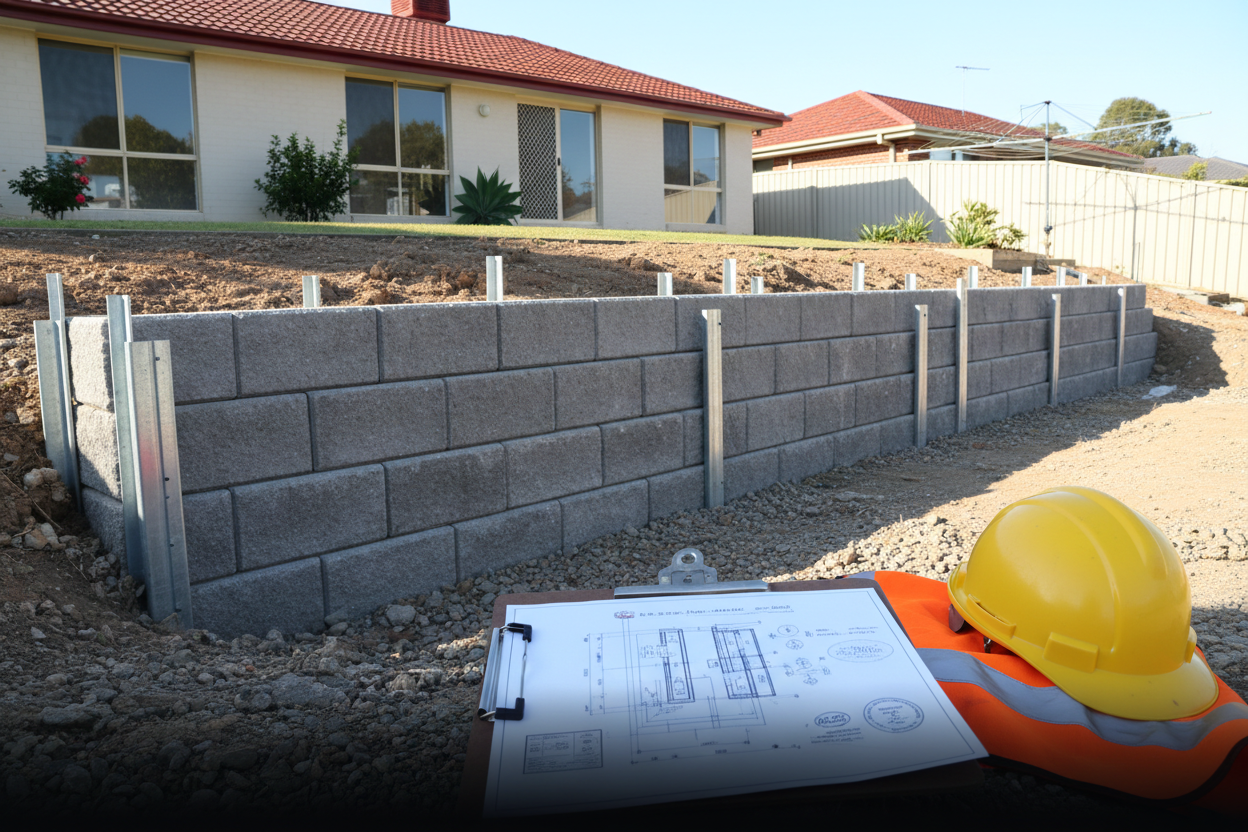

Building a retaining wall without the required council approval is one of the most common and costly mistakes Australian homeowners make. The consequences range from council fines and demolition orders to insurance voidance and property sale complications.
With over 40 years of hands-on retaining wall construction experience across Australia, I've navigated the council approval process in every state. This step-by-step guide tells you exactly what to do — from checking whether you need approval, through to getting your permit and building your wall correctly.
Key Rule: In most Australian states, retaining walls over 1.0m require a building permit. In NSW, the trigger is often 600mm. Always check with your local council before starting — requirements vary between councils within the same state.
Step 1 — Check If You Need Approval
Permit requirements depend on wall height, location, surcharge loads, soil conditions, and your specific council. Height triggers by state:
| State | Permit Trigger | Authority |
|---|---|---|
| NSW | 600mm (many councils) | NSW Fair Trading · NSW guide |
| VIC | 1.0m | VBA Victoria · VIC guide |
| QLD | 1.0m | QBCC · QLD guide |
| WA | 500mm (some councils) | WA Building Commission · WA guide |
| SA | 1.0m | SA guide |
| ACT/TAS | 1.0m | ACT & TAS guide |
See our state-by-state regulations hub and engineering and council rules page.
Step 2 — Contact Your Local Council
Before engaging professionals or purchasing materials, contact your council's planning or building department. Ask about the height threshold, CDC vs DA requirements, boundary setback rules, required documents, fees, and processing times. Most councils offer free pre-application advice from a duty planner.
Step 3 — Engage a Structural Engineer
If your wall requires a permit, you will almost certainly need a structural engineer to design the wall and provide an engineering certificate. The engineer will assess soil conditions (see our soil types guide), design the wall to AS4678-2002, specify posts and embedment (see our post selection guide), design drainage (see our drainage guide), and provide stamped drawings and a certificate.
Find a CPEng through Engineers Australia. See our engineering requirements guide.
Step 4 — Prepare Your Application Documents
A typical council application requires:
- Site plan — wall location, distances to boundaries, nearby structures
- Engineering drawings — plan view and cross-section with post positions, embedment depths, drainage
- Engineering certificate — signed and stamped by a CPEng
- Soil report — required for some councils and all walls over 1.5m
- Completed application form and application fee
Step 5 — Lodge Your Application
Most councils accept online applications. Two approval pathways:
- Complying Development Certificate (CDC) — 10–20 business days for standard walls
- Development Application (DA) — 4–12 weeks for complex walls, boundary walls, or non-standard conditions
Step 6 — Build to the Approved Plans
Build exactly as shown in the approved drawings. Use the specified post type and size (see our H-beam posts and C-channel posts), achieve the specified embedment depth (see our embedment guide), install drainage as specified, and use AS4680 hot-dip galvanised posts (see our corrosion protection guide).
Step 7 — Arrange Inspections
Some councils require inspections after posts are set, after drainage is installed, and at final completion. Check your permit conditions and book inspections in advance — council inspectors are often booked 1–2 weeks ahead.
Step 8 — Obtain Your Occupation Certificate
Once inspections are passed, your certifier issues an occupation certificate. Keep this document — you will need it when selling your property.
Common Mistakes That Delay Approval
- Incomplete drawings — always include a cross-section showing embedment and drainage
- Engineer not a CPEng — some councils require specific qualifications
- Not checking boundary setback requirements before designing
- Starting construction before approval is granted
- Not notifying neighbours for boundary walls
Frequently Asked Questions
How long does council approval take?
CDC: 10–20 business days. DA: 4–12 weeks. Factor this into your timeline before ordering materials.
How much does a retaining wall permit cost?
Council fees: $200–$2,000+. Engineering: $500–$4,000. See our cost guide.
Can I build without council approval?
Only if below your council's permit threshold. Building without required approval risks fines, demolition orders, insurance voidance, and property sale complications.
Do I need to notify my neighbour?
Required in some states for boundary walls as part of the DA process. Good practice regardless.
What happens if I build without approval?
Stop-work orders, demolition at your cost, fines, property title notations, and insurance denial. See our engineering and approval guide.
Ready to Build?
Retaining Walls Direct supplies AS4678-2002 compliant materials nationwide:
- Concrete sleepers
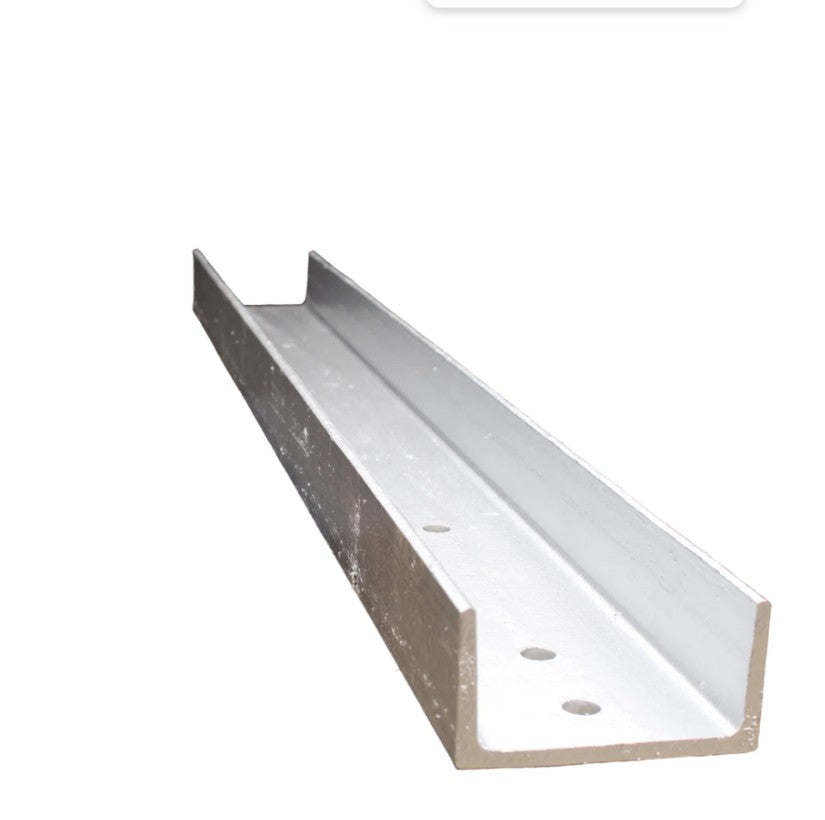
- C-channel posts — walls up to 1.0m
- H-beam posts — engineered walls over 1.0m
- Drainage kits
- Complete retaining wall kits
Use our calculator · Get a free quote
Related: Engineering & council rules · State regulations · Engineering guide · NSW · VIC · QLD · Post selection · Drainage · Calculator

Leave a comment (all fields required)