
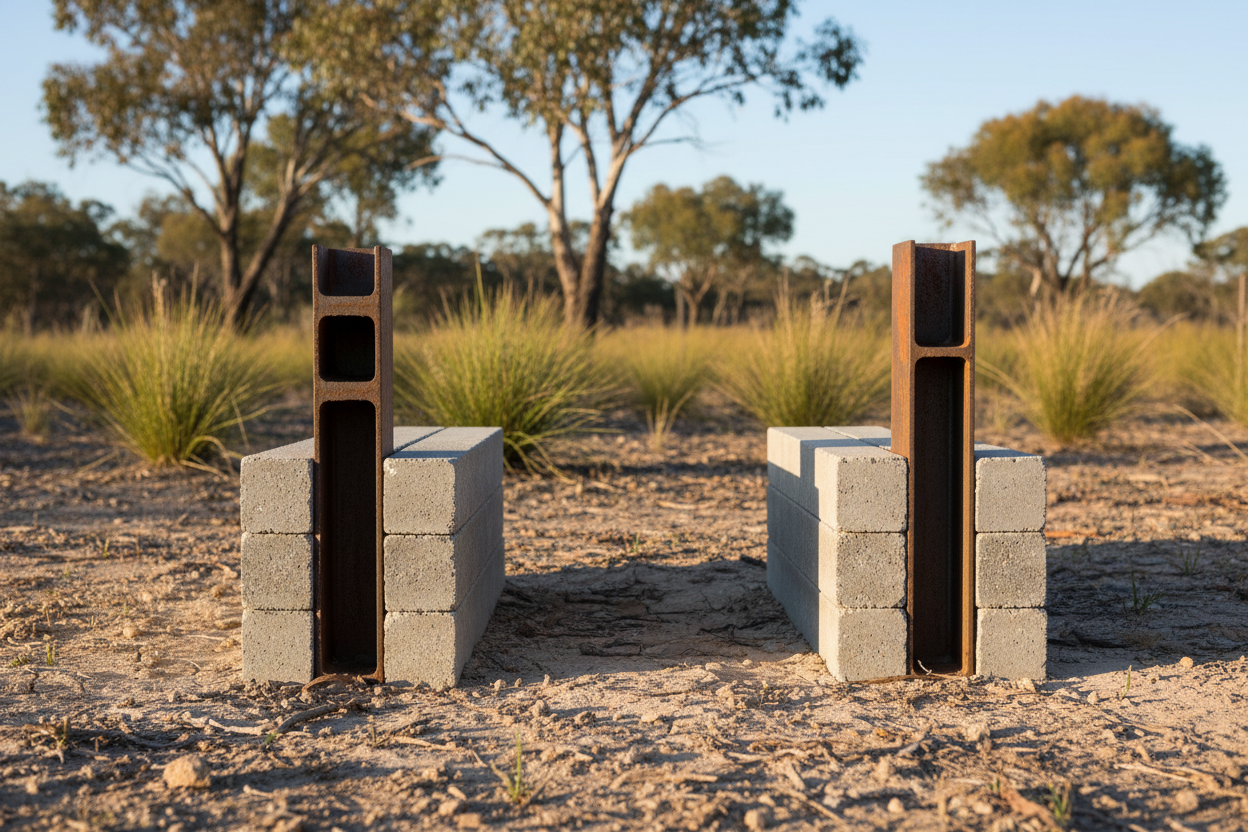

The most common specification question we get from homeowners, landscapers, and builders is: do I need C-channel posts or H-beam posts for my retaining wall?
It's an important question. Underspecify the post and the wall can fail. Overspecify and you're spending money you don't need to. This guide gives you a practical framework for making the right call — and tells you when the decision should be confirmed by a structural engineer rather than made from a buying guide.
The Two Post Types Explained
C-Channel PFC Posts
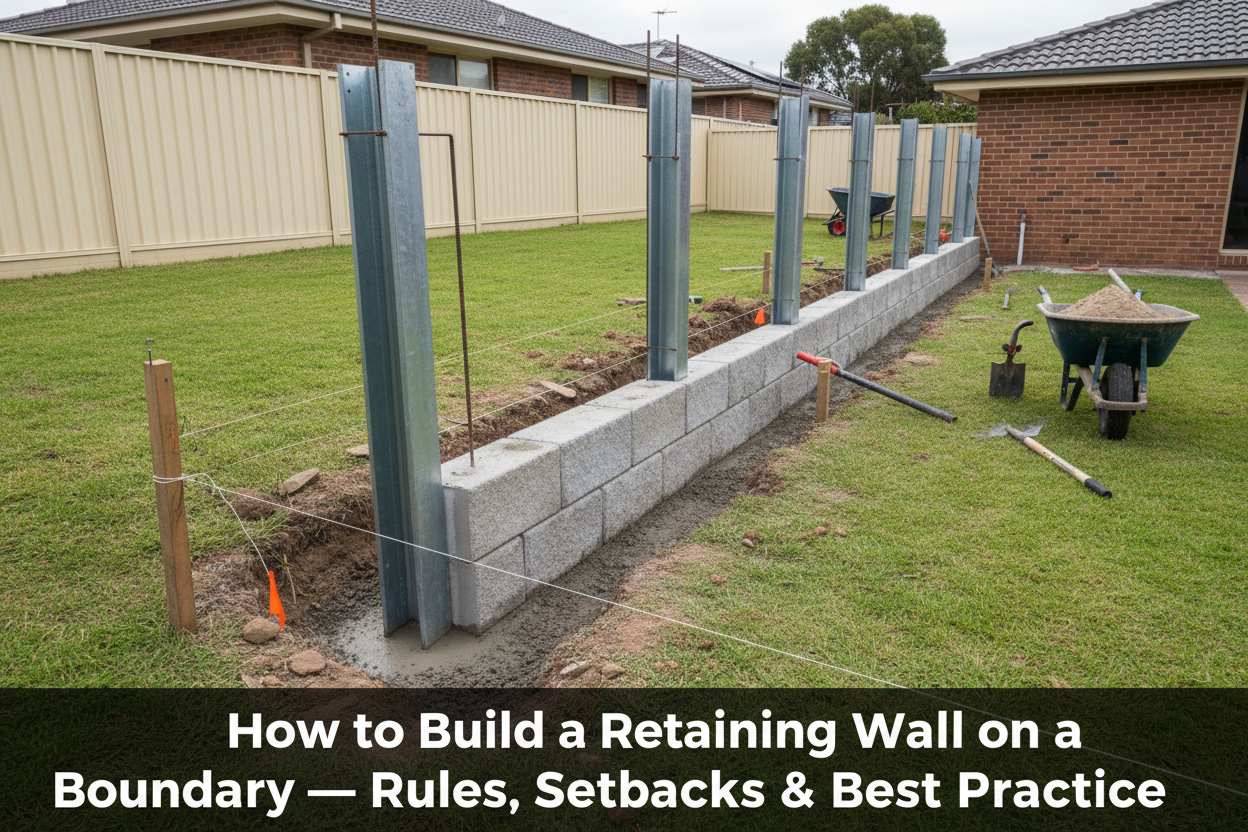
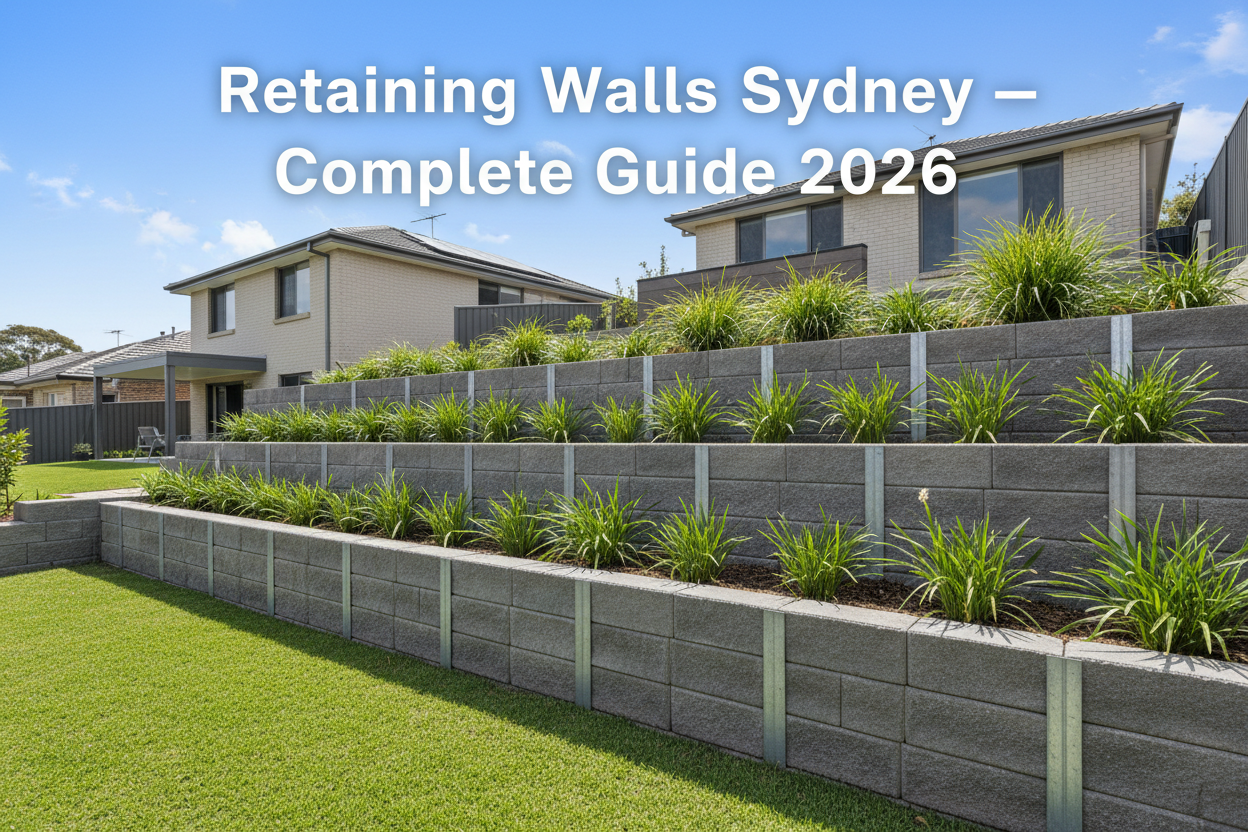
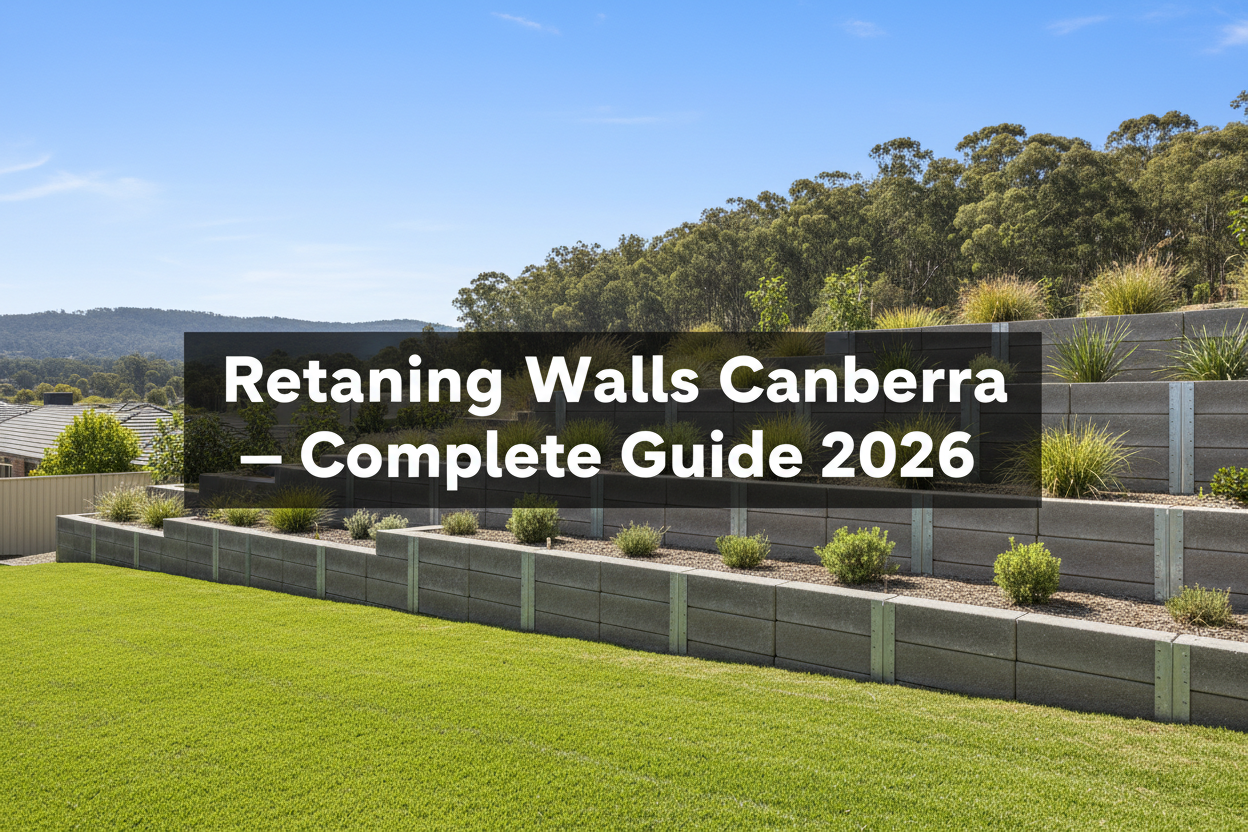
C-channel posts (also called PFC posts — Parallel Flange Channel) are the most widely used retaining wall post in Australia. The concrete sleepers slot horizontally into the open channel as the wall is built up course by course. C-channel posts are cost-effective, easy to install, and well-suited to the majority of standard residential retaining wall applications.
View our C-channel PFC post range
H-Beam Posts (Universal Column)
H-beam posts (also called UC posts — Universal Column) are the structural workhorse of the retaining wall post range. The H-shaped cross-section provides significantly greater bending strength and stiffness than C-channel, making H-beam posts the correct specification for taller walls, heavier soils, surcharge loads, and any application where an engineer has specified UC posts.
View our H-beam universal column post range
The Key Differences
Bending Strength
H-beam posts have a significantly higher section modulus than C-channel posts of the same nominal size. In practical terms, this means H-beam posts resist the lateral pressure from retained soil much more effectively — they deflect less under load and have a higher load capacity before failure. For standard residential walls under 1.0–1.2m in normal soil, C-channel is adequate. As wall height, soil pressure, or surcharge loads increase, the advantage of H-beam becomes critical.
Stiffness
H-beam posts are stiffer than C-channel posts. This matters for taller walls where post deflection (the post bending slightly under soil pressure) can cause sleepers to shift, gaps to open between courses, and the wall face to bow outward over time. H-beam posts maintain wall alignment better under sustained load.
Cost
H-beam posts cost more than C-channel posts. For a standard residential wall where C-channel is the correct specification, the additional cost of H-beam is unnecessary. For walls where H-beam is required, the cost difference is a small fraction of the cost of rebuilding a wall that has failed due to underspecified posts.
Which Post Do You Need? A Practical Guide
Use C-Channel PFC Posts When:
- Wall height is under 1.0–1.2m (finished retained height)
- Soil is sandy loam, light clay, or well-drained
- No surcharge loads above the wall (no driveway, vehicles, structures, or stored materials)
- Wall is not near a boundary or structure
- Standard residential garden wall, level change, or low embankment
Use H-Beam Posts When:
- Wall height exceeds 1.0–1.2m (finished retained height)
- Soil is heavy clay, reactive clay, expansive, or waterlogged
- There is a driveway, vehicle parking, structure, or stored materials above the wall (surcharge load)
- Wall is on or near a boundary where failure could affect neighbouring property
- Wall is near a structure (house, shed, pool, retaining wall above or below)
- A structural engineer has specified UC or H-beam posts
- You want maximum long-term structural confidence regardless of height
The Grey Zone: 800mm–1.2m in Clay Soils
The most common specification uncertainty is walls in the 800mm–1.2m range in clay soils. In sandy or well-drained soils, C-channel posts are generally adequate at this height. In heavy clay soils — common across western Sydney, Brisbane's western suburbs, Melbourne's eastern suburbs, and many regional areas — the lateral pressure on the wall is significantly higher, and H-beam posts are the safer specification even at heights where C-channel might technically be adequate in better soil conditions.
If you're in this grey zone and unsure, the conservative choice is H-beam. The cost difference is modest; the consequence of underspecifying is not.
Post Spacing
Post type and post spacing work together. Wider post spacing increases the bending moment on each post — which means that if you're using wider spacing, you may need to move from C-channel to H-beam even at heights where C-channel would otherwise be adequate.
Standard post spacing for concrete sleeper retaining walls:
- C-channel posts: typically 1.8m–2.0m centres for walls up to 1.0m in standard conditions
- H-beam posts: typically 1.8m–2.4m centres depending on wall height and soil conditions
- For walls over 1.0m: post spacing should be confirmed by a structural engineer. See our guide on retaining wall post spacing.
Post Length and Embedment Depth
Regardless of post type, the in-ground embedment depth is critical. The standard rule of thumb is that the in-ground portion should be at least one-third of the total post length. For a 1.0m wall, this means a minimum of 500mm in the ground, requiring a post of at least 1.5m total length. Read our full guide on how deep retaining wall posts should be.
In heavy clay soils, near boundaries, or for taller walls, greater embedment depth may be required. A structural engineer can confirm the required embedment for your specific site conditions.
Sleeper Thickness and Post Selection
Not sure whether you need 75mm or 100mm sleepers? See our guide on what size concrete sleepers you need — sleeper thickness and post type are often specified together for taller or more demanding walls. Browse our full concrete sleeper range.
Specialist Posts: Corners, Ends, and Joiners
Beyond C-channel and H-beam, most retaining wall layouts require at least some specialist posts:
- Corner posts — where two wall runs meet at 90 degrees
- L-posts — for specific wall configurations at corners or junctions
- Joiner posts — to connect two wall runs in a straight line
- End posts — to terminate a wall run cleanly at a driveway, steps, or open end
See our full range of corner, L-post, joiner & end posts.
Galvanising — Why It Matters for All Post Types
All retaining wall posts — C-channel and H-beam — should be hot-dip galvanised. Posts are embedded in soil and concrete, exposed to groundwater, and in coastal areas, to salt air. Non-galvanised or inadequately coated posts will corrode, weaken, and eventually fail — often invisibly below ground before the problem becomes apparent at the wall face.
All posts we supply are hot-dip galvanised as standard. This is the minimum specification for any retaining wall application in Australia. Read more about why hot-dip galvanising matters for retaining wall posts.
When to Get Engineering Sign-Off
This guide covers the most common residential retaining wall scenarios. There are situations where post selection should be confirmed by a licensed structural engineer rather than determined from a buying guide:
- Wall height exceeds 1.0m (finished retained height)
- Surcharge loads are present above the wall
- Wall is near a boundary or structure
- Soil is heavy clay, reactive, waterlogged, or unstable
- Council approval requires engineering certification
- You are unsure about any aspect of the specification
Frequently Asked Questions
Can I use C-channel posts for a 1.2m wall?
In sandy or well-drained soils without surcharge loads, C-channel posts may be adequate at 1.2m. In clay soils, near boundaries, or with any surcharge load, H-beam posts are the safer specification. For walls at or above 1.0m, confirm the post specification with a structural engineer if you have any doubt.
What does a structural engineer specify for retaining walls?
For engineered retaining walls, structural engineers almost universally specify H-beam (UC) posts and concrete sleepers. C-channel posts are rarely specified by engineers for walls over 1.0m or in demanding soil conditions.
Are H-beam posts worth the extra cost?
For walls where H-beam is the correct specification, yes — unambiguously. The cost difference between C-channel and H-beam posts is a small fraction of the cost of rebuilding a wall that has failed due to underspecified posts. For walls where C-channel is genuinely adequate, the extra cost of H-beam is unnecessary.
Do I need different posts for different sleeper thicknesses?
Both C-channel and H-beam posts are compatible with standard 200mm wide concrete sleepers in both 75mm and 100mm thickness. The post type is determined by wall height, soil conditions, and load — not by sleeper thickness. That said, if you're specifying 100mm sleepers (typically for taller or more demanding walls), H-beam posts are usually the appropriate post choice for the same reasons.
Ready to Order?
Browse our C-channel PFC posts and H-beam universal column posts, or contact our team to confirm the right post specification for your project before you order.