

If you're building a retaining wall along a boundary and need a fence on top, you'll often encounter the question of an under-fence concrete plinth. A plinth is a low concrete wall or beam that closes the gap between the bottom of the fence and the top of the retaining wall — or between the fence and sloping ground.
With many years of hands-on retaining wall and fencing construction experience across Australia, I've specified and built hundreds of plinths. This guide explains exactly what they are, when you need one, and how they work with concrete sleeper retaining walls.
Quick Answer: A concrete plinth is required when there is a gap between the bottom of a fence and the ground or retaining wall that would allow animals, debris, or unauthorised access through the fence line. They are commonly used on sloping blocks, boundary retaining walls, and where a fence sits on top of a concrete sleeper wall.
What Is an Under-Fence Concrete Plinth?
An under-fence plinth (also called a fence plinth, base plinth, or kickboard) is a concrete element installed beneath a fence to:
- Close the gap between the fence bottom and uneven or sloping ground
- Provide a level base for the fence when the ground is not level
- Prevent animals, children, or debris from passing under the fence
- Provide a clean, finished appearance at the base of the fence
- Protect the bottom of timber fence palings from ground contact and rot
When Is a Plinth Required with a Retaining Wall?
Plinths are commonly required in the following retaining wall situations:
1. Fence on Top of a Retaining Wall
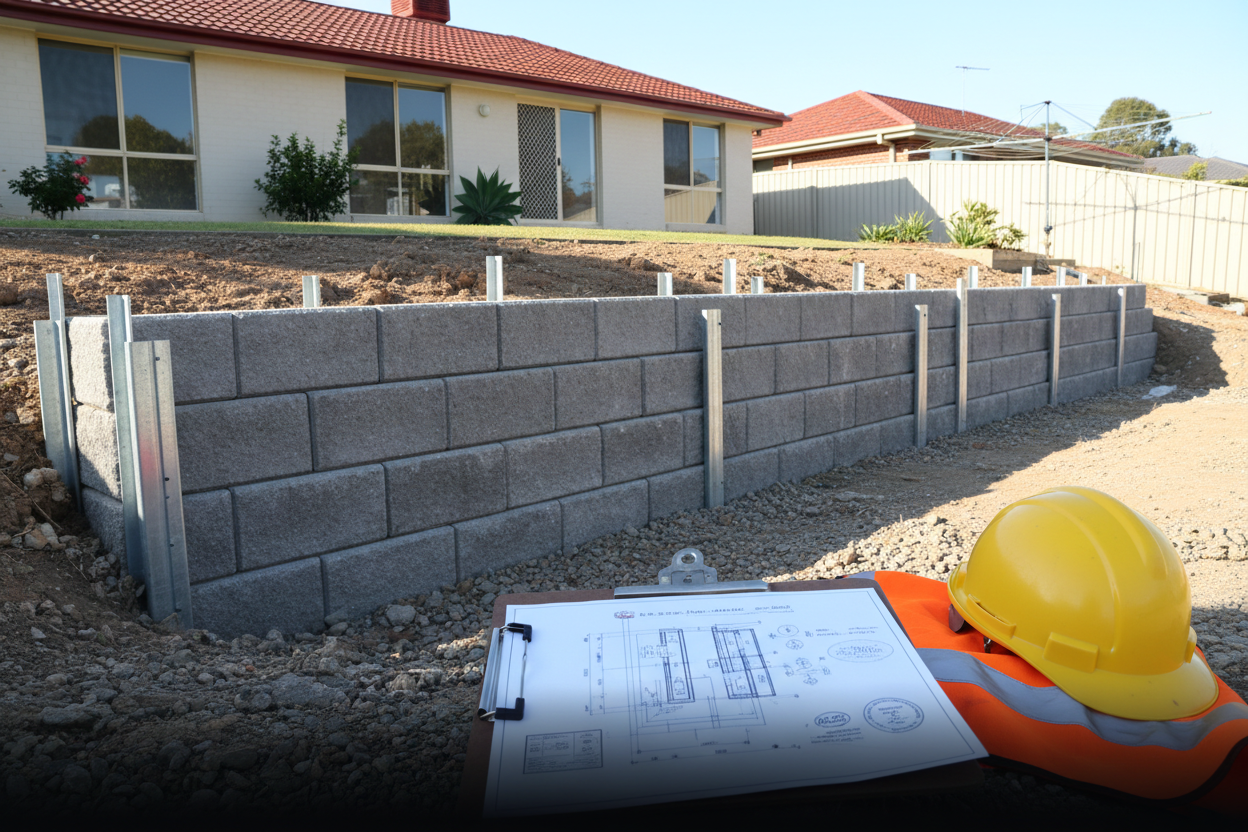
When a fence is installed on top of a concrete sleeper retaining wall, the fence posts are typically set into the top of the retaining wall posts or into a separate footing behind the wall. The fence panels sit above the top sleeper. A plinth may be required if there is a gap between the bottom fence rail and the top of the retaining wall.
2. Sloping Ground Along a Boundary
On sloping blocks, a fence line that follows the slope will have a gap at the low end of each fence panel. A plinth fills this gap and provides a level base for each panel. This is one of the most common applications for under-fence plinths in Australian residential construction.
3. Stepped Fence on a Retaining Wall
Where a fence steps down in height to follow a slope, plinths fill the triangular gap at each step. See our guide on retaining walls on slopes.
4. Boundary Walls with Level Difference
Where there is a significant level difference between two properties and a retaining wall manages the transition, a plinth may be required on the lower side to close the gap between the fence and the lower ground level. See our guide on retaining walls on boundaries.
Plinth Design — Key Specifications
| Parameter | Typical Specification |
|---|---|
| Height | 100mm–600mm depending on gap size |
| Width | 100mm–150mm (matches fence post width) |
| Concrete strength | 20MPa minimum; 25MPa recommended |
| Reinforcement | N12 bar at 300mm centres for plinths over 300mm high |
| Footing | Tied into retaining wall footing or separate pad footing |
| Finish | Formed, off-form, or rendered to match wall |
Plinth vs Concrete Sleeper — Which to Use?
For low plinths under 200mm, a concrete sleeper laid flat or on edge is often the most practical and cost-effective solution. Concrete sleepers are available in standard sizes and can be cut to length. For taller plinths or where a continuous formed finish is required, poured-in-place concrete is preferred.
Browse our concrete sleeper range for plinth options, or see our full retaining wall kits which include sleepers suitable for plinth applications.
Fence Posts on Retaining Walls — Key Considerations
When installing a fence on top of a retaining wall, the fence post connection is critical:
- Post into retaining wall post: Fence posts can be welded or bolted to the top of the retaining wall steel posts. This is the strongest connection but requires the retaining wall posts to be designed for the combined load.
- Post into separate footing behind wall: Fence posts are set into separate concrete footings behind the retaining wall. This separates the fence and wall loads but requires adequate space behind the wall.
- Post into top of wall: For low fences, posts can be set into the top course of the retaining wall. Not suitable for tall fences or high-wind areas.
If your fence is over 1.8m or in a high-wind area, the fence post connection should be specified by a structural engineer. See our guide on when engineering is required.
Council Requirements for Plinths
Plinths are generally considered part of the fence structure for council approval purposes. If your fence requires a permit (typically over 1.8m in most states), the plinth will be included in the permit application. Check with your local council. See our state-by-state regulations hub and our guide on how to get council approval.
Drainage Considerations for Plinths
Plinths must not block drainage from behind the retaining wall. Weep holes in the plinth or gaps at the base of the plinth must be maintained to allow water to escape. Never render or seal over weep holes in a plinth. See our drainage installation guide.
Frequently Asked Questions
What is the difference between a plinth and a retaining wall?
A retaining wall holds back soil and manages a level difference between two areas. A plinth is a low concrete element that closes a gap beneath a fence — it does not retain soil. Plinths are typically 100–600mm high. Retaining walls are typically 600mm or more.
Do I need a plinth if I have a retaining wall?
Not always. A plinth is only required if there is a gap between the bottom of the fence and the top of the retaining wall or the ground. If the fence sits directly on top of the retaining wall with no gap, a plinth is not needed.
Can I use concrete sleepers as a plinth?
Yes — for plinths under 200mm, a concrete sleeper laid flat is a practical and cost-effective solution. Browse our concrete sleeper range.
How deep does a plinth footing need to be?
For plinths under 300mm high, a 200mm deep footing tied into the retaining wall footing is typically sufficient. For taller plinths or those in reactive soil, a structural engineer should specify the footing. See our retaining wall footings guide.
Who is responsible for a plinth on a boundary?
Boundary fence and plinth responsibility is governed by the Dividing Fences Act in each state. Generally, costs are shared equally between neighbours unless one party requires a higher or more expensive fence. Check with your local council or a solicitor for specific advice.
Order Your Retaining Wall and Plinth Materials
- Concrete sleepers — suitable for plinths and retaining walls
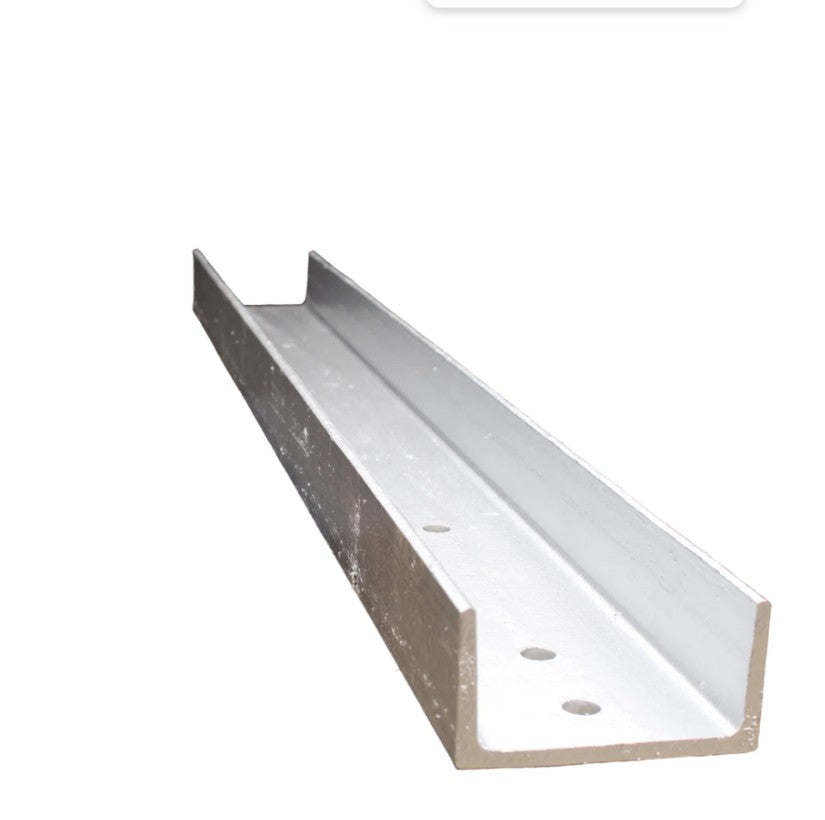
- C-channel steel posts
- H-beam steel posts
- Drainage kits
- Complete retaining wall kits
Use our calculator · Contact our team for advice on plinth and retaining wall combinations.
Related guides: Boundary retaining walls · Retaining walls on slopes · Council approval guide · Drainage guide · Footings guide · Engineering guide · State regulations · Calculator


Leave a comment (all fields required)