

One of the most common questions from homeowners planning a retaining wall is: do I actually need a structural engineer? The honest answer is: it depends on your wall height, soil conditions, surcharge loads, and which state or territory you're building in.
With many years of hands-on retaining wall construction experience across Australia, I've worked alongside structural engineers on hundreds of projects. This guide explains exactly when engineering is required, what triggers a permit, and what you get from an engineer — so you can make an informed decision before you start building.
Quick Answer: In most Australian states, a retaining wall over 1.0m requires a building permit and structural engineering. Some states trigger requirements at 600mm. If your wall is near a boundary, has a surcharge load, or is in reactive soil — get engineering advice regardless of height.
When Is a Structural Engineer Required?
- Wall height exceeds the state threshold — typically 1.0m, but as low as 500–600mm in some councils
- Wall is near a boundary — most states require engineering within 1.5m of a property boundary
- Surcharge load behind the wall — driveways, vehicles, structures, pools, or sheds within 1.5m
- Reactive or unstable soil — Class H1, H2, or E soils per AS2870
- Tiered walls — combined retained height exceeds the single-wall threshold
- Wall supports a structure — building, pool, or structure within the zone of influence
- Council requires it — some councils require engineering regardless of height
See our engineering and council rules guide and state-by-state regulations hub.
State-by-State Engineering Requirements
New South Wales (NSW)
Walls over 600mm generally require a building permit. Many councils require engineering from 600mm; all walls over 1.0m near boundaries require engineering. See our NSW regulations guide and NSW Fair Trading.
Victoria (VIC)
Walls over 1.0m require a building permit under the Building Act 1993. See our VIC regulations guide.
Queensland (QLD)
Walls over 1.0m require a permit under the QBCC framework. See our QLD regulations guide.
Western Australia (WA)
Walls over 500mm may require a permit in some areas. See our WA regulations guide and the WA Building Commission.
South Australia (SA)
Walls over 1.0m require development approval and engineering. See our SA regulations guide.
ACT and Tasmania
See our ACT and Tasmania regulations guide.
Height Triggers — Quick Reference
| State | Permit Trigger | Engineering? | Authority |
|---|---|---|---|
| NSW | 600mm (many councils) | Yes | NSW Fair Trading |
| VIC | 1.0m | Yes | VBA Victoria |
| QLD | 1.0m | Yes | QBCC |
| WA | 500mm (some councils) | Often yes | WA Building Commission |
| SA | 1.0m | Yes | Local council |
| ACT | 1.0m | Yes | ACT Planning |
| TAS | 1.0m | Yes | Local council |
Always verify with your local council — requirements vary within states.
When to Get Engineering Even If Not Required
- Reactive clay soil (H1 or H2) — western Sydney, Brisbane, Adelaide. See our soil types guide.
- Driveway or structure within 1.5m. See our surcharge loads guide.
- Steep slope or unstable ground. See our slopes guide.
- Tiered wall system. See our tiered wall guide.
- Wall on a boundary. See our boundary wall guide.
What Does a Structural Engineer Provide?
- Geotechnical assessment — soil classification, bearing capacity, lateral earth pressure
- Structural design — post type, size, spacing, embedment per AS4678-2002
- Drainage design — see our drainage installation guide
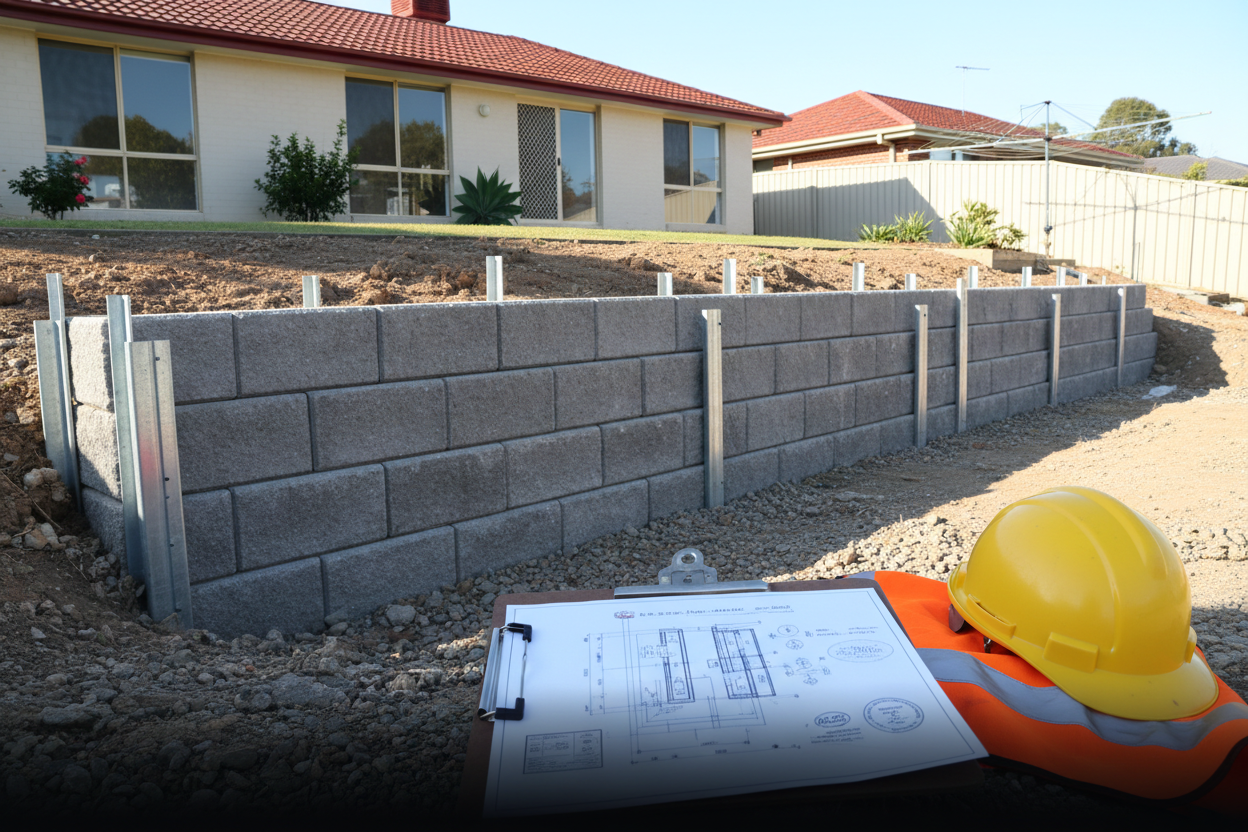
- Engineering certificate — required for council permit approval
- Construction drawings — post positions, embedment depths, drainage layout
- Inspection sign-off — required by some councils before occupancy certificate
How Much Does Retaining Wall Engineering Cost?
- Simple certificate only: $500–$1,500
- Full design with drawings: $1,500–$4,000
- Complex walls with geotechnical testing: $4,000–$10,000+
Engineering is a small fraction of total wall cost. See our retaining wall cost guide.
Consequences of Building Without Engineering
- Council fines and demolish-and-rebuild orders
- Insurance claims denied if the wall fails
- Liability for damage to neighbouring properties
- Difficulty selling your property
- Personal injury liability if the wall collapses
Choosing Posts for an Engineered Wall
Engineers almost always specify H-beam posts — 150 Series or 200 Series depending on height and loading. See our H-beam vs C-channel guide and complete steel post buyer's guide.
Frequently Asked Questions
Do I need an engineer for a 1m retaining wall?
In most states, 1.0m is the permit threshold. NSW may require engineering from 600mm. Always check with your local council first.
Can I use a building designer instead of a structural engineer?
Some states allow a registered building designer for simple walls. For walls over 1.5m, near boundaries, or with surcharge loads, a structural engineer (CPEng) is required.
How do I find a structural engineer in Australia?
Search for a Chartered Professional Engineer through Engineers Australia. Look for structural or geotechnical specialisation.
Does my wall need to be inspected by an engineer?
Some councils require inspection after posts are set and before backfilling. Check your permit conditions.
What is AS4678-2002?
AS4678-2002 Earth-Retaining Structures is the Australian Standard governing retaining wall design. For walls under 1.0m in standard conditions, formal certification may not be required but the standard's principles still apply. See Standards Australia.
Ready to Build?
Retaining Walls Direct supplies AS4678-2002 compliant materials for every wall type:
- Concrete sleepers — 40MPa, 50MPa, and 60MPa
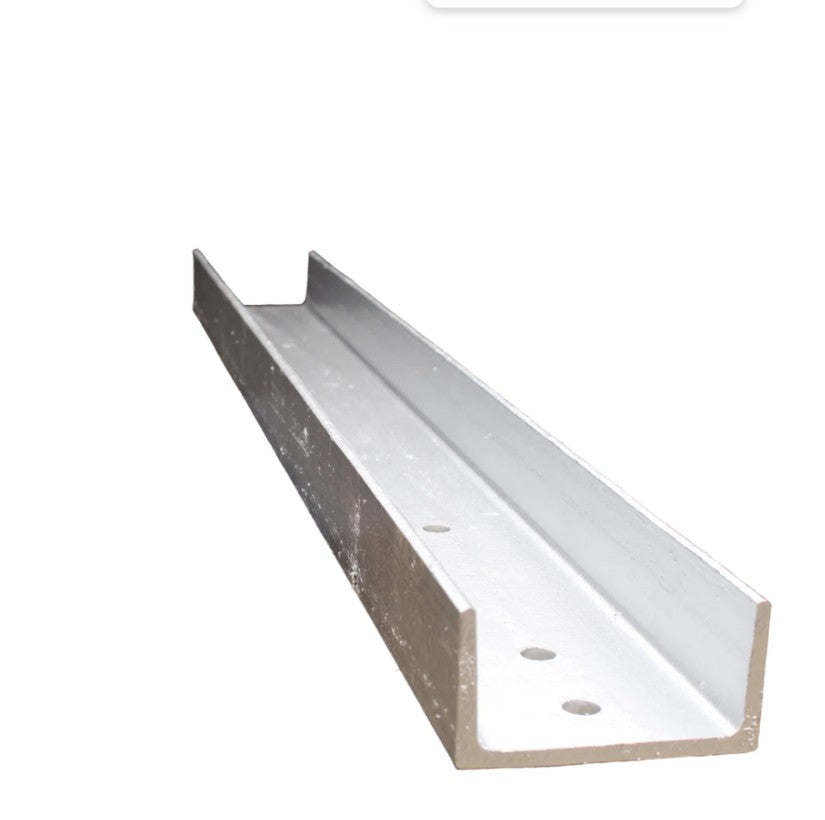
- C-channel posts — walls up to 1.0m
- H-beam posts — engineered walls over 1.0m
- Drainage kits — ag pipe, geotextile, weep holes
- Retaining wall kits & bundles
Contact our team · Retaining wall calculator · Book a free quote
Related guides: Engineering & council rules · Height limits & council approval · H-beam vs C-channel · Post embedment depth · Soil types · Surcharge loads · Cost guide · Calculator


Leave a comment (all fields required)