
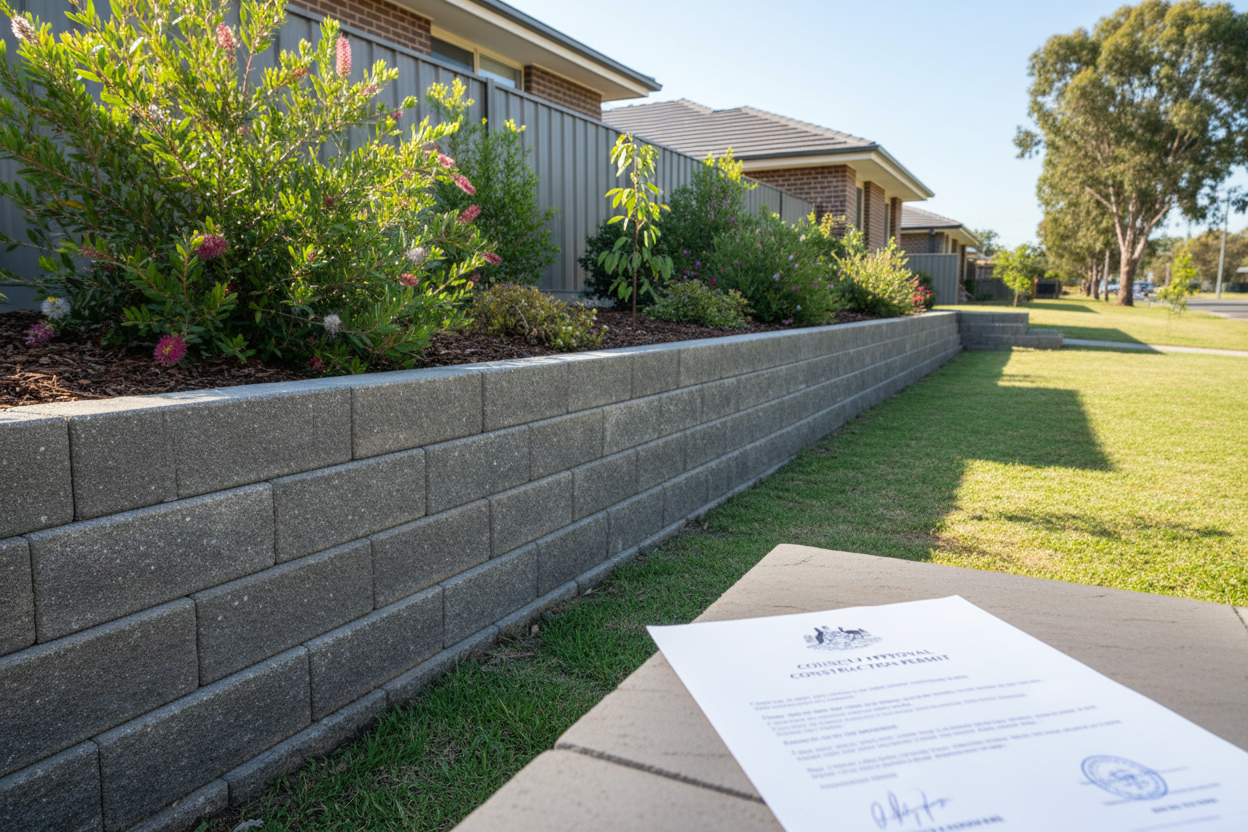

Getting council approval for a retaining wall can feel daunting — but it's a straightforward process if you know what's required and prepare the right documentation. This guide walks you through the approval process step by step, so you can get your project approved and underway without unnecessary delays.
Do You Need Council Approval?
Not all retaining walls require council approval. Whether you need approval depends primarily on wall height, location, and your state's regulations. As a general guide:
- Under 600mm (NSW) / Under 1.0m (QLD, VIC, SA) / Under 500mm (WA): Generally exempt from approval
- Over these thresholds: A building permit, Complying Development Certificate (CDC), or Development Application (DA) is typically required
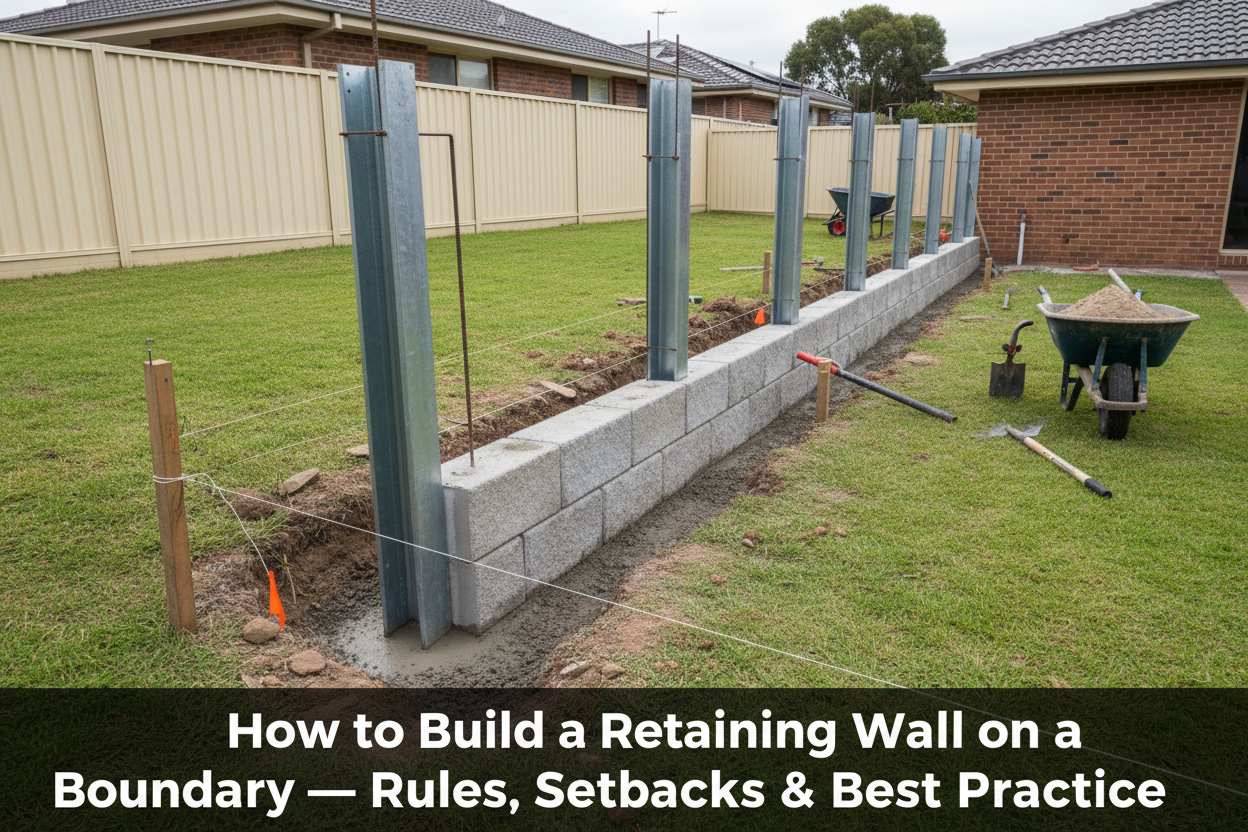
- Near boundaries: Walls within 1.0–1.5m of a boundary may require approval regardless of height
For a full state-by-state breakdown, read our Retaining Wall Regulations Guide.
Types of Approval
Exempt Development
Walls below the height threshold in your state are generally exempt — no application required. However, you must still comply with any applicable standards (drainage, setbacks, structural requirements).
Complying Development Certificate (CDC) — NSW
In NSW, walls that meet specific standards can be approved as Complying Development — a faster, simpler process than a full DA. A private certifier can issue a CDC without council involvement, typically within 10–20 days.
Building Permit — QLD, VIC, WA, SA
In most other states, walls over the height threshold require a building permit from a private certifier or council. The process typically takes 2–6 weeks depending on the state and certifier.
Development Application (DA) — Complex Cases
A full DA is required for walls that don't meet Complying Development standards — for example, walls in heritage areas, flood zones, or bushfire-prone areas. DAs take longer (typically 4–12 weeks) and involve council assessment.
What Documentation Do You Need?
For most building permit or CDC applications, you'll need:
- Site plan: Showing the location of the wall on your property, distances from boundaries, and any structures nearby
- Wall design drawings: Cross-section showing wall height, sleeper thickness, post size and spacing, embedment depth, and drainage design
- Engineering certification: For walls over 1.0m, a structural engineer's certificate confirming the design meets structural requirements
- Soil report: May be required for walls on reactive clay, fill sites, or near easements
- Neighbour notification: May be required if the wall is near a boundary
We can provide standard engineering drawings for common wall configurations. Contact our team for more information, or download our technical spec sheets and drawings.
Step-by-Step: Getting Council Approval
- Determine if approval is required — check your state's thresholds and your local council's specific requirements
- Engage a structural engineer — for walls over 1.0m, get engineering certification before applying
- Prepare your documentation — site plan, wall drawings, engineering certificate
- Choose your approval pathway — CDC (NSW), building permit (other states), or DA if required
- Lodge your application — with a private certifier (faster) or your local council
- Wait for approval — typically 2–6 weeks for a building permit or CDC; longer for a DA
- Build your wall — ensure construction matches the approved drawings
- Final inspection — some approvals require a final inspection by the certifier or council
How Long Does Approval Take?
- CDC (NSW): 10–20 business days with a private certifier
- Building permit (QLD, VIC, WA, SA): 2–6 weeks depending on state and certifier
- DA (complex cases): 4–12 weeks or longer
How Much Does Approval Cost?
- Engineering certification: $1,500–$3,000 for a standard wall
- Private certifier fees: $500–$1,500 for a CDC or building permit
- Council DA fees: Vary by council — typically $500–$2,000
- Soil report: $500–$1,500 if required
For a full cost breakdown including materials, see our Retaining Wall Cost Guide.
Tips for a Smooth Approval Process
- Use a private certifier rather than council — private certifiers are typically faster and more responsive than council assessment teams
- Get engineering certification early — don't wait until you're ready to build; get the engineer involved in the design phase
- Talk to your neighbours early — if the wall is near a boundary, a conversation with your neighbour before lodging can prevent objections
- Use standard wall configurations — non-standard designs take longer to certify; stick to standard post sizes and spacings where possible
Need Help with Your Approval?
Our team can provide standard engineering drawings and technical documentation to support your council submission. Contact us to discuss your project.
Related Articles
- Retaining Wall Regulations in Australia — State-by-State Guide
- How to Build a Retaining Wall with Concrete Sleepers
- How to Choose the Right Steel Post
- How Much Does a Retaining Wall Cost in Australia?
- How Deep Should Retaining Wall Posts Be?
- DIY vs Professional Retaining Wall Installation
- Retaining Wall Ideas for Australian Backyards
- Retaining Wall Maintenance Guide