
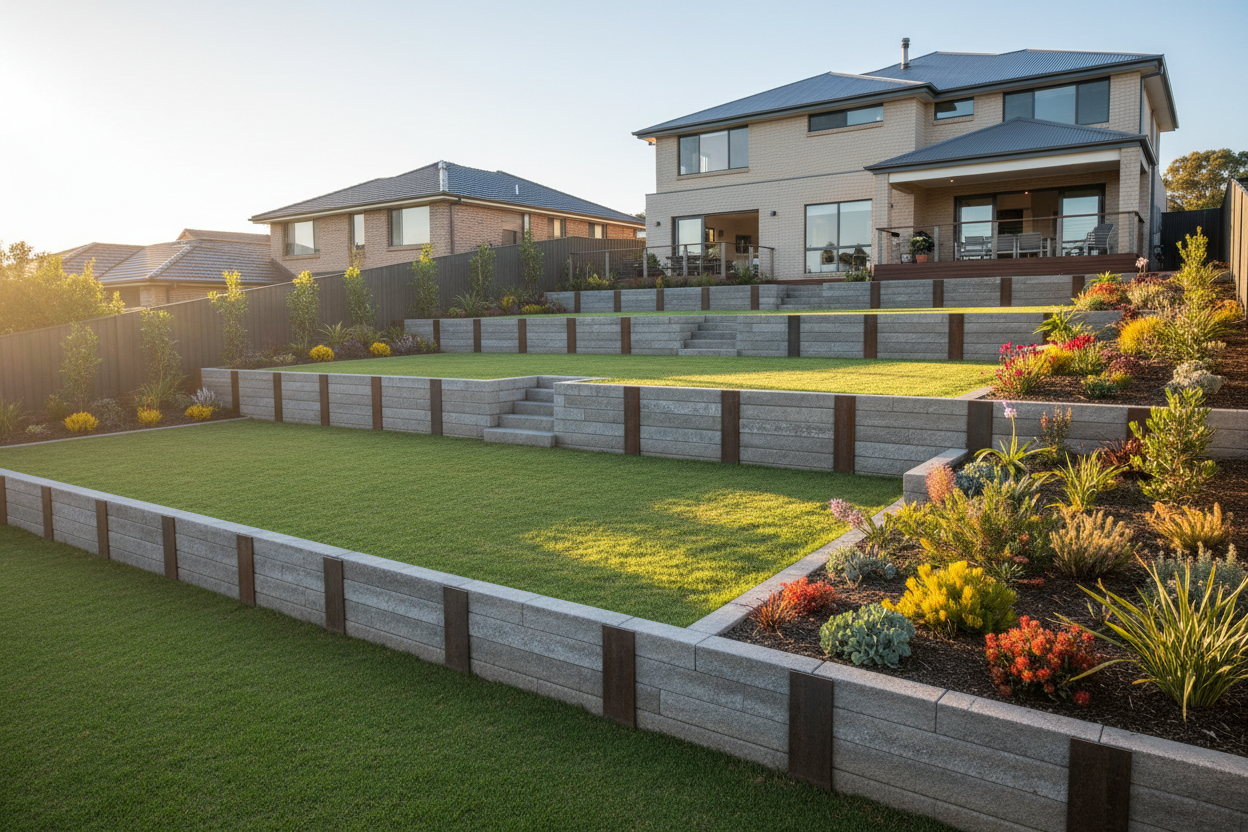

A sloping block can feel like a challenge — but with the right retaining wall design, it becomes one of your property's greatest assets. Sloped blocks offer opportunities for terraced gardens, elevated entertaining areas, and dramatic landscaping that flat blocks simply can't match.
This guide covers the best retaining wall ideas for sloping blocks, with practical design tips for every type of slope.
Understanding Your Slope
Before designing your retaining wall, understand what you're working with:
- Gentle slope (under 1:10): A single low retaining wall or raised garden bed may be all you need
- Moderate slope (1:10 to 1:4): Terraced walls work well — 2–3 levels of lower walls rather than one tall wall
- Steep slope (steeper than 1:4): Multiple terraced walls, possibly with engineer certification required. See our Regulations Guide
Idea 1: Terraced Garden Levels
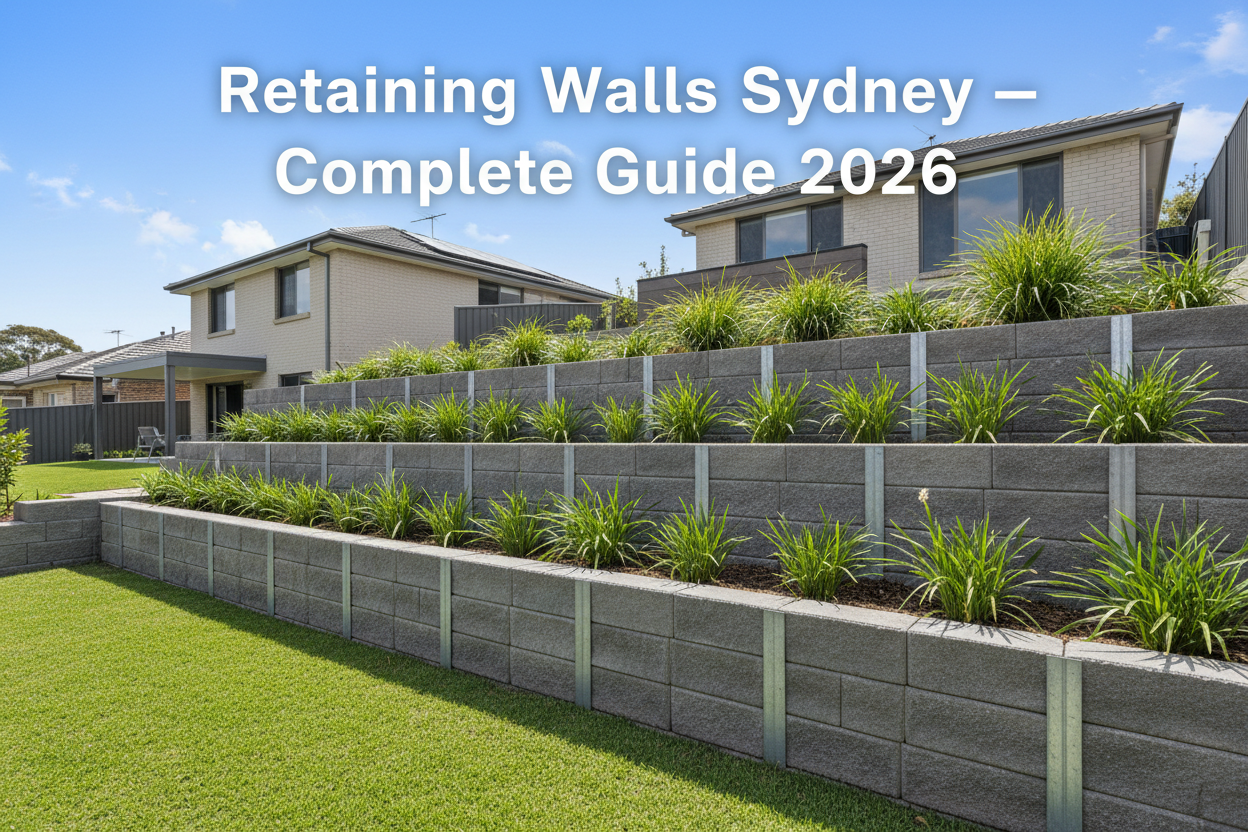
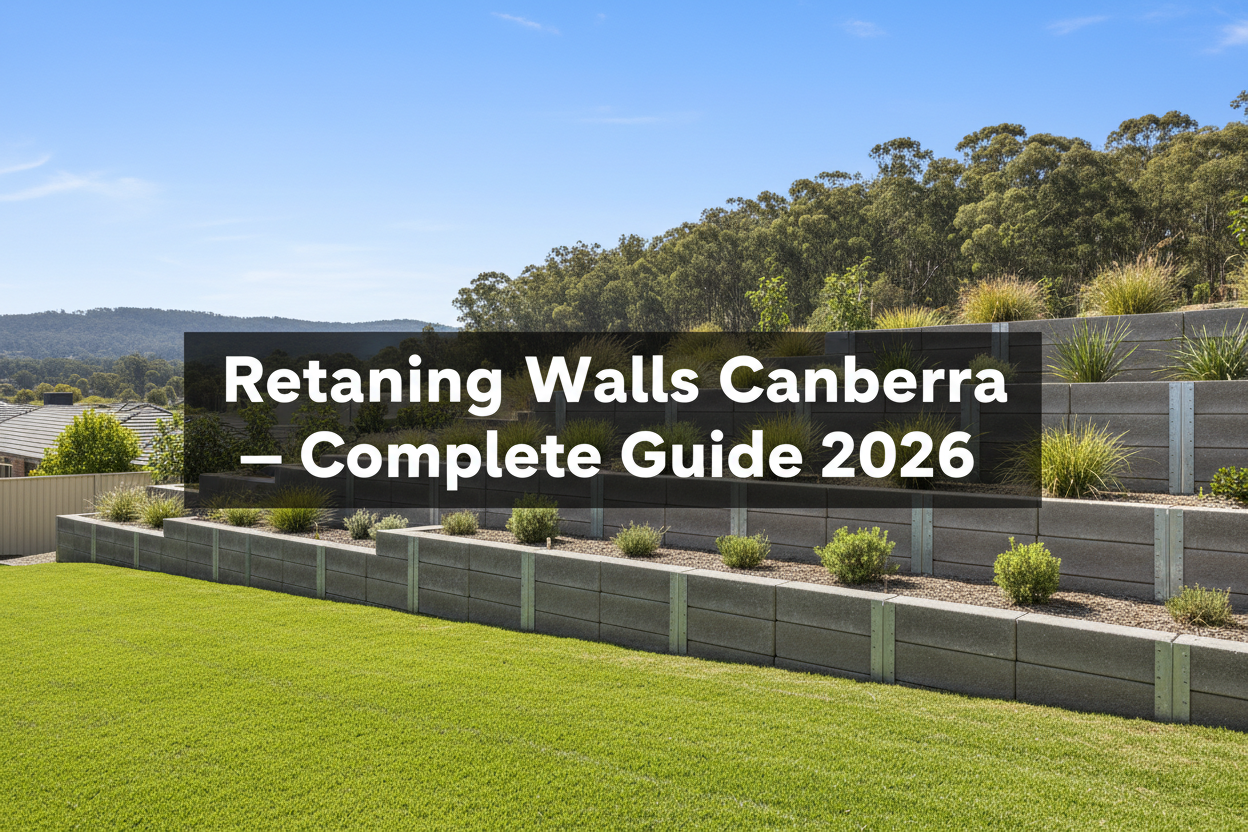
The most popular solution for sloping blocks — a series of lower retaining walls creates multiple flat terraces, each usable for planting, lawn, or entertaining. Key design principles:
- Keep each wall under 1.0m to simplify council approvals
- Allow at least 600mm–1.0m of flat space between each terrace for planting and access
- Use consistent sleeper finish across all terraces for a cohesive look
- Plant each terrace with different heights — groundcovers at the front, shrubs and trees at the back
- Charcoal sleepers or woodgrain sleepers work beautifully in terraced garden settings
Idea 2: Elevated Entertaining Area
Use retaining walls to create a flat, elevated entertaining area at the top of a slope — perfect for an outdoor dining area, BBQ, or pool. The wall holds back the slope below, creating a usable flat space with views over the garden.
- Design the wall height to suit the slope — typically 0.6m–1.5m
- Cap the wall with a wide concrete or stone cap for seating
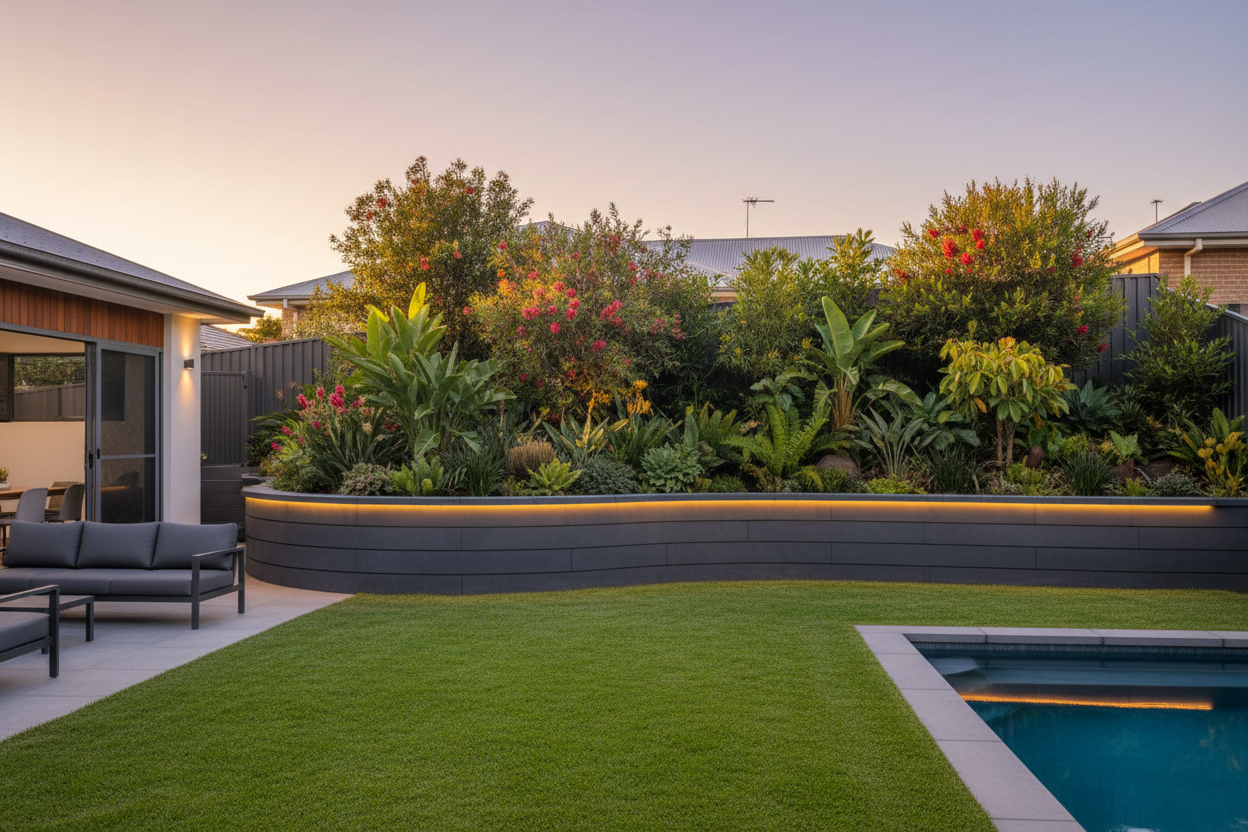
- Integrate lighting into the wall face for evening ambience
- Use smooth finish sleepers for a contemporary entertaining aesthetic
Idea 3: Stepped Access Between Levels
Integrate steps into your retaining wall design to create access between levels. Steps can be built into the wall itself or positioned at the end of a wall run. Design tips:
- Standard step dimensions: 150–200mm riser, 280–350mm tread
- Use the same sleeper finish for steps and walls for a unified look
- Add lighting to step risers for safety and ambience
- Consider a landing at each level for planting or seating
Idea 4: Driveway Retaining Walls
Sloped driveways often require retaining walls on one or both sides to create a safe, level driving surface. For driveway walls:
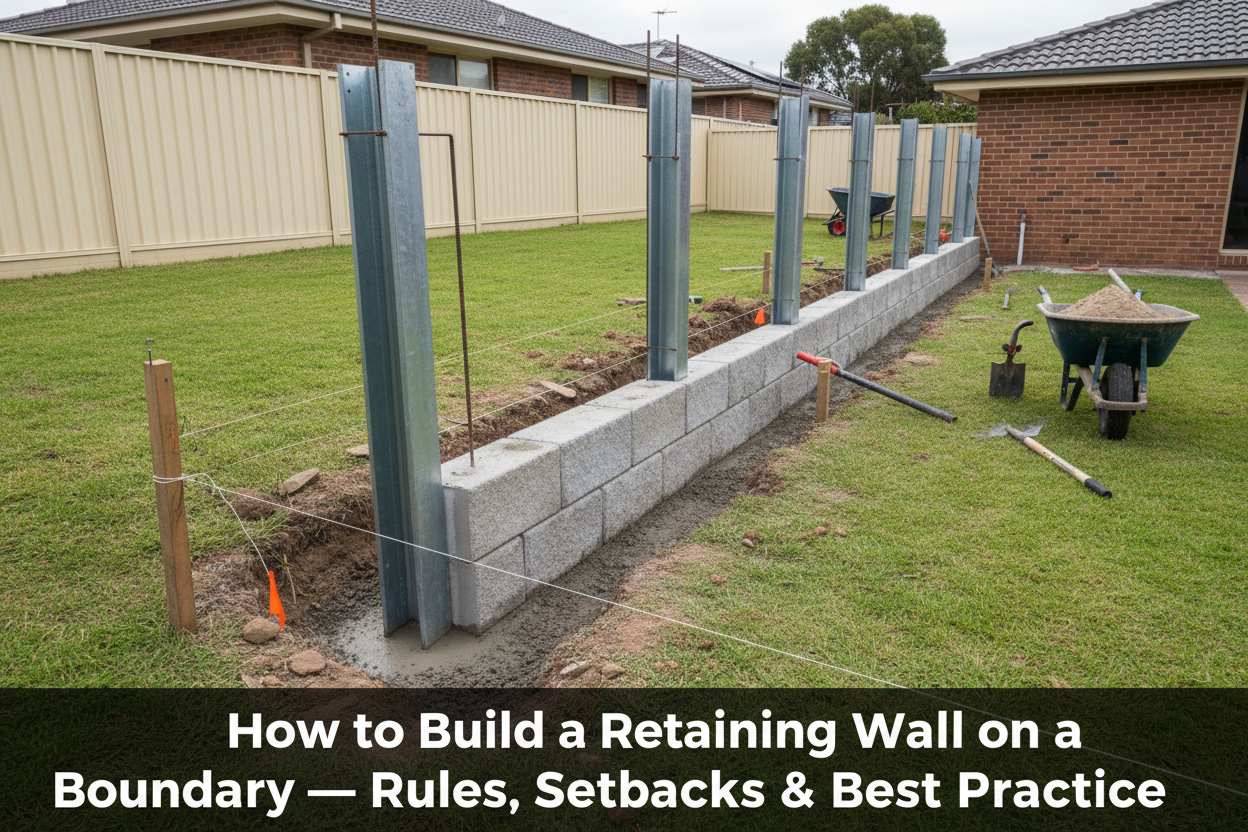
- Always use 100mm heavy duty sleepers — vehicle surcharge loads require the extra thickness
- Use 150UC or 200UC H-Beam posts — see our Steel Post Guide
- Get engineer certification — vehicle loads significantly increase wall requirements
- Ensure drainage handles runoff from the driveway surface
Idea 5: Natural Bushland Integration
For properties with native bushland or a natural aesthetic, woodgrain concrete sleepers blend beautifully with the landscape while providing the structural performance of concrete. Plant native species in the terraces for a low-maintenance, water-wise garden.
Idea 6: Curved or Angled Walls
Straight walls aren't your only option. Angled walls that follow the natural contours of the slope can look more organic and reduce the amount of excavation required. Note that curved walls require specialist corner posts — see our Corner & End Posts.
Idea 7: Retaining Wall + Lawn Combination
A single retaining wall at the base of a slope, with lawn on the flat area above, is one of the simplest and most effective solutions for gentle slopes. The wall creates a clean edge between the lawn and the lower garden, and the flat lawn area becomes fully usable.
Practical Tips for Sloping Block Retaining Walls
- Work with the slope, not against it — terracing is almost always better than one tall wall
- Drainage is critical on slopes — water runs downhill and concentrates at the base of slopes. Read our Drainage Guide
- Check council requirements early — steep slopes often require engineering certification. See our Council Approval Guide
- Consider the view from below — the face of the wall is often the most visible element from the lower garden; choose a finish that looks good from both sides
- Plan access for maintenance — ensure you can reach all terraces for planting and maintenance
Get a Free Quote for Your Sloping Block
Our team specialises in speccing retaining walls for sloping blocks across Australia. Book a free quote and we'll recommend the right wall design, materials, and drainage for your specific slope.
Related Articles
- Retaining Wall Ideas for Australian Backyards
- How to Build a Retaining Wall with Concrete Sleepers
- How to Choose the Right Steel Post
- Retaining Wall Regulations in Australia
- How Much Does a Retaining Wall Cost in Australia?
- How to Install Drainage Behind a Retaining Wall
- Best Retaining Wall for a Pool Area
- Retaining Wall Maintenance Guide