
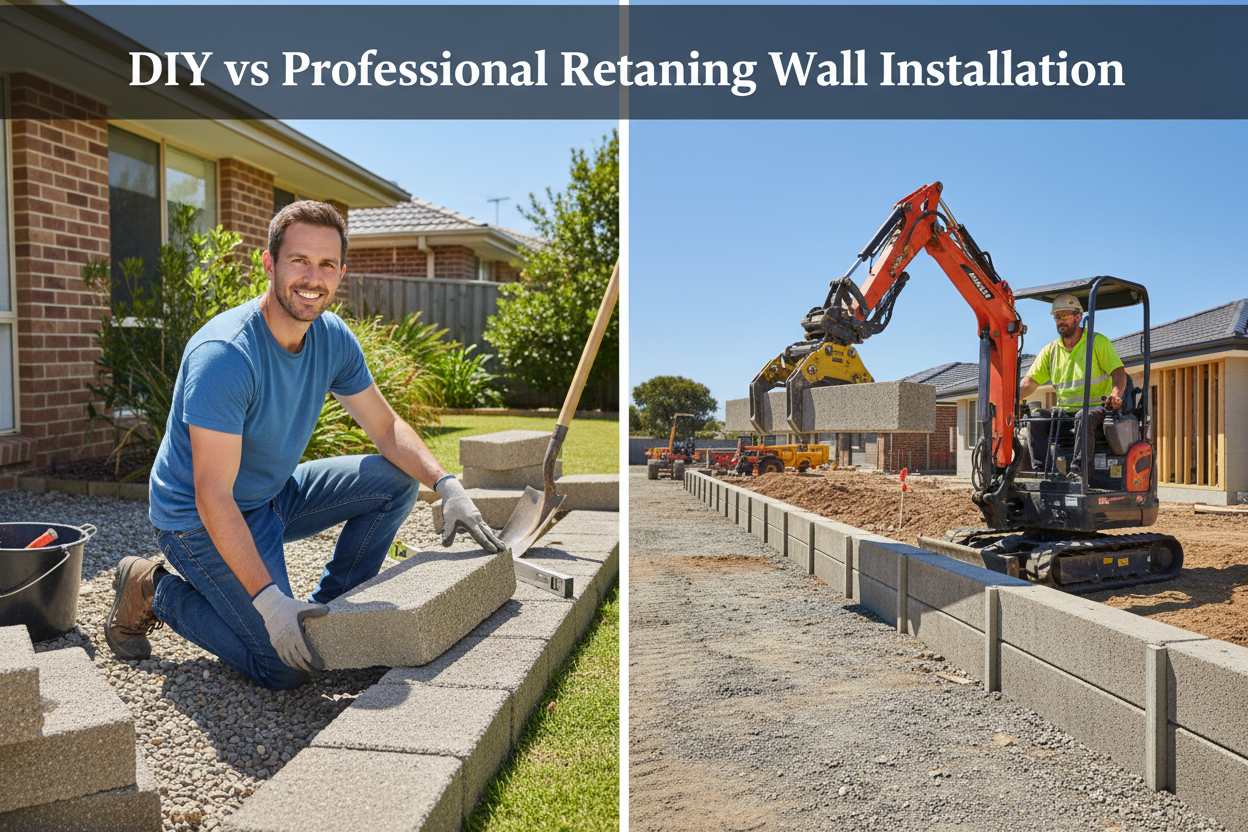

One of the first decisions you'll face when planning a retaining wall is whether to build it yourself or hire a professional. Both options have genuine merit — and the right choice depends on your wall height, budget, skills, and how much time you're willing to invest.
This guide gives you an honest breakdown of both options so you can make the right call for your project.
When DIY Makes Sense
A concrete sleeper retaining wall is absolutely achievable as a DIY project — if the conditions are right. DIY works well when:
- Wall height is under 1.0m — lower walls are simpler to design, don't require council approval in most states, and are manageable without heavy equipment
- You have basic construction skills — setting posts plumb, mixing concrete, and working to a string line are the core skills required
- You have help available — concrete sleepers are heavy (75kg+ each); you'll need at least one other person and possibly a small crane for taller walls
- Access is good — easy site access makes DIY much more feasible; tight access requiring hand-digging significantly increases difficulty
- Soil conditions are straightforward — standard clay or loam is manageable; rock or highly reactive soil is much harder
What DIY Saves You
Labour is typically the biggest cost in a retaining wall project. Professional installation rates in Australia range from $300–$600 per lineal metre depending on wall height, access, and location. For a 10m wall, that's $3,000–$6,000 in labour alone.
DIY eliminates this cost entirely — you pay only for materials. See our Retaining Wall Cost Guide for a full materials cost breakdown.
The Real Challenges of DIY
DIY retaining walls fail most often because of three things:
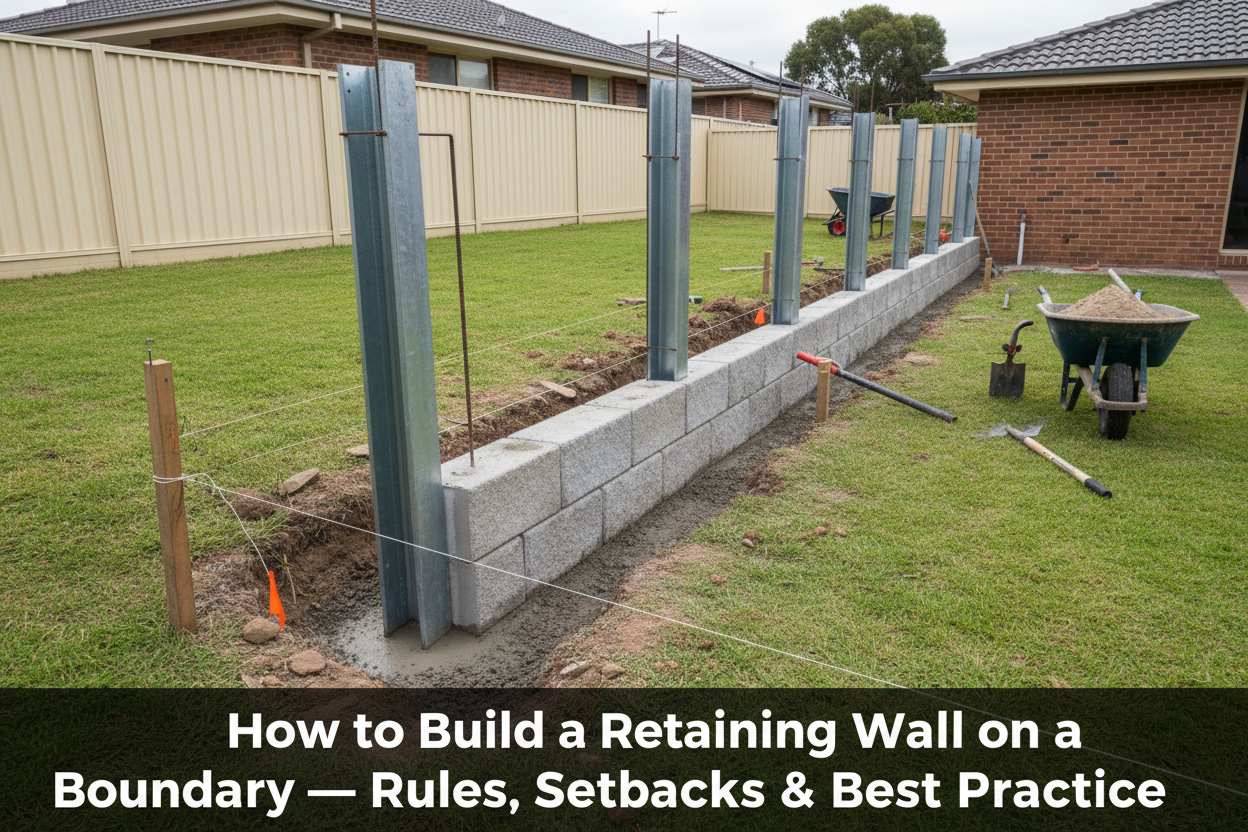
1. Posts Not Set Correctly
Setting posts plumb, at the right height, and at the right spacing is the most critical step. If posts aren't perfectly plumb before the concrete sets, the wall will look wrong and may not perform correctly. Take your time, use a good spirit level, and brace posts properly before pouring concrete. Read our Post Embedment Guide for depth requirements.
2. Drainage Skipped or Done Wrong
The most common DIY mistake. Drainage must be installed before backfilling — you can't retrofit it easily. Read our Drainage Guide before you start.
3. Wrong Post Size
Undersized posts are a common DIY error. Read our Steel Post Guide to make sure you're using the right post for your wall height.
When to Hire a Professional
Professional installation is strongly recommended when:
- Wall height is over 1.0m — taller walls require council approval, engineering certification, and often heavy equipment
- Council approval is required — a licensed builder or contractor can manage the approval process
- Soil conditions are difficult — rock, highly reactive clay, or unstable fill requires specialist assessment
- Access is poor — tight access requiring hand-digging or small equipment significantly increases difficulty and risk
- Surcharge loads are present — walls adjacent to driveways, structures, or steep slopes need engineering sign-off
- You don't have the time or confidence — a poorly built wall is expensive to fix; if in doubt, hire a professional
The Hybrid Approach
Many homeowners use a hybrid approach to save money while managing risk:
- Hire a professional to set the posts (the most critical and difficult step)
- DIY the sleeper installation, drainage, and backfilling
- This can save $1,500–$3,000 on a standard wall while ensuring the structural elements are done correctly
Finding a Good Retaining Wall Contractor
If you decide to hire a professional, look for:
- A licensed builder or landscaper with specific retaining wall experience
- References from recent retaining wall projects
- A contractor who will handle council approvals and engineering certification if required
- A fixed-price quote that includes materials, labour, drainage, and disposal of excavated soil
Our Contractor Partner Program connects you with experienced retaining wall installers in your area.
Supply Your Own Materials
Whether you DIY or hire a professional, you can save significantly by supplying your own materials direct from Retaining Walls Direct. Many contractors are happy to install materials supplied by the homeowner — and you avoid the contractor's markup on materials (typically 20–40%).
Book a free quote and we'll provide a full itemised materials list you can take to any contractor.
Related Articles
- How to Build a Retaining Wall with Concrete Sleepers — Step-by-Step Guide
- How Much Does a Retaining Wall Cost in Australia? (2026 Guide)
- How to Choose the Right Steel Post
- How to Install Drainage Behind a Retaining Wall
- Retaining Wall Regulations in Australia
- How Deep Should Retaining Wall Posts Be?
- Retaining Wall Ideas for Australian Backyards
- Retaining Wall Maintenance Guide