
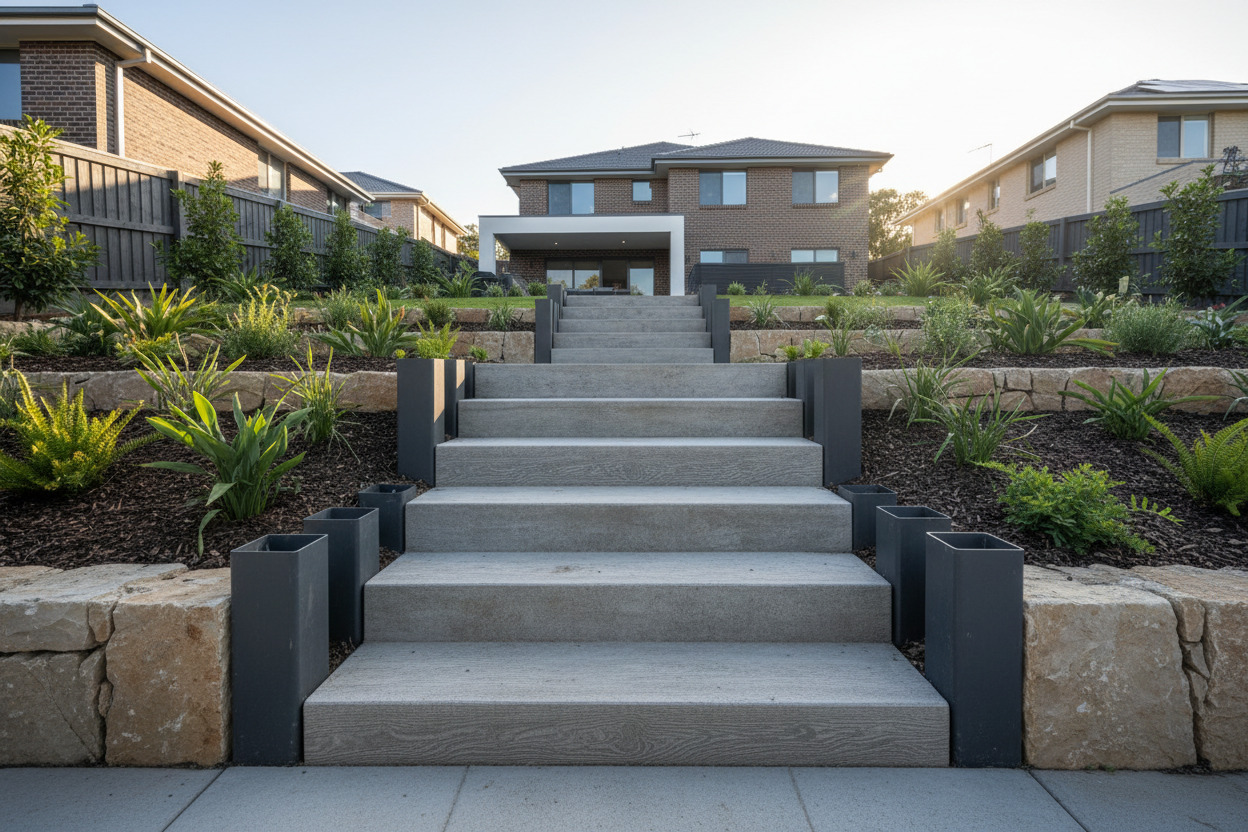

One of the great advantages of a concrete sleeper retaining wall is that it requires virtually no maintenance. Unlike timber walls, concrete sleepers don't rot, don't need sealing, and don't require periodic treatment. But "virtually no maintenance" is not the same as "no maintenance at all." A concrete sleeper wall that is inspected annually and has its drainage kept clear will last 50+ years. A wall that is ignored until something goes wrong may develop problems that are expensive to fix.
This guide covers what to inspect, how often, and what to do if you find a problem.
Annual Inspection Checklist
Once a year — ideally after the wet season when any drainage or structural issues are most likely to be apparent — walk along your retaining wall and check the following:
1. Wall face alignment
Stand back from the wall and look along the face. The wall should be vertical (plumb) and straight in plan. Look for:
- Any section of wall that is leaning outward (bowing) — this indicates post rotation under soil pressure
- Any section that has moved horizontally out of line with the rest of the wall
- Any section where the wall face is no longer vertical
Minor variations in alignment are normal and not a concern. Progressive movement — where the wall is noticeably more out of plumb than it was last year — requires investigation.
2. Weep holes
Check that all weep holes are clear and unobstructed. Weep holes should be visible and open. During or after heavy rain, water should be discharging through the weep holes. If weep holes are blocked by soil, debris, or plant growth, clear them immediately.
Blocked weep holes are one of the most common causes of retaining wall problems. They prevent drainage relief and allow hydrostatic pressure to build behind the wall. See our guide on retaining wall drainage.
3. Sleeper condition
Inspect the face of each sleeper for:
- Cracking — hairline surface cracks in concrete are normal and not a structural concern. Wide cracks (more than 1–2mm) or cracks that run through the full depth of the sleeper require assessment
- Spalling — concrete breaking away from the surface, particularly at the edges. Minor surface spalling is cosmetic; spalling that exposes reinforcing steel requires repair to prevent reinforcement corrosion
- Staining — rust staining on the sleeper face can indicate reinforcement corrosion. This requires assessment by a structural engineer
4. Post condition
Inspect the visible portion of each post (above ground) for:
- Rust staining or corrosion at the base of the post where it enters the ground — this is the most vulnerable zone for post corrosion
- Any visible deformation or bending of the post
- Any movement of the post relative to the sleepers
5. Soil behind the wall
Check the garden bed or soil surface behind the wall for:
- Subsidence or settlement — depressions in the soil surface behind the wall can indicate voids forming as soil migrates through the drainage zone
- Cracking in the soil surface parallel to the wall — can indicate wall movement
- Waterlogging — persistent wet areas behind the wall after rain indicate drainage problems
6. Drainage outlet
Check that the ag pipe outlet is clear and discharging freely. If the outlet is blocked, the entire drainage system is compromised. Clear any blockages and flush the ag pipe with a hose if possible.
After Major Rainfall Events
After significant rainfall — particularly after extended wet periods or heavy storms — do a quick check of:
- Weep holes — are they discharging water? If not, they may be blocked
- Drainage outlet — is it flowing freely?
- Wall face — any new movement or cracking?
- Soil behind the wall — any new subsidence or waterlogging?
Vegetation Management
Keep vegetation away from the wall face and weep holes. Plant roots can:
- Block weep holes and drainage aggregate
- Grow into joints between sleepers and cause movement
- Exert pressure on the wall face as root systems expand
Avoid planting large trees or shrubs directly behind a retaining wall. The root systems of large plants can exert significant pressure on the wall and interfere with the drainage system.
Cleaning the Wall Face
Concrete sleeper walls can be cleaned with a pressure washer if desired. This is purely cosmetic — it has no structural benefit. Avoid using harsh chemical cleaners that could damage the concrete surface or affect the surrounding soil and drainage system.
Efflorescence (white salt deposits on the concrete surface) is common in new walls and typically reduces over time as the concrete weathers. It is cosmetic and not a structural concern. It can be removed with a dilute acid wash if desired.
When to Call a Professional
Contact a structural engineer or retaining wall specialist if you observe:
- Progressive wall movement — the wall is leaning or bowing more than it was previously
- Wide cracks in sleepers (more than 1–2mm) or cracks that run through the full sleeper depth
- Rust staining on sleeper faces indicating reinforcement corrosion
- Post corrosion at ground level
- Soil subsidence behind the wall
- Persistent waterlogging behind the wall despite clear weep holes and drainage outlet
- Any sudden change in wall condition after a major rainfall event or earthquake
Do not attempt to repair a wall that is showing signs of structural movement without professional assessment. The cause of the movement must be identified and addressed before any repair work is undertaken. See our guide on diagnosing and fixing retaining wall drainage problems.
Frequently Asked Questions
How often should I inspect my retaining wall?
Once a year is adequate for most concrete sleeper retaining walls in standard conditions. After major rainfall events or earthquakes, do a quick visual check. If the wall is near a boundary, structure, or driveway, more frequent inspection is prudent.
Do concrete sleeper walls need sealing?
No. Concrete sleepers do not require sealing. The concrete is designed to be durable in outdoor conditions without any surface treatment. Sealing is not recommended as it can trap moisture in the concrete and cause surface damage over time.
My weep holes aren't discharging water during rain — is that a problem?
It depends. If the soil behind the wall is well-drained and the rainfall was light, weep holes may not discharge during every rain event. If the soil is clay, the rainfall was heavy, and the weep holes are still not discharging, the drainage system may be blocked. Check the ag pipe outlet and clear any blockages. If the problem persists, have the drainage system inspected.
Need Help?
If you have concerns about your retaining wall's condition, contact our team for advice. Browse our drainage products if you need to replace or upgrade your drainage system. See also our guide on how to build a concrete sleeper retaining wall for reference on correct installation standards.