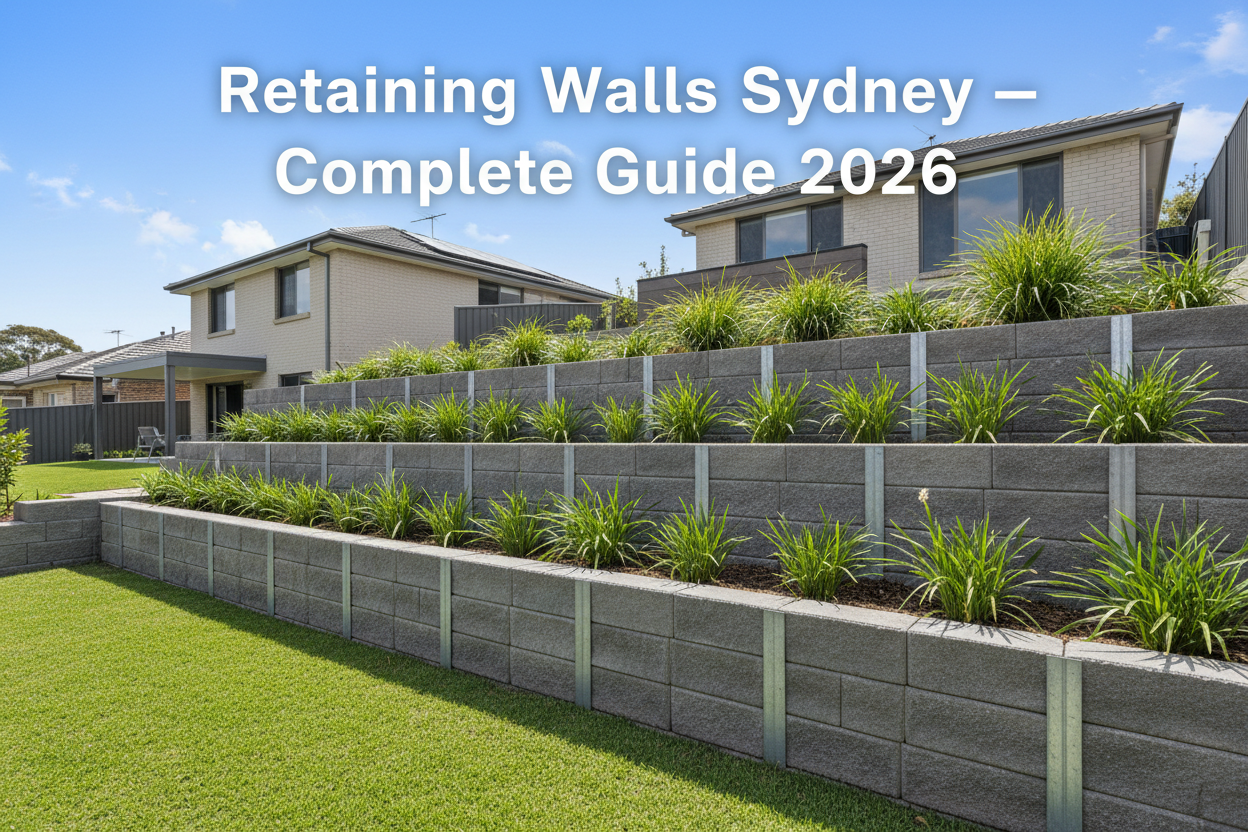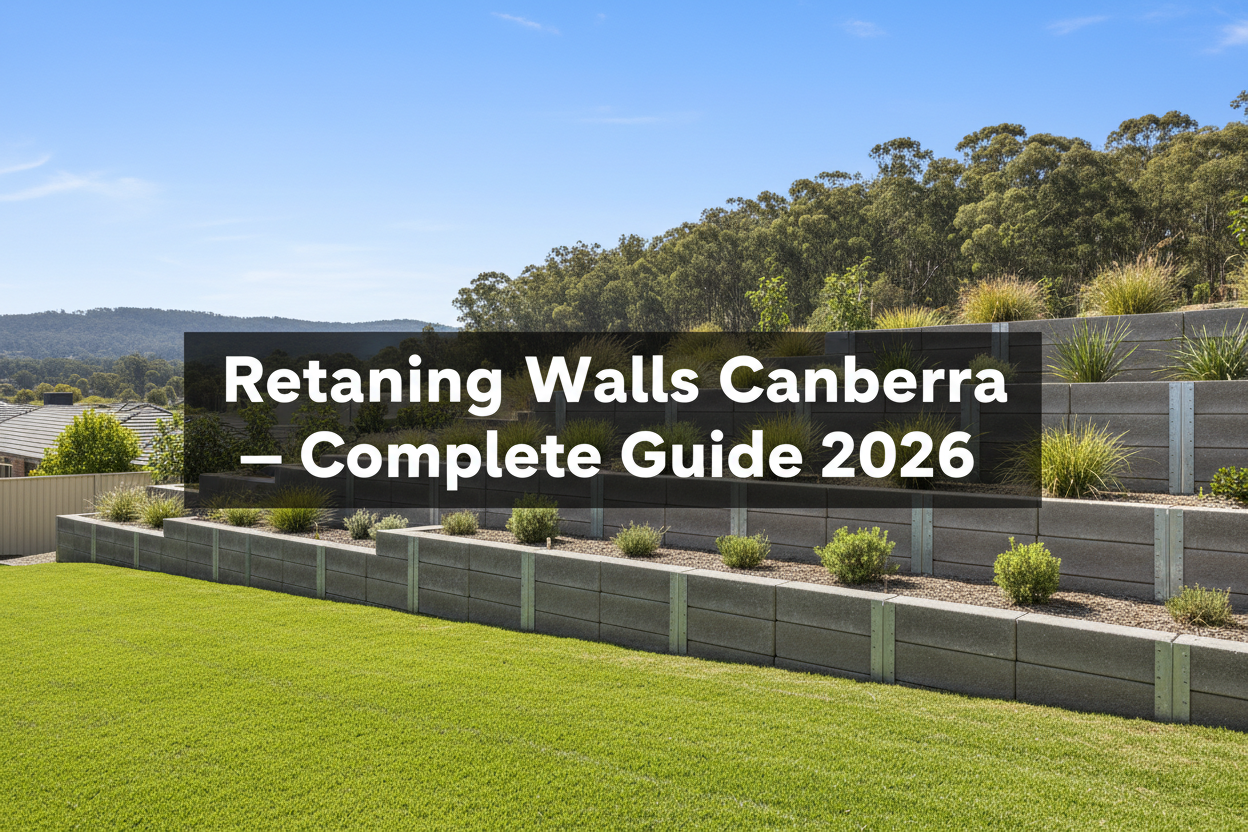

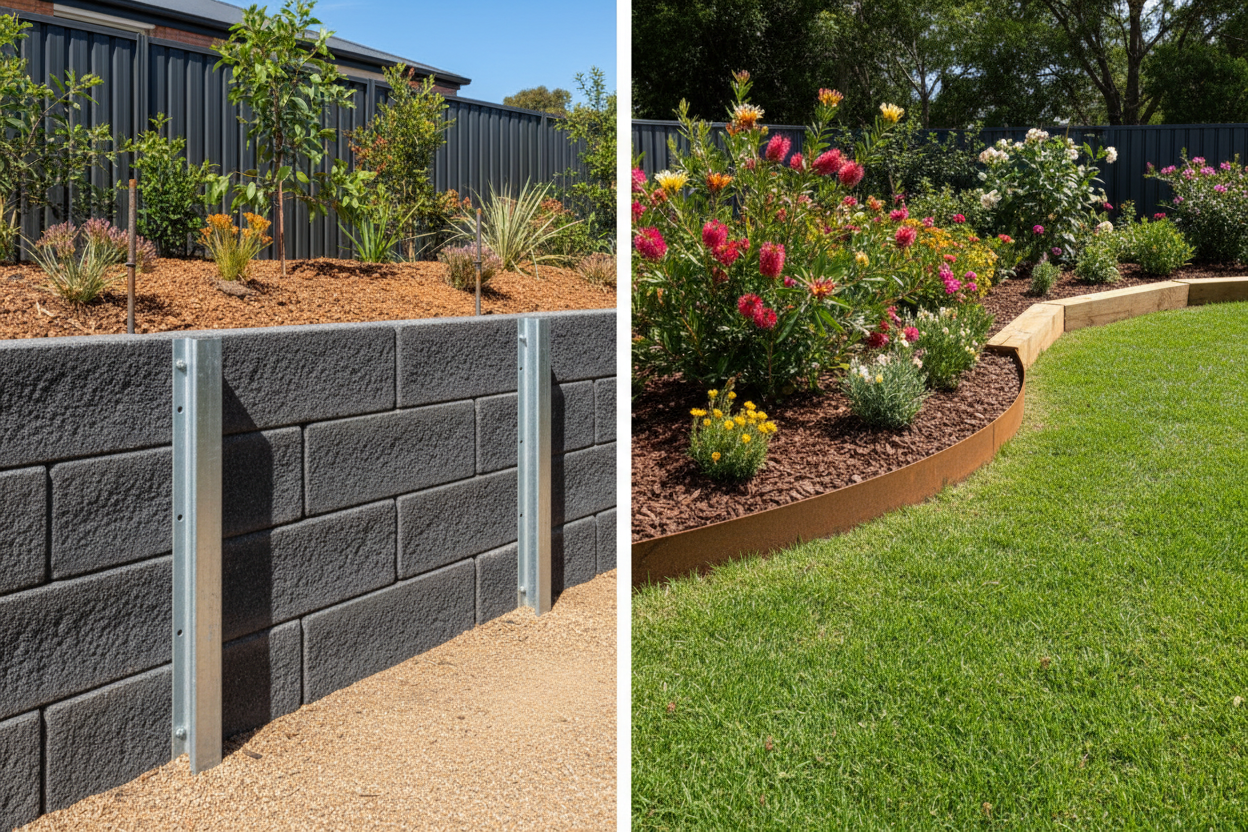

Tiered retaining walls — multiple wall levels stepping up a slope — are one of the most common solutions for steep residential blocks across Australia. Done correctly, a tiered wall system is structurally sound, visually appealing, and creates usable flat areas on an otherwise unusable slope. Done incorrectly, the upper wall creates a surcharge load on the lower wall that neither wall was designed for, and both walls fail.
This guide covers the key design principles for tiered retaining walls, the critical setback rule, drainage requirements, and when engineering sign-off is required.
What Is a Tiered Retaining Wall?
A tiered retaining wall system consists of two or more individual retaining walls built at different levels on a slope, with a flat or gently sloping terrace between each tier. Each wall retains a portion of the total slope height, rather than one wall retaining the full height.
The main advantage of tiering is that it allows a steep slope to be managed with walls that individually stay within standard height limits — reducing the structural demands on each wall and often avoiding the need for engineering certification that would be required for a single tall wall.
The Critical Setback Rule
The most important design principle in tiered retaining walls is the setback between tiers. The upper wall must be set back far enough from the lower wall that the upper wall and its retained soil do not create a significant surcharge load on the lower wall.
The standard rule of thumb for tier setback is:
Minimum setback = Height of the lower wall
So if the lower wall is 1.0m high, the upper wall should be set back at least 1.0m from the face of the lower wall. If the lower wall is 800mm high, the minimum setback is 800mm.
This setback allows the load from the upper wall and its retained soil to disperse through the soil before reaching the lower wall face, significantly reducing the surcharge effect. See our guide on surcharge loads for more detail on how this works.
What happens if the setback is too small?
If the upper wall is too close to the lower wall, the upper wall and its retained soil create a surcharge load on the lower wall. The lower wall was not designed for this load and will be overloaded. Both walls may fail — the lower wall from overloading, and the upper wall from loss of support as the lower wall moves.
Engineering Requirements for Tiered Walls
Tiered retaining wall systems require engineering sign-off in the following situations (which covers most practical tiered wall projects):
- Any individual wall in the system exceeds 1.0m in height
- The setback between tiers is less than the height of the lower wall
- There is a surcharge load (driveway, structure) above any wall in the system
- The soil is heavy clay, reactive, or unstable
- Any wall is near a boundary or structure
- Council approval is required for any wall in the system
In practice, most tiered wall systems on residential blocks will require engineering sign-off. See our guide on retaining wall height limits and council approval.
Drainage in Tiered Wall Systems
Drainage is critical in tiered wall systems — and more complex than in single-wall systems. Each tier must have its own drainage system, and the drainage from upper tiers must be managed so it doesn't concentrate behind lower walls.
Key drainage principles for tiered walls:
- Each wall must have its own ag pipe, geotextile fabric, drainage aggregate, and weep holes
- The ag pipe from each tier must drain to a suitable outlet — not simply discharge onto the terrace below, where it will concentrate water behind the next wall down
- The terrace between tiers should be graded to drain away from the upper wall face and toward a suitable outlet
- In heavy clay soils, the drainage design for a tiered system should be confirmed by a drainage engineer or hydraulic consultant
See our full guide on retaining wall drainage. Our drainage kits include everything needed for each tier.
Post Specification for Tiered Walls
Each wall in a tiered system is specified independently based on its own height, soil conditions, and any surcharge loads. However, the proximity of the upper wall to the lower wall must be considered when specifying the lower wall — even with adequate setback, the upper wall creates some additional load on the lower wall that should be factored into the lower wall's post specification.
For tiered systems where the setback is at or near the minimum, H-beam posts are typically specified for the lower wall even at heights where C-channel might otherwise be adequate. See our guide on C-channel vs H-beam posts.
Building Sequence for Tiered Walls
Build tiered walls from the bottom up:
- Excavate and build the lowest wall first, including its drainage system
- Backfill the lowest tier and allow the concrete footings to cure fully
- Build the next wall up, including its drainage system
- Continue up the slope, completing each tier before starting the next
Do not build upper walls before lower walls are complete and backfilled — the upper wall excavation can destabilise the lower wall if it hasn't been backfilled and cured.
Frequently Asked Questions
How far apart should tiered retaining walls be?
The minimum setback between tiers is equal to the height of the lower wall. For a 1.0m lower wall, the upper wall should be at least 1.0m back from the face of the lower wall. Greater setback is always better — it reduces the surcharge effect and creates more usable terrace space between tiers.
Can I build two 1.0m walls instead of one 2.0m wall?
Yes — this is the standard approach for managing steep slopes. Two 1.0m walls with adequate setback between them are structurally simpler and often more cost-effective than a single 2.0m wall, which would require significant engineering. However, the setback between the walls must be adequate, and the drainage system for each wall must be correctly designed.
Do tiered retaining walls need council approval?
The approval requirements for each wall in a tiered system are assessed individually. If any individual wall exceeds the height threshold for your council (typically 1.0m), that wall requires approval. The proximity of the walls to each other may also trigger additional requirements. Check with your local council before starting.
Ready to Order?
Browse our full range of concrete sleepers, steel posts, and drainage kits for each tier, or contact our team to discuss your tiered wall project before ordering materials.